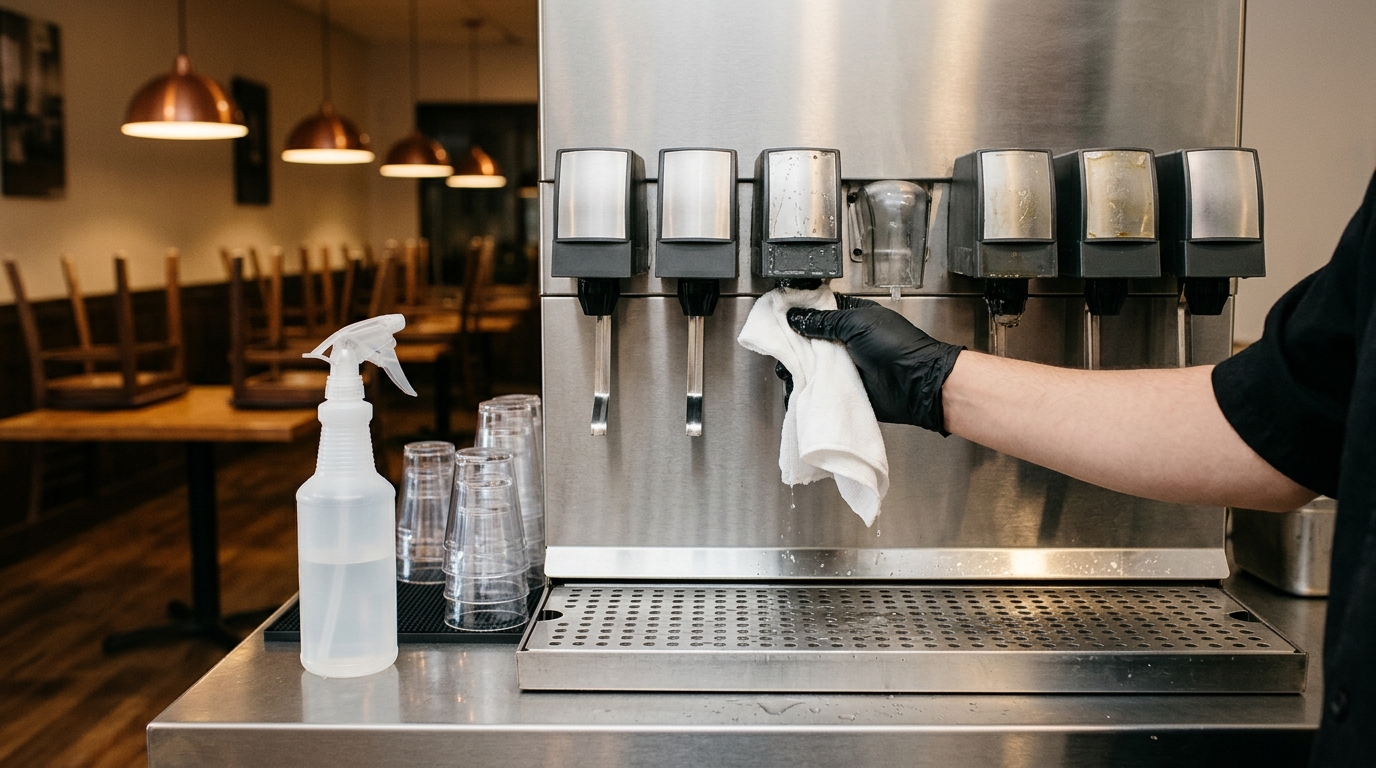
Some maintenance tasks belong to your team and others belong to your supplier, and the line between them is clearer than most people expect. Knowing it before you sign saves everyone a frustrating conversation later. Use this as a reference document you can keep and share with your dietary staff, office manager or facilities team.
Your Team’s Responsibilities
Your staff is closest to the equipment every day. That means they’re the first to notice a dirty drip tray, a low BIB bag or a machine that isn’t behaving right. Daily and weekly upkeep keeps equipment hygienic, extends its life and catches small problems before they turn into service calls.
The cleaning tasks below apply across the main equipment types in a Denver Beverage program.
Fountain, Soda and Juice Dispensers
Fountain, soda and juice dispensers are the units your staff touches most, so most of the upkeep is quick surface work. It also includes the two checks that settle most service calls. Here’s the routine for your team.
Daily:
- Nozzles and drip trays: Wipe down dispense nozzles and drip trays with a food-safe cloth. This is one of the most important equipment hygiene standards for any dispense unit.
- CO2 and BIB levels: Check them before calling for service. If the machine has stopped dispensing, check that the BIB bag isn’t empty and that the CO2 tank isn’t empty. Most “machine stopped working” calls turn out to be one of these two things.
- Hot juice or only water: If juice is coming out hot or only water is dispensing, check the juice BIB first. An empty bag is the first cause, not an equipment fault.
Weekly:
- Exteriors: Wipe down the exterior of juice, soda and fountain units, including handles and control panels.
- Nozzle tips: Inspect nozzle tips for buildup and rinse as needed.
Monthly:
- Interior cleaning: Complete any interior cleaning steps called for in the manufacturer’s guide for your specific unit.
Coffee Equipment
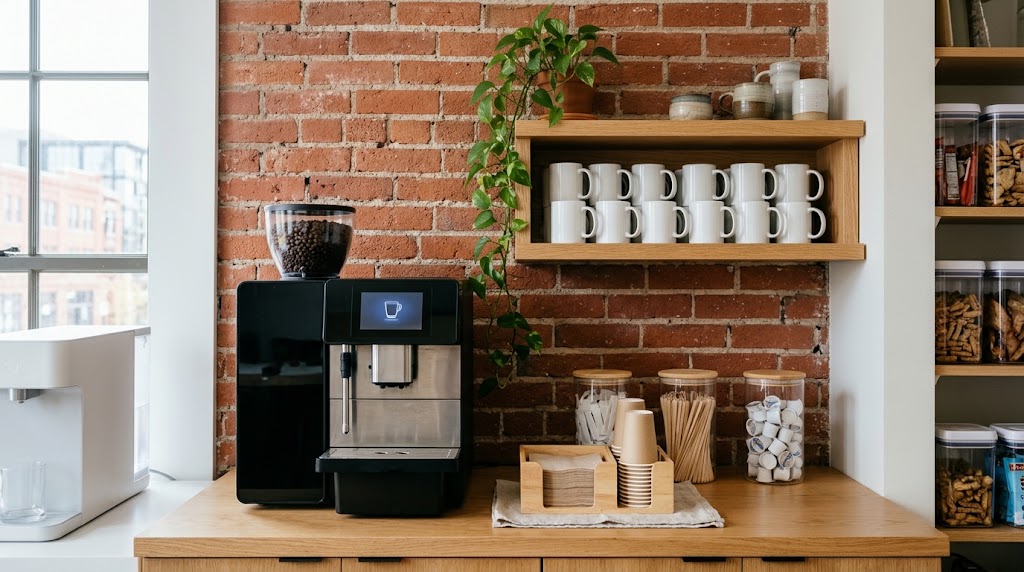
Coffee equipment needs regular surface cleaning, and the taste of the coffee is often the first sign that something needs attention. The tasks below keep brewers, bean-to-cup machines and airpots in good shape between technician visits. Here’s what to cover.
Daily:
- Drip trays and exteriors: Wipe down drip trays, nozzles and the exterior of bean-to-cup machines and brewers.
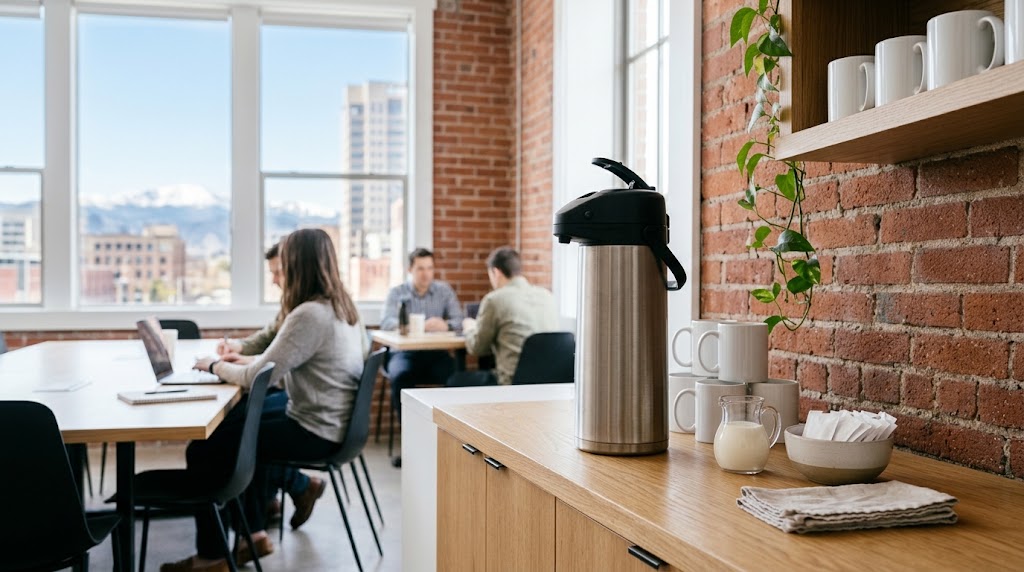
- Airpots: Rinse airpots after each emptying cycle.
Weekly:
- Surfaces: Clean faucet handles, airpot exteriors and any countertop surfaces around the brewer.
- Fractional pack: Check that the correct fractional pack is loaded. Coffee that tastes too weak often traces back to the wrong pack or an exhausted one, not an equipment fault.
Monthly:
- Interior cleaning: Run interior cleaning cycles per manufacturer instructions.
Ice Machines and Water Units
Ice machines and water units mostly need clear space, a clean dispense area and quick reporting when something looks off. Here’s what your team handles.
Daily:
- Ice machine surroundings: Keep the area around the ice machine clear. Ice machines need airflow to run efficiently, so blocked surroundings can lead to unnecessary service calls.
- Water dispense area: Wipe down the dispense area of any Bevi water unit or water cooler.
Ongoing:
- Fault flagging: Flag equipment faults right away instead of waiting for a machine to fail completely. Denver Beverage offers a 24-hour service response.
Commercial Dish Machines
Dish machines get cleaned every shift, and the daily routine is the operator’s job. A few tasks also come around weekly. Here’s the routine.
Daily:
- Machine parts: Clean the door gasket, wash and rinse arms and drain strainer after each shift.
- Chemical levels: Check chemical levels in the dispenser and report low levels to the person responsible for ordering.
Weekly:
- Interior surfaces: Descale and degrease interior surfaces per the machine’s cleaning guide.
Denver Beverage handles internal service and repairs. For facilities running ADS machines through its dish and laundry programs, free repairs are included in the lease, and daily operator cleaning is still the customer’s responsibility.
What Denver Beverage Handles
The technicians handle internal system work. Your staff handles surface work. That split exists because internal components require training, calibration tools and system knowledge that an operator’s team isn’t expected to have. Denver Beverage’s 13 technicians are CFESA-trained and cover the Front Range and the I-70 corridor with 7-day service coverage.
Here’s what falls on Denver Beverage’s side.
Scheduled Preventive Maintenance
Denver Beverage’s own technicians, not subcontractors, carry out scheduled preventive maintenance visits on equipment in the program. Each visit covers the internal inspection items operators can’t access and shouldn’t attempt. A typical visit includes:
- Lines and gas: Inspection of syrup lines, CO2 regulators and beverage gas lines, including pressure integrity and leaks.
- Calibration: Testing and calibration of dispense equipment after any product or formula change.
- Carbonation: Carbonation system checks.
- Valves and lines: Dispense valve and line condition assessment.
- Coffee equipment: Internal cleaning cycles beyond what staff can reach.
Your specific schedule is set by your program. Call 303-295-3737 to ask what’s included.
Repairs and Parts
Repairs on equipment in your program, including parts, are Denver Beverage’s job. Repairs carry a 90-day labor warranty, and 7-day service coverage is available on the Front Range and the I-70 corridor.
That covers fountain and soda systems, bar guns, juice and frozen beverage dispensers, coffee equipment, Bevi water units, ice machines, dish machines and chemical dispensing systems.
For beverage equipment repair service, post-installation maintenance and ongoing repairs are handled by the same technicians who installed your equipment.
Draft Beer Line Cleaning
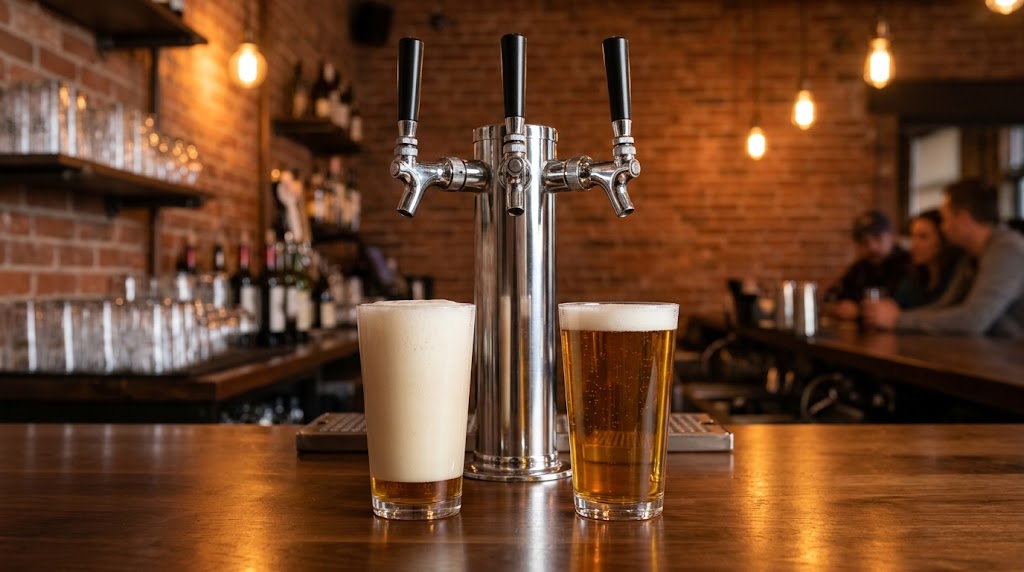
Where Denver Beverage supplies the draft program, draft beer line cleaning is the supplier’s responsibility, not the bar team’s. It’s one of the clearest examples of the split between operator and supplier in a beverage program. Line cleaning schedules and standards are covered in a related guide. For the full scope of what’s included in the program, see draft beer system installation and service.
Healthcare and Office Program Management
For healthcare beverage programs and office coffee service, the team manages the internal side of the equipment in the program. That includes coffee equipment descaling and valve maintenance, juice dispenser calibration and water filtration service. Staff handle the daily surface cleaning, and the technicians handle everything underneath.
Denver Beverage is a State of Colorado preferred vendor for healthcare, and the service model is built around scheduled maintenance and fast response rather than reactive break-fix visits.
Before You Call for Service
A quick check before calling saves your team a wasted visit. Most avoidable service calls fall into one of these categories. Here’s what to check first.
- Empty BIB or low CO2: Check the BIB bag first. If it’s empty, swap it. Check that your CO2 tank isn’t empty. These two issues account for most “machine stopped working” calls.
- Power or electrical fault: Check the breaker and the GFI outlet before assuming equipment failure. A tripped GFI outlet is a separate cause from a tripped breaker, so reset both before you call.
- Only water from the juice machine: Check the juice BIB first. An empty bag is the first cause to rule out, not an equipment fault.
- Coffee too weak: Check that the correct fractional pack is loaded and that the pack isn’t exhausted.
- Soda flat or no carbonation: Confirm the CO2 tank isn’t empty.
Catching these before calling saves your time, not ours. A service visit that finds an empty BIB is a wasted trip for everyone.
See What Service Looks Like Before You Sign
If you’re evaluating a beverage, coffee or dish program and want to know exactly what service looks like before you commit, the Denver Beverage team will walk you through it. Quote requests get a response within 24 hours. Call 303-295-3737 or contact the team.
Frequently Asked Questions
Who is responsible for cleaning beverage equipment, my staff or the supplier?
Your staff and your supplier split beverage equipment cleaning. Your team handles daily surface cleaning, such as wipe-downs, drip trays, nozzle rinses and rinsing airpots, while Denver Beverage handles scheduled internal maintenance, calibration, gas line inspection and all repairs. The rule of thumb is simple: if it’s on the surface and accessible without tools, it’s your team’s job, and if it’s internal or needs a technician, it’s Denver Beverage’s.
What does a beverage supplier’s preventive maintenance typically cover?
A scheduled preventive maintenance visit from Denver Beverage covers internal system inspection: syrup lines, CO2 regulators, gas lines, dispense valves and carbonation systems. It also includes calibration after product or formula changes and internal cleaning on coffee equipment beyond what staff can access. All of this is performed by Denver Beverage’s own CFESA-trained technicians, not third-party subcontractors.
How do I know when to call for service versus handle it myself?
Call for service when the problem is internal or doesn’t resolve after the basic checks. Surface cleaning and daily upkeep stay with your team. If you’ve checked the BIB, the CO2, the breaker and the GFI outlet and the problem is still live, call 303-295-3737. Denver Beverage offers a 24-hour service response and 7-day service coverage on the Front Range and the I-70 corridor.
Does Denver Beverage clean the coffee machines?
Denver Beverage handles internal cleaning and maintenance on coffee machines, and your team handles the daily wipe-downs. Internal work includes descaling, internal valve maintenance and any cleaning cycles that require system access. Drip trays, nozzle exteriors and airpots are your team’s to wipe down each day.
What happens if equipment breaks down? Is that covered?
Repairs carry a 90-day labor warranty, and Denver Beverage’s CFESA-trained technicians handle repairs on equipment in the program, with 7-day service coverage on the Front Range and the I-70 corridor. For ADS commercial dish machines leased through Denver Beverage, free repairs are included as part of the lease from $129 a month.