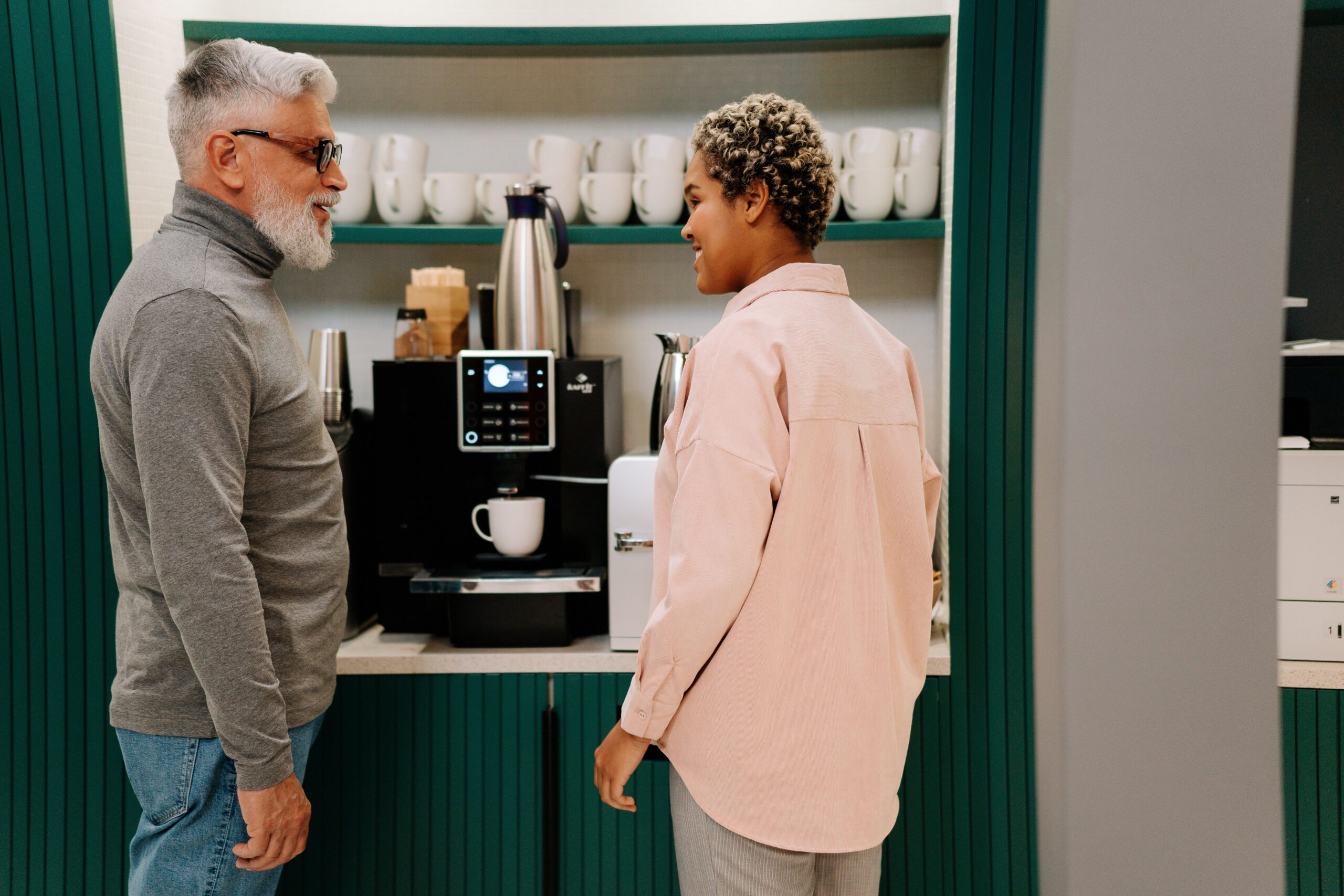
A coffee and beverage program in a senior living community isn’t a single thing. A 200-unit independent living building and a 90-bed skilled nursing facility serve different residents, face different clinical realities, and operate under different compliance expectations. What works in one setting may be inadequate or even problematic in another.
The sections below walk through what a strong program looks like at each care level. If you’re a dietary director, administrator, or director of dining services, start with the section that matches your facility, then use the vendor evaluation criteria at the end to compare options.
Independent Living: Beverage as a Resident Amenity and Differentiator
Independent living residents aren’t looking for a clinical beverage program. They’re looking for the same quality of life they had at home, or better.
Baby Boomers now make up the majority of new independent living residents, and their coffee expectations are specific:
- Decades of strong coffee preferences
- The ability to tell a well-pulled espresso from a drip pot that’s been sitting for two hours
- An expectation that a communal gathering space feels like a café, not a hospital break room
For operators competing on occupancy, the beverage program is a visible differentiator. Three spaces carry this signal directly: the lobby café, the dining room coffee station, and the resident lounge.
Getting coffee right supports social engagement and gives residents a reason to gather. That matters for both quality of life and community reputation.
What a strong program looks like at this care level:
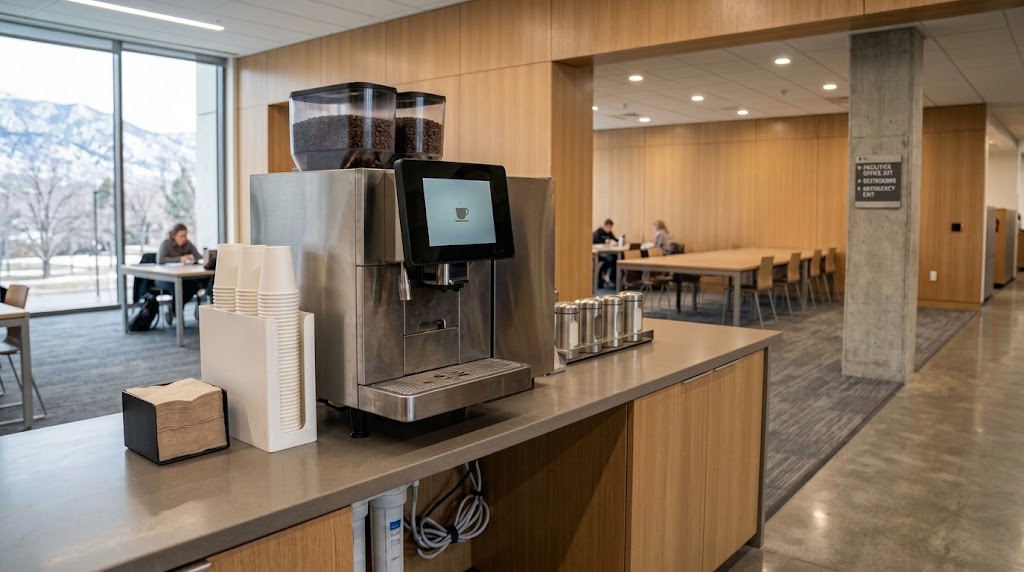
- Bean-to-cup machines that grind fresh per serving, café-style drinks including lattes and cappuccinos, and quality sourcing that residents can taste.
- Denver Beverage’s exclusive Colorado partnership with Boyer’s Coffee, alongside Ozo Organic Coffee, Queen City Collective, and Boulder Organic, provides named, locally recognized premium options that resonate with Colorado residents.
- The full coffee programs offering covers Boyer’s, Ozo Organic Coffee, Queen City Collective, and Boulder Organic positioning, plus Starbucks authorized placement for communities where brand-name recognition is part of the amenity pitch.
Decaffeinated options as a complete program: Not a substitute offered reluctantly, but a parallel offering with the same quality and visibility as regular coffee.
Café culture, not just a coffee station: Residents in upscale independent living communities respond to the atmosphere, not just the product. Equipment placement, service style, and beverage variety all contribute.
For continuing care retirement community operators running independent living alongside other care levels, one vendor managing multiple service tiers under a single contract simplifies operations significantly. That context matters when evaluating program structure.
Assisted Living: Supporting the Dining Program and Dietary Needs
Assisted living sits between the hospitality emphasis of independent living and the clinical rigor of skilled nursing. The food and beverage director or director of dining services at an assisted living facility is balancing resident preferences, dietary accommodations, and operational simplicity. The beverage program has to enhance the dining experience without requiring clinical management that the team isn’t staffed for.
Beverage variety across the full program
A complete assisted living beverage program covers three categories: hot beverages (coffee, tea, decaffeinated options), cold beverages (juices, flavored water, specialty drinks), and consistent hydration access throughout the day. Filtered water and ice access is part of that infrastructure, not a separate amenity, which is the distinction that determines whether a hydration program actually functions or just exists on paper.
Dietary needs specific to this setting
Assisted living residents frequently have dietary restrictions that the beverage program has to accommodate:
- Sugar-conscious options for residents managing diabetes or metabolic conditions
- Low-acid coffee varieties to reduce GI sensitivity complaints
- Decaffeinated options as a standard requirement at this care level, not an afterthought
Dysphagia-safe beverage protocols
Swallowing disorders affect a meaningful share of assisted living residents. For affected residents, certain beverages must be thickened to meet IDDSI consistency standards, the international framework defining eight levels of liquid consistency.
That single fact is what separates vendors in this category: a beverage supplier who understands IDDSI and stocks thickener products is a materially different partner than one who doesn’t know the framework exists. Denver Beverage doesn’t function as a clinical training resource, but knowing the standards and carrying the right products changes the conversation.
Coffee station setup and staff burden
A well-structured coffee station reduces staff burden rather than adding to it. Reliable equipment, clear product organization, and consistent delivery scheduling mean staff spend less time managing the beverage program and more time with residents. Resident satisfaction with food and beverage service is a measurable driver of family referrals and occupancy.
Skilled Nursing: Compliance, Hydration, and Clinical Considerations
Skilled nursing is the highest-acuity setting in senior care. Residents are medically complex, care is regulated at the federal level, and a beverage program that doesn’t account for clinical realities creates operational and compliance risk, not just an inconvenience. That’s the distinction this section is built around: what changes when a beverage program has to hold up under federal oversight.
- Hydration as a compliance issue
CMS F-tag F692 (Nutrition/Hydration Status Maintenance) requires skilled nursing facilities to maintain and document adequate fluid intake for residents. This makes beverage programming a survey-readiness concern, not a hospitality choice. Scheduled beverage rounds, hydration stations accessible throughout the day, and fluid tracking consistent enough to support documentation are operational requirements, not amenities. A beverage supplier who supports reliable delivery schedules and consistent equipment uptime directly supports this compliance posture. - Dysphagia-safe beverage protocols
A higher proportion of skilled nursing residents have dysphagia than in other care settings, including residents in memory care units. The IDDSI framework defines eight levels of liquid consistency. Beverages served to affected residents must meet the prescribed level, consistently across every service. This affects what’s stocked, how beverages are prepared, and what products the supplier needs to carry. A vendor who stocks thickener and understands why it’s needed is a different category of partner than one who doesn’t. - Caffeine and medication interactions
Skilled nursing residents often have dietary or beverage restrictions tied to their individual care plans, including caffeine limits set by a physician or dietitian. Denver Beverage isn’t a clinical resource and doesn’t advise on medication interactions, but a supplier who treats decaf as a standard offering, not an afterthought, is easier for dietary staff to work with. Decaffeinated options should be as visible and accessible as regular coffee, so staff can honor a resident’s care plan without a special request every time. - Equipment reliability
A skilled nursing facility can’t tolerate equipment downtime the way a hotel lobby can. When a beverage station goes down in a facility running scheduled hydration rounds, it affects resident care and documentation, not just convenience. That’s why equipment reliability matters more here than almost anywhere else Denver Beverage operates, and it’s the reason the account runs 13 field technicians with 7-day service coverage across the Front Range.
Equipment and Service: What to Look for in a Coffee and Beverage Program Vendor
A dietary director or administrator who has read through the facility-type sections above now has a clearer picture of what the beverage program actually needs to do. The question becomes: what should you compare when evaluating vendors?
Equipment ownership and program support
Denver Beverage provides and services equipment as part of the program. Equipment isn’t a separate capital line item. This matters for facilities that don’t want to manage vendor relationships for equipment supply, maintenance, and product delivery independently.
Service response time and technician availability
Ask any vendor what their service coverage looks like in your area and what response time looks like on a Saturday. For Colorado healthcare facilities on the Front Range, Denver Beverage’s 7-day coverage with 13 field technicians is a concrete, verifiable answer to that question. That same evaluation should extend to the equipment itself: the coffee brewing equipment page covers the difference between bean-to-cup machines suited to high-amenity independent living communities and batch brewing systems designed for volume in assisted and skilled nursing settings.
Coffee brand quality and consistency
Boyer’s Coffee, a Colorado-roasted brand for which Denver Beverage is the exclusive foodservice distributor, anchors the same local/premium lineup that includes Ozo Organic Coffee, Queen City Collective, and Boulder Organic. For communities where brand-name recognition is part of the amenity pitch, Starbucks authorized placement is also available.
These are real named partnerships with real quality implications, not generic “premium coffee” language. Facilities evaluating the full scope of options beyond coffee can also explore the broader beverage equipment lineup available through Denver Beverage.
Delivery reliability and multi-level program flexibility
For continuing care retirement community operators or multi-property management companies, a vendor managing independent living, assisted living, and skilled nursing under one program is a significant operational simplification, and it’s exactly the kind of coordination Denver Beverage runs today as a State of Colorado preferred vendor with statewide Colorado distribution coverage. If that kind of single-vendor structure is what you’re evaluating for your own facility type, the Denver Beverage team is a straightforward place to start that conversation.
FAQ
What should be included in a senior living beverage program?
A complete program covers four things: hot beverages (coffee, tea, decaffeinated options), cold beverages (juices, flavored water, specialty drinks), consistent filtered water access, and the equipment and delivery infrastructure to run it.
The mix varies by care level. Independent living typically supports café-style specialty coffee programs. Assisted and skilled nursing prioritize dietary accommodation and hydration access, with skilled nursing also requiring IDDSI-compliant beverage preparation for residents with dysphagia.
How does a coffee program improve resident satisfaction in assisted living?
Coffee is one of the most consistent parts of a resident’s daily routine, and a specialty coffee program with quality sourcing and visible decaffeinated options gives residents a reason to gather in communal spaces.
That matters operationally too: resident satisfaction with food and beverage service influences family referrals and community reputation. The Baby Boomer generation entering assisted living today has elevated expectations for coffee quality that a generic drip program doesn’t meet.
What type of coffee equipment is best for senior living communities?
It depends on the care setting. Bean-to-cup machines that grind fresh per serving fit high-amenity independent living communities where specialty coffee is a differentiator, while batch brewing systems suit the volume demands of assisted living and skilled nursing, where consistency matters more than single-serve customization.
Denver Beverage can advise on the right equipment tier for your facility type and program structure.
How do you manage caffeine and dietary restrictions in a senior living coffee program?
Decaffeinated coffee should be a standard, visible part of every service at every care level, not a substitute offered only on request. For residents with dysphagia, beverages that require thickening must be prepared to the correct IDDSI consistency level consistently, which affects both product sourcing and staff preparation.
Sugar-conscious and low-acid options are worth building into the program, particularly in assisted living settings where dietary needs are common.
What compliance considerations apply to beverage programs in skilled nursing facilities?
CMS F-tag F692 requires skilled nursing facilities to maintain and document adequate fluid intake, which makes the beverage program a survey-readiness issue, not a hospitality question. Scheduled beverage rounds, accessible hydration stations, and reliable equipment uptime all support that documentation requirement.
Dysphagia-safe beverage preparation under the IDDSI framework is an additional requirement for facilities serving residents with swallowing disorders.