When your ice machine stops producing, starts leaking, or puts out cloudy, hollow cubes, the problem doesn’t resolve on its own. In a working kitchen or bar, ice downtime affects every drink order on the floor and puts your health code standing at risk.
This article covers the most common commercial ice machine failure categories and what repair costs look like. It also helps you decide whether repair or replacement makes more sense for your operation. If you’ve already confirmed something is wrong and need a technician, Denver Beverage provides commercial kitchen and beverage equipment repair across the Front Range and the I-70 corridor, with 24-hour service response and 7-day service coverage.
The Most Common Commercial Ice Machine Failures
Commercial ice machine problems fall into a handful of recurring categories. Knowing which one your failure fits helps you describe the problem accurately when you call for service, and it helps a technician prepare before the visit.
No Ice or Low Production
Low or stopped production is the most common reason operators call for service. It typically traces to one of three areas:
- Water inlet valve: A blocked or failed valve cuts off the water the machine needs to form ice.
- Condenser condition: A dirty condenser forces the refrigeration system to work harder than it should, which reduces output gradually until production stops.
- Refrigerant charge: Refrigerant issues also cut output, and they need a technician to diagnose.
Denver Beverage technicians service Hoshizaki and Manitowoc ice machines across the Front Range and the I-70 corridor. Both brands are common in foodservice kitchens, and parts availability for both is strong.
One pattern is worth noting. Production loss often builds slowly over weeks before it becomes a full stop, and operators frequently call after a gradual decline, not a sudden failure. If your machine is making less ice than it used to, that’s worth a service call now, before a complete shutdown.
Slow or Stuck Harvest Cycle
The harvest cycle is how the machine releases a formed slab of ice from the evaporator plate into the storage bin. When it’s slow or stuck, operators usually notice the bin filling too slowly or cubes clumping and sticking together. The machine looks like it’s running, but it isn’t producing usable ice at normal capacity.
Common causes include:
- Harvest valve: A failed valve keeps the ice from releasing properly.
- Curtain switch: This switch tells the machine when the bin is full and when to resume cycling. A fault here can stop the machine from cycling even when the bin is nearly empty.
- Evaporator plate: Problems here also disrupt the harvest.
Harvest cycle problems are often misread as “the machine is running but not making ice.” They benefit from a proper diagnostic visit, not guesswork.
Hollow, Soft, or Cloudy Cubes
Cube quality problems almost always come down to water quality. On the Front Range, municipal water carries mineral hardness that speeds up scale buildup on evaporator plates and water distribution tubes. Scale and mineral deposits reduce contact efficiency, which produces hollow or soft cubes. Cloudy cubes typically mean the water isn’t freezing clearly, often because of dissolved minerals in the supply.
Ice machine maintenance that addresses scale buildup can extend equipment life and protect cube quality over time. The longer-term fix is water filtration at the point of supply. Denver Beverage’s filtered water and ice programs include filtration equipment designed to reduce mineral load before it reaches your ice machine. Fixing water quality upstream keeps the same problem from coming back after a cleaning or repair.
Leaks and Water on the Floor
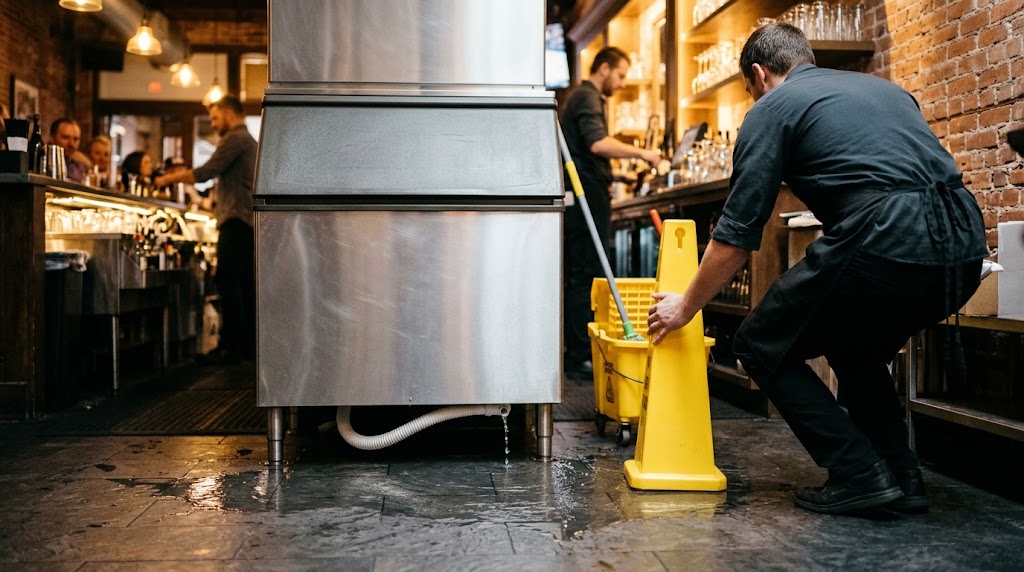
Water on the floor near an ice machine points to one of these:
- Drain lines: They clog or kink over time, especially in machines without regular ice machine maintenance.
- Pumps and gaskets: A failed pump seal or degraded gasket produces a slow, steady drip that can go unnoticed until the floor is wet.
- Internal reservoir: A cracked reservoir can leak from inside the machine.
A leak left alone is both a slip hazard and a potential health code issue, since pooled water near refrigeration equipment can trigger an inspection finding. Waiting a day or two to see if a leak resolves rarely helps. A technician visit at the first sign of a leak is the right call.
What Commercial Ice Machine Repair Costs
The question operators ask most before calling is how much commercial ice machine repair costs. The honest answer is that it depends on the failure type, and the components involved vary significantly in price and labor time.
A repair bill usually breaks down into three parts: the diagnostic call, parts, and labor. Where you land depends on what failed. A worn gasket or a clogged drain line is a straightforward fix, while a refrigerant recharge or a failed compressor takes far more parts and labor time.
The quickest way to get a real number is to call 303-295-3737 and describe the problem. Once a technician has diagnosed it, you’ll have a quote before any work begins, and the repair carries a 90-day labor warranty.
Repair or Replace?
Whether to repair or replace a commercial ice machine comes down to four factors:
- Age of the unit: How much service life the machine has left.
- Repair cost against replacement value: What the repair costs compared with what a new unit and its installation would cost.
- Past failures: One repair on an otherwise reliable machine is a clear decision. A machine that keeps needing service is telling you something different.
- Brand serviceability: A Hoshizaki or Manitowoc machine usually has strong parts availability, so it can be worth repairing even when the repair isn’t cheap. The alternative is buying a new unit and paying for installation on top. An older machine from a less common manufacturer is a different story. Parts get harder to find, and the labor cost per repair keeps climbing.
A technician can assess the unit in person and give you a view of its remaining life alongside the quote. That assessment is the most reliable input for this decision.
How a Service Call Works
Denver Beverage’s repair process is direct. A technician arrives at your location, diagnoses the failure, and gives you a quote before any work begins. All technicians are CFESA-trained refrigeration technicians employed directly by Denver Beverage, and no subcontractors are dispatched.
Service covers the Front Range and the I-70 corridor, with 24-hour service response and 7-day service coverage. Completed repairs carry a 90-day labor warranty. That means one call, one team, and a clear warranty on the work.
If you also run commercial warewashing equipment, Denver Beverage’s own ADS (American Dish Service) leased dish machines start at $129 a month, with free repairs included. See our commercial dishwasher repair page for details.
When the Ice Stops, We Start
A machine that’s down means slow drink service, a stressed bar team, and a health code risk if the problem drags on. Call 303-295-3737 or request a quote online, and you’ll hear back within 24 hours. Our CFESA-trained technicians take it from there.
Frequently Asked Questions
How much does it cost to repair a commercial ice machine?
The cost depends on the failure type, from simple parts up to a compressor. Denver Beverage provides a quote before any work begins. Call 303-295-3737 for a specific number based on your equipment and the problem you’re seeing.
What are the most common problems with commercial ice machines?
The most common failures are low or stopped ice production, a slow or stuck harvest cycle, poor cube quality from scale buildup, and water on the floor from a drain or gasket issue. Each has distinct causes that a CFESA-trained technician can diagnose on-site.
How often should a commercial ice machine be serviced?
It depends on water quality, usage volume, and equipment type. Hard water on the Front Range speeds up scale buildup, which can mean more frequent cleaning than a default schedule suggests, and a filtration program can extend the time between service visits. The Denver Beverage team can advise on a maintenance schedule that fits your equipment and location.
Is it worth repairing or replacing a commercial ice machine?
It depends on the unit’s age, the cost of the repair, and how often it has needed service. Hoshizaki and Manitowoc machines have strong parts availability, which keeps repair viable further into the equipment’s life. A machine that needs repeated repairs in a short window is a stronger candidate for replacement. A Denver Beverage technician can assess the unit and give you a clear picture alongside the repair quote.
How long does a commercial ice machine repair typically take?
It depends on the failure type and parts availability. A diagnostic visit and straightforward repair often finish in a single visit, while a more involved failure, such as a compressor replacement, may need a parts order first. The technician will tell you what to expect after the diagnostic, before any work begins.