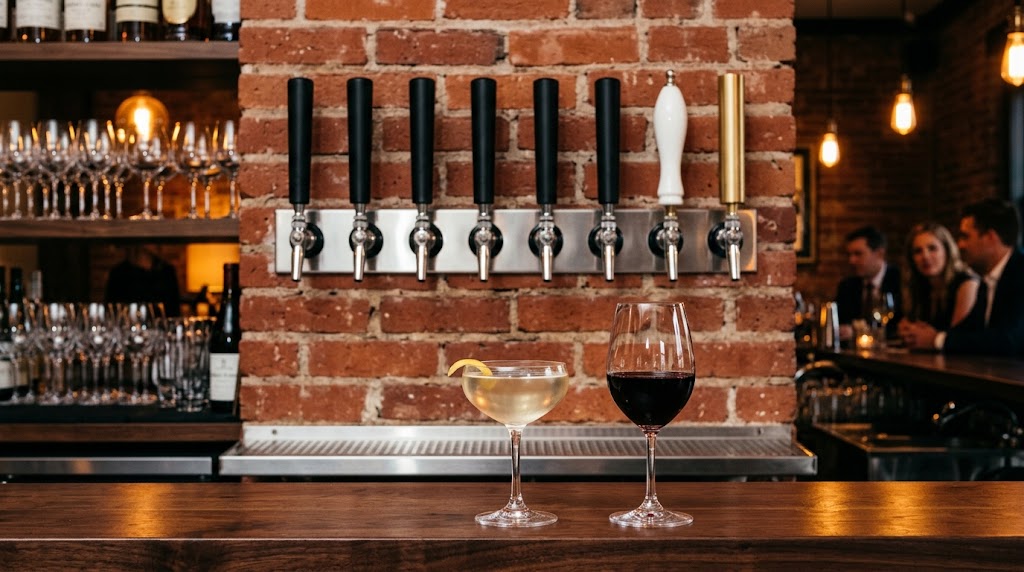
A cocktails on tap system works the way your draft beer lines do. A pre-batched cocktail goes into a keg, gas pressure pushes it through a chilled line, and it pours from a faucet without a bartender measuring each ingredient. Wine on tap follows the same principle, with wine kegged instead of bottled.
This piece covers cocktails and wine on tap as a single systems conversation, because they run on the same draft infrastructure. If you’re a restaurant or bar owner weighing a tap cocktail or wine program, this is the operational picture to have before you call an installer.
What “On Tap” Actually Means for Cocktails and Wine
The core mechanic is simple. Your bar team pre-batches a cocktail recipe in volume, the batch goes into a keg, and the dispensing system does the rest. Here’s how each piece works:
- Pre-batching: Spirits and mixers are combined in volume, with dilution adjusted because the drink won’t be shaken or stirred over ice. The recipe is set before the keg is filled.
- The keg: The batch goes into a standard stainless steel keg, the same kind of keg system used for draft beer.
- Gas pressure: Gas pushes the liquid from the keg through the line to the faucet. Carbonated cocktails use CO2. Still or nitrogenated pours use nitrogen or a 75/25 nitrogen/CO2 blend. Micro-Matic’s dispensing knowledge center is a good reference for how gas blends work.
- Chilled lines: The line runs through a glycol cooling system to keep the drink at serving temperature from keg to faucet.
- The faucet: The drink pours on demand, the same way a pint of beer does.
Wine on tap works the same way. The wine comes in a keg rather than a bottle, gas pressure moves it to the faucet (typically nitrogen, which doesn’t affect flavor), and the pour is consistent from one glass to the next. There’s far less oxidation after opening, and no by-the-glass waste from half-finished bottles.
What Your Venue Needs to Run a Tap Cocktail or Wine Program
This isn’t a plug-in solution. Your venue needs to be set up before anything goes in, and a professional installation covers the equipment side. The setup involves:
- Tap lines: Cocktail and wine lines can sometimes share existing draft beer infrastructure, depending on your system’s layout. A separate line may make sense in some cases, and a technician can assess what’s already in place.
- Gas supply: Beverage gas comes as part of the draft program, not as a separate standalone purchase, and the Denver Beverage team can tell you which gas suits the drink you plan to pour.
- Glycol cooling: Lines carrying cocktails or wine need to stay cold from the keg to the faucet, and a glycol cooling system handles this.
- Pre-batching prep: Someone on your team scales the recipes and adjusts dilution and portions consistently before the keg is filled. This is a real operational step that stays with your team.
- Keg storage: Kegs need cold storage, so you’ll need a keg room or back-of-house cold space for the number of drinks you plan to run.
Denver Beverage builds custom draft systems from a few taps to hundreds. Your team handles pre-batching and day-to-day operation.
Why Venues Add Cocktails and Wine on Tap
The business case comes down to speed, consistency, labor, and menu appeal. Each one follows from how a pre-batched keg works:
- Speed during rush: A kegged house cocktail pours in seconds, versus 45 to 60 seconds of hand-build time. At a high-volume bar, that matters when the bar is packed on a Friday night.
- Cocktail consistency: Pre-batching removes the variables, so you’re not relying on a new bartender to nail a ratio during a Saturday rush. Every pour comes from the same recipe.
- Labor efficiency: Fewer steps per drink means your bar team can keep pace without everyone building every cocktail by hand.
- Margin and menu appeal: House signature cocktails on tap can be priced as a premium, and wine on tap cuts waste from opened bottles. A tap lineup that includes cocktails or wine also gives guests something different to order at the bar.
Cocktails on Tap vs. Wine on Tap: What Changes Between Them
Both programs run on the same kind of draft system. The differences are in gas, recipe prep, and how long a keg holds up:
- Gas choice: Carbonated cocktails need CO2. Still cocktails and most wines use nitrogen, which doesn’t affect flavor and keeps wine fresh. The Denver Beverage team can tell you which gas fits the system you’re building.
- Recipe complexity: Batched cocktails take deliberate pre-batching, because you’re scaling a recipe and adjusting for dilution. Wine goes in the keg as it is, so there’s no batching step on your end.
- Hold time: Cocktails built on spirits alone hold up better than drinks made with fresh juice or dairy. Drinks with perishable mixers need to stay cold and move faster.
- Shared infrastructure: With the right planning, cocktail lines and wine lines can run on the same draft system, and your installer can map what’s possible with your existing setup.
Line Cleaning and Maintenance
Cleaning is the operational requirement that gets the least attention. Beer lines build up residue from yeast and bacteria over time, and cocktail lines can build up residue too, especially when the recipe includes sugar or juice.
If lines aren’t cleaned on schedule, drink quality and flavor suffer, and a dirty line can become a food safety concern. The right cleaning schedule depends on what runs through the line and how much volume you pour, so it isn’t one fixed interval for every venue.
Denver Beverage provides line maintenance and sanitation for draft systems. If your cocktail recipe includes juice or dairy, your batches need to stay cold and move fast, and that’s worth talking through with your installer before you turn the system on.
How Denver Beverage Installs and Services Tap Systems on the Front Range
Denver Beverage installs and services draft beer, cocktail, and wine tap systems on the Front Range and the I-70 corridor. Its own technicians, 13 on staff, handle the installation rather than subcontractors, and the same team services the system once it’s live. Here’s what that looks like:
- Equipment: Dispensing equipment is provided at no charge for qualified accounts.
- Service coverage: 7-day service coverage with a 24-hour service response.
- Repairs: CFESA-trained technicians and a 90-day labor warranty on repairs.
- Quotes: Quote requests get a response within 24 hours.
- Installation: Installs take planning and are rarely immediate, so the earlier you call, the earlier the conversation starts.
Cocktail and wine dispensing systems are part of the draft beer system installation and service program, not a side offering. To see what the process looks like from first call to first pour, read the step-by-step draft beer, cocktail and wine tap installation process.
The company has been Colorado-owned since 1986 and supplies restaurants and bars with beverage, draft, and dish programs. The team can tell you whether your current setup supports a cocktail or wine program and what the install would involve.
Ready to Put Cocktails or Wine on Tap?
If you’ve read this far, you probably have a menu idea in mind. The next step is finding out what it would take at your venue. Call Denver Beverage at 303-295-3737 or request a quote to talk through what a cocktails or wine on tap program would look like for you.
Frequently Asked Questions
How does a cocktails on tap system work?
A cocktails on tap system works like a draft beer system. Your team pre-batches a cocktail recipe in volume and loads it into a keg, and gas pressure pushes it through a chilled line to the faucet. Carbonated cocktails use CO2, and the Denver Beverage team can tell you which gas fits other drinks. The pour is consistent because the recipe is set before the keg is filled.
What are the benefits of serving draft cocktails at a bar?
The main benefits are speed, consistency, and labor efficiency. A drink that pours from a tap takes less hands-on time than a hand-built one, and pre-batching means every pour comes from the same recipe regardless of who’s behind the bar. For a busy bar, those two things make service easier on the team.
Do I need separate tap lines for cocktails and wine, or can I use my existing draft beer setup?
Sometimes you can use your existing setup. In some cases, cocktail and wine lines can run on existing draft infrastructure with the right configuration. A Denver Beverage technician can assess your setup during installation planning and tell you what’s practical for your venue. Call 303-295-3737 to start that conversation.
How do you batch cocktails for a keg? Do I need special equipment?
Your team handles the batching, and Denver Beverage handles the draft system. Pre-batching means combining your spirits and mixers in volume and adjusting the dilution, since the drink won’t be shaken or stirred over ice. Your team does recipe prep before the keg is filled, and Denver Beverage covers the dispensing equipment, gas, and line setup.
How often do cocktail tap lines need to be cleaned?
Cocktail lines need regular cleaning, and how often depends on your recipe and volume. Drinks with sugar, juice, or dairy can leave more residue in a line, and cleaning on schedule protects drink quality and flavor. Denver Beverage provides line maintenance and sanitation for draft systems, so the team can tell you what fits your setup at 303-295-3737.