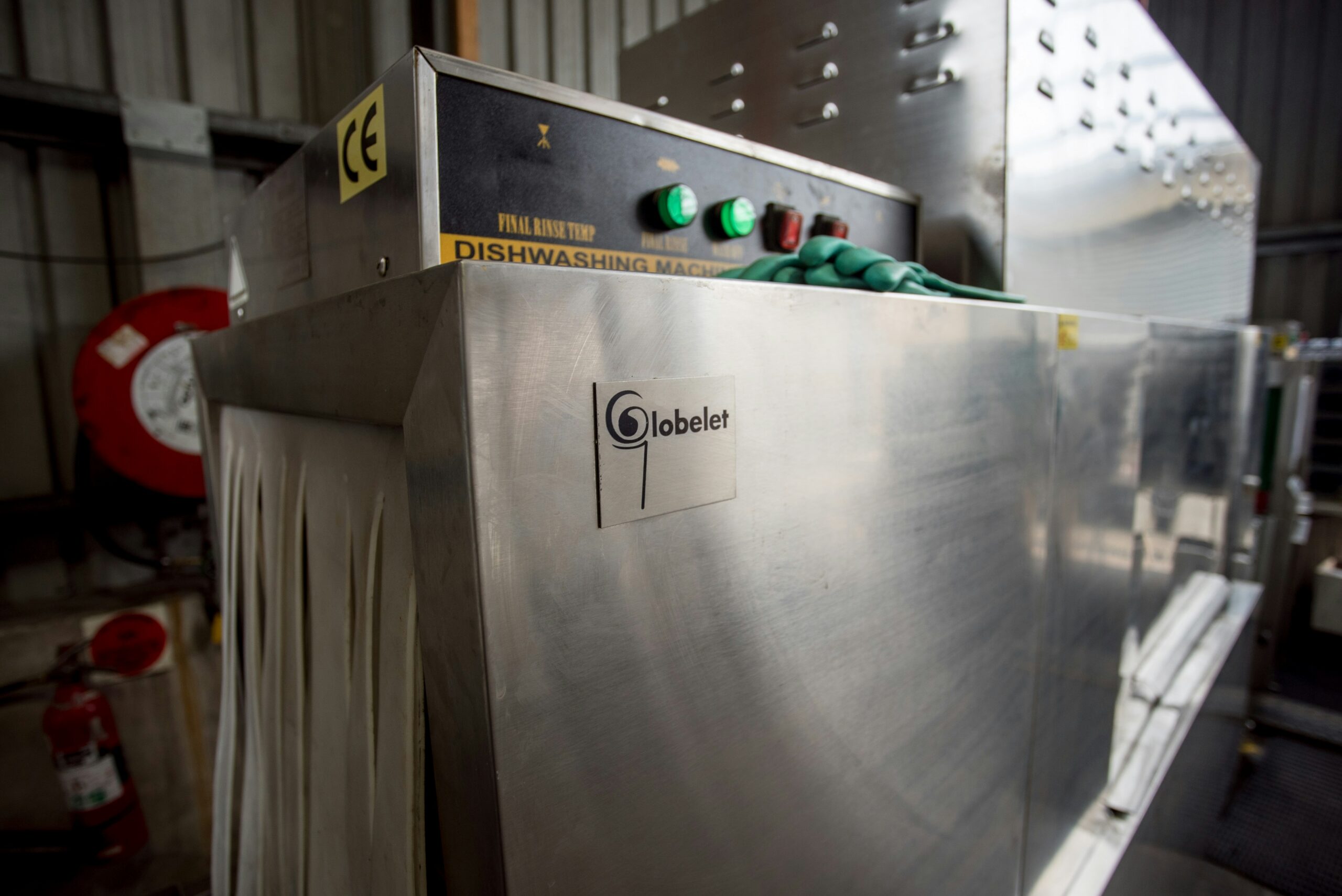
Most operators piece together their warewashing setup the same way: a dish machine from one vendor, chemicals from another, and a repair company on speed dial for when something breaks. That works until it doesn’t. A chem dispenser runs off-ratio for three weeks without anyone noticing. A booster heater fails on a Friday night with 200 covers on the books, and nobody’s sure whose problem it is to fix.
A commercial dishwasher rental program is the better approach for restaurants and bars and other foodservice operations: one service agreement bundles equipment, chemicals, preventive maintenance, and repair, so coordination gaps don’t become your emergency.
What’s Actually Included in a Bundled Dish Machine Program
A bundled program isn’t a menu of add-ons you assemble at checkout. It’s one agreement covering four integrated components.
- Equipment rental: You receive a commercial dish machine placed and installed at your facility. No capital purchase, no depreciation to manage, and no equipment sitting on your balance sheet.
- Chemical systems: Warewashing chemicals are auto-dispensed through dispensers calibrated to your specific machine and water conditions. The chemical program isn’t a separate contract with a separate vendor; it’s part of the same agreement.
- Preventive maintenance: Scheduled PM visits keep the machine running within spec before problems surface. This is maintenance on a calendar, not a response to a breakdown.
- Repair coverage: When something fails, an on-site repair technician comes to you. Parts and labor are covered under the program rather than billed as a surprise line item.
The structural contrast with a separated-vendor model matters operationally, not just competitively. When Ecolab or Auto-Chlor handles chemicals only and a separate repair company services the equipment, neither party is accountable to the other.
Here’s what that looks like in practice: if a dispenser is miscalibrated, the chemical vendor says the concentration is fine by their records, and the repair company says the pump is working. Nobody owns the gap between them.
Under a bundled program, one party is responsible for chemical calibration, machine performance, and repair response. That accountability is the specific thing a service agreement structure is built to close.
If you’d like to see how Denver Beverage structures dish and laundry chemical programs as part of a full program, that page covers the program in detail.
Equipment Options: Matching the Machine to Your Operation
Every dish machine program starts with the right machine for your volume, space, and sanitization requirements. Three machine categories cover the full range of foodservice operations, and all equipment placed under the program is NSF-certified commercial warewashing equipment.
- Undercounter dishwasher: Designed for lower-volume operations with limited space. Bars, small cafes, and hotel bar programs typically fit this category. Runs one rack at a time and can be configured as either a high-temperature dishwasher (heat sanitization) or a low-temperature dishwasher (chemical sanitization).
- Door-type (rack) dishwasher: The standard mid-volume machine for restaurants, hotel restaurants, and assisted living dining rooms. Handles higher rack throughput than an undercounter and suits operations running 100 to 300 covers per service.
- Conveyor dishwasher: Built for high-volume foodservice. Hotel banquet operations, hospital dietary departments, and high-cover-count restaurants running continuous ware flow need this category. Moves racks through wash, rinse, and sanitization zones continuously rather than one rack at a time.
The choice between high-temperature and chemical sanitization affects more than equipment specs. It determines how the chemical system needs to be configured, which is covered in the next section.
Healthcare facilities and energy-conscious hotel operations have increasingly moved toward low-temperature systems, and that shift has real implications for how the chemical program is structured. For more on how those programs work in healthcare settings specifically, see healthcare beverage programs.
Chemical Systems: Why They’re Integrated, Not an Add-On
Chemical dispensers aren’t interchangeable hardware. A dispenser calibrated for a high-temperature unit uses chemistry formulated to work alongside heat as the primary sanitizing force. You can’t move that same dispenser and chemical program to a low-temperature machine and expect compliant results.
Many facilities are moving to low-temperature wash systems to save on energy costs. But washing at a lower temperature means the chemicals have to do more of the work that heat used to do. Dispenser calibration for a low-temperature program has to reflect three things specific to the operation:
- Wash temperature: the actual operating temperature of the machine, not a manufacturer default
- Water hardness: which affects how much detergent and sanitizer the wash cycle needs
- Soil load: how heavily loaded the racks typically run
The detergents and sanitizers in a low-temperature program are formulated differently to compensate for this. Getting any of these variables wrong doesn’t just affect cleaning quality. It affects chemical sanitization efficacy, which shows up as a compliance failure at inspection.
Under Denver Beverage’s dish and laundry chemical programs, the chemical supplier and the equipment supplier are the same party, so three things stay coordinated instead of siloed:
- Dispenser calibration
- Chemical concentration
- Machine performance
When water hardness changes seasonally or a machine is swapped for a higher-volume model, the chemical program adjusts with it because the same team is responsible for all three.
Preventive Maintenance: What the Schedule Actually Looks Like
Most operators think of maintenance as something that happens after a problem appears. Scheduled PM under a dish machine program works differently: a technician visits on a defined calendar to inspect and verify machine performance before it drifts out of spec.
A standard PM visit covers the following:
- Wash and rinse temperature verification: The FDA Food Code sets minimum sanitizing rinse temperatures of 165°F for stationary rack, single-temperature machines and 180°F for other machine types. A failing thermostat or booster heater isn’t just a performance issue.
It’s a health code compliance failure waiting for the next inspection. The 2022 FDA Food Code warewashing temperature requirements set these thresholds, and health departments cite them directly during warewashing inspections. - Chemical dispenser calibration and pump function: Confirming that detergent and sanitizer are dosing at the correct concentration for the machine type and water conditions.
- Wash arm and filter inspection: Blocked spray arms and clogged filters reduce wash efficacy. These are caught on a PM visit, not after a customer complaint.
- Water temperature and pressure verification: Spray pattern and pressure affect both cleaning and sanitizing performance. Low pressure produces uneven coverage; the PM check confirms the machine is operating within spec.
Wash temperature is a regulatory figure under the FDA Food Code, not just a “how clean do the dishes look” measure. A dish machine running five degrees low on wash temperature will look completely normal in daily operation and still fail a health inspection. Scheduled PM catches that gap before an inspector does. A break-fix repair call after the inspection doesn’t.
When Something Breaks: What Repair Coverage Looks Like Under the Program
Equipment fails. The question is what happens next and how much it costs.
A general appliance repair company:
- Arrives without context, has never seen the machine
- Doesn’t know the installation history
- Bills by the hour starting from diagnosis
- Parts and labor are out-of-pocket
A bundled dish machine rental program:
- The technician who responds already knows the equipment
- They installed it and have been maintaining it on PM visits
- Diagnosis is faster because there’s a service history
- Parts and labor are covered under the program agreement rather than billed separately
A single booster heater repair on an owned unit can run into the hundreds of dollars before labor is added. That’s a covered event under a rental program.
Denver Beverage runs 13 field technicians with 7-day service coverage on the Front Range, including Denver Metro, Boulder County, Fort Collins, Colorado Springs, Pueblo, and the I-70 corridor. For commercial kitchen and beverage equipment repair beyond the dish machine program specifically, that page covers the full scope of what Denver Beverage’s technicians service in commercial kitchens.
Commercial Dishwasher Rental vs. Buying: The Real Total Cost Comparison
Commercial dishwashers have a serviceable lifespan of roughly 10 to 15 years under normal foodservice use. A new door-type unit carries a significant upfront capital cost, followed by repair variability as the machine ages.
Equipment consultants and commercial kitchen advisors generally apply the same threshold used across commercial kitchen equipment: when a single repair exceeds 50% of the unit’s replacement value, replacement is typically the better economic call. On a machine that’s 8 to 10 years old, you can hit that threshold faster than expected.
| Buying | Rental Program | |
| Upfront cost | Significant capital purchase | No capital outlay, predictable monthly fee |
| Repair cost | Out-of-pocket grows more variable as the machine ages | Covered under the program agreement |
| Best fit | Well-capitalized operations with in-house technicians and a strong equipment purchasing history | Limited capital budgets, lean facilities staffing, or high-volume operations where downtime has real revenue consequences |
| What it removes | Nothing, capital risk, and repair variability stay with the owner | Uncertainty: a covered repair event doesn’t create an unplanned expense |
The honest answer is that the right choice depends on your volume, your capital position, your facilities’ capacity, and how much repair variability your operation can absorb. What restaurant equipment leasing and commercial kitchen equipment rental programs remove from that calculation is uncertainty. That’s the core trade-off.
If you’d like to talk through which structure makes sense for your operation, the Denver Beverage team can run a site assessment to determine program fit before any agreement is signed. Request a site assessment and get a real answer based on your machine type, water hardness, and volume, not a generic price list.
Frequently Asked Questions
How much does it cost to rent a commercial dishwasher?
There’s no honest flat rate for this, and any vendor who gives you one without seeing your operation is guessing. The real number depends on machine type, water hardness, volume, and the chemical program your unit needs. A monthly program fee for a commercial dishwasher rental covers equipment, chemicals, scheduled PM, and repairs, but it’s built around your specific setup rather than a generic price list. The right starting point is a site visit.
What is included in a dish machine rental service agreement?
A service agreement covers four components, built into the program from the start rather than assembled as add-ons:
- Equipment placement and installation
- Auto-dispensed warewashing chemicals calibrated to the machine
- Scheduled preventive maintenance visits
- On-site repair coverage, with parts and labor included
Is it better to rent or buy a commercial dishwasher for a restaurant?
It depends on your operation. High-volume operations with limited capital budgets or thin facilities staffing tend to benefit most from rental: the monthly cost is predictable, repair variability is eliminated, and equipment decisions become someone else’s responsibility. Well-capitalized operations with in-house technicians and a strong purchasing history may find ownership more cost-effective over a full equipment lifecycle. The right call comes down to your capital position, your repair capacity, and how much downtime risk your operation can absorb.
How quickly can a commercial dishwasher repair technician respond?
Denver Beverage runs 13 field technicians with 7-day service coverage across the Front Range, including Denver Metro, Boulder County, Fort Collins, Colorado Springs, Pueblo, and the I-70 corridor. Requests are dispatched through that network, so actual response time depends on technician availability at the time of the request rather than a fixed window.
What types of commercial dishwashers are available for rental?
Three machine types cover the full range of foodservice operations. An undercounter dishwasher fits bars, small cafes, and low-volume programs. A door-type (rack) dishwasher suits mid-volume restaurants and assisted living dining rooms. A conveyor dishwasher handles high-volume operations, including hotel banquet facilities and hospital dietary departments.
Each type can be configured as high-temperature or low-temperature depending on your sanitization approach and energy requirements.
What happens if my dish machine fails a health department inspection?
Wash temperature, rinse pressure, and chemical sanitizer concentration are the three most common warewashing inspection failures, and they’re exactly what a scheduled PM visit checks. If a machine does fail inspection, a technician can be dispatched to restore it to compliant spec, verifying wash and rinse temperatures against FDA Food Code minimums and confirming chemical dispenser calibration. Under a PM program, the goal is to catch these variances before an inspector does, not after.