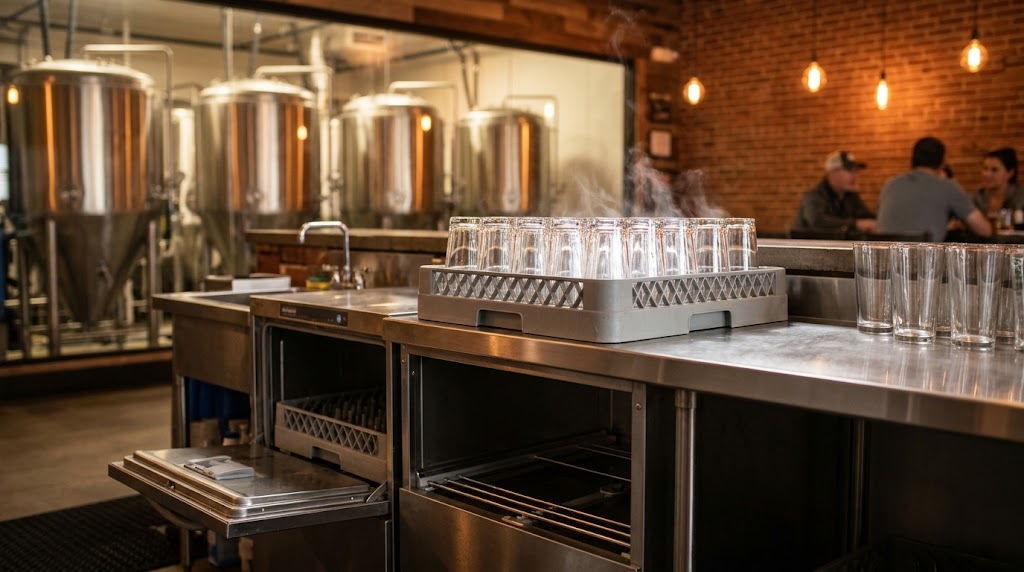
If you run a bar, taproom, or small brewery and are deciding on a dedicated glass washer, this guide covers the choices that matter. It explains how a glass washer differs from a standard undercounter dishwasher, how high-temp and low-temp machines differ, and what to do when the machine stops working.
Glass Washer vs. Standard Undercounter Dishwasher: Why It Matters for Bars
Denver Beverage offers undercounter, glass washer, conveyor, and door-type dish machines, and bar owners often ask whether one machine can do the other’s job. An undercounter dishwasher can wash glasses, but a dedicated glass washer is the machine built around glassware.
Bar service is a repeat-cycle job. Pint glasses and other glassware go back out to guests all night, so the machine you choose affects how quickly you can turn glasses around and how well your glassware holds up. Here’s how a dedicated glass washer is built for that:
- Shorter cycles: A dedicated glass washer typically runs shorter cycles, which gets glasses back to the bar faster.
- Gentler water pressure: It uses lower pressure to protect stemware from cracking.
- Built for volume: A bar washing 200 pint glasses a night needs a different tool than a kitchen washing plates.
Picking the wrong machine can mean slower service, more breakage, or a machine that wears out sooner than it should.
What to Know If You’re Running a Taproom or Small Brewery
Taprooms and small breweries wash a lot of one type of glass, such as pint, nonic, or tulip glasses, in constant rotation during busy pours. Hygiene here is about more than looks. Beer residue left on a glass, including lipids from skin contact, can affect how the next pour looks and holds its head.
That’s why breweries and taprooms have contacted Denver Beverage specifically about dish machines. Here’s how the program is set up:
- The machines: ADS (American Dish Service) machines are Energy Star-rated and are Denver Beverage’s own leased line, from $129 a month with free repairs.
- The chemicals: They pair with Purworks, Denver Beverage’s own line of professional cleaning chemicals made in Denver, which comes in concentrated 1.5-gallon containers.
You can see how the two fit together in Denver Beverage’s dish and laundry programs. And if you also run draft at your taproom, its draft beer services cover installation and service for the tap side of the operation.
High-Temp vs. Low-Temp Glass Washers: Which Type Fits a Bar?
Denver Beverage offers both high-temp and low-temp dish machines, plus booster heaters. The two types sanitize differently, and the selection depends on your space, your volume, and how your operation is set up:
- High-temp machines: These sanitize with heat, with a final rinse at 180°F, so they don’t need a sanitizing chemical in the rinse cycle. They do need a booster heater and use more energy. They suit higher-volume or back-of-house setups.
- Low-temp machines: These sanitize with a chemical sanitizer, typically chlorine-based, instead of heat. They draw less energy and take up less space, which is why low-temp undercounter units are common where space behind the bar is tight. The trade-off is that the chemical cost is ongoing and has to be managed correctly.
Choosing between them is a program decision rather than a spec-sheet comparison. Denver Beverage offers a free dish machine assessment, covering high-temp vs. low-temp, so you can choose before you commit to equipment.
What Affects Glass Washer Performance Day to Day
A glass washer can be the right machine and still produce cloudy or spotted glasses if the program around it isn’t right. Three things matter most:
- Chemical program: The detergent, rinse aid, and sanitizer you run matter as much as the machine itself. Purworks is Denver Beverage’s own chemical line, made in Denver, and dish machine chemical programs are offered to go with the machines.
- Water hardness: Hard water causes clouding, filming, and etching on bar glassware regardless of chemical dosing, and it’s an under-addressed problem for Front Range operators. The free dish machine assessment is where this gets looked at.
- Preventive maintenance: A glass washer that isn’t descaled, cleaned, and maintained will perform inconsistently over time. This is where a local service team matters, not just at installation but throughout the life of the equipment.
Glass Washer Repair and Service on the Front Range
When a glass washer goes down mid-service, a bar feels it fast. Denver Beverage’s 13 service technicians are CFESA-trained and service commercial dish machines across the Front Range and the I-70 corridor, with 7-day service coverage and a 24-hour service response. Repairs carry a 90-day labor warranty, and all work is done by its own technicians, not subcontractors.
Some signs mean it’s time to call a technician instead of working through the problem behind the bar during service:
- The machine isn’t completing a full wash cycle.
- Standing water isn’t draining after a cycle finishes.
- Glasses keep coming out cloudy or filmed.
- There’s unusual noise during operation.
Denver Beverage covers commercial dish machines as part of its own program, and you can read more on its commercial dishwasher repair page. It also supplies restaurants and bars with beverage, draft, and dish programs, so a new location or a replacement program can come together with one provider.
Ready to Choose a Glass Washer?
Picking a machine is easier once someone has looked at your glassware volume and your space. Call Denver Beverage at 303-295-3737 to book a free dish machine assessment, or to talk through what an ADS glass washer program would look like for your bar or taproom. You can also request a quote, and quotes get a response within 24 hours.
Frequently Asked Questions
Does installation cost anything?
Denver Beverage gives you pricing in a quote, and quote requests get a response within 24 hours. ADS dish machines are leased from $129 a month with free repairs, and Denver Beverage’s own technicians handle installation. Installs take planning rather than happening right away, so call 303-295-3737 to start.
How quickly can someone come out if the machine breaks down?
Denver Beverage provides a 24-hour service response and 7-day service coverage on the Front Range and the I-70 corridor. Repairs carry a 90-day labor warranty.
Do I have to buy chemicals through Denver Beverage too?
Chemicals come as part of a Denver Beverage dish program. Purworks, its own chemical line made in Denver, goes with the dish machines it installs. The team can explain what a program includes when you request a quote or call 303-295-3737.
Can you service a glass washer you didn’t originally install?
That depends on the machine. Denver Beverage’s technicians service commercial dish machines as part of its own program, and for a machine it didn’t install, the team can tell you what applies. Call 303-295-3737 and describe what you have.
What is a bar glass washer?
A bar glass washer is a glass washer set up for bar and taproom use, where glassware goes back out to guests all night. Denver Beverage offers glass washers alongside undercounter, conveyor, and door-type machines, in both high-temp and low-temp models. The free dish machine assessment is the clearest way to match a unit to your volume and setup.