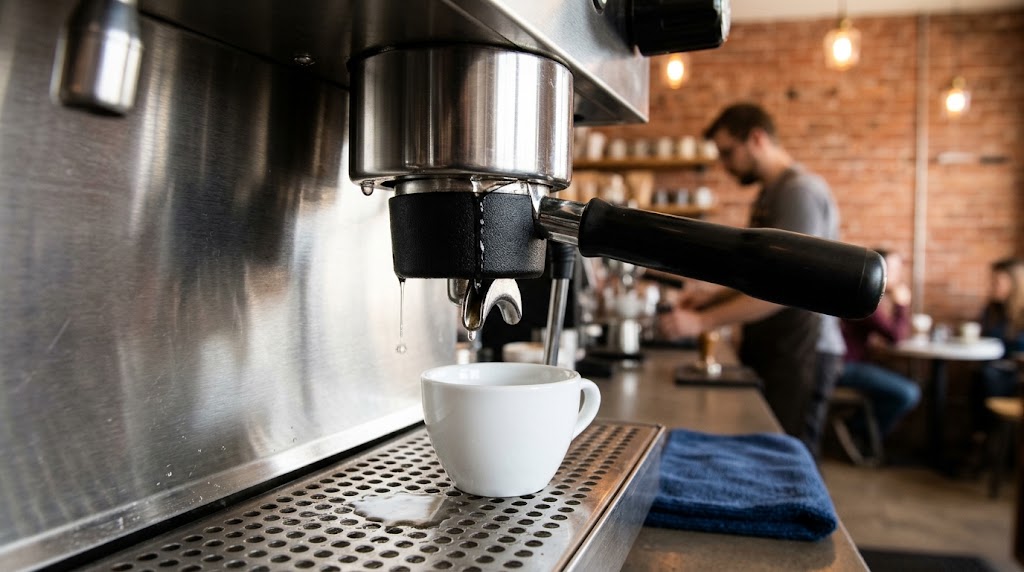
When a commercial espresso machine starts pulling thin shots, leaking around the group head, or won’t power up, the cause is usually one of a handful of familiar faults. This guide helps you match what you’re seeing, hearing, or tasting to the likely cause, so you can describe the problem clearly when you call. It also explains what professional repair looks like on the Front Range and the I-70 corridor.
Common Commercial Espresso Machine Problems
Most espresso machine faults show up as a change you can see, hear, or taste. Here are the five most common, with the symptoms to watch for.
Pressure Loss or Inconsistent Extraction
Thin shots, fast pulls, or a low pressure gauge reading often point to a worn pump, a group head solenoid problem, or a blocked portafilter basket. The symptoms are easy to spot, but a technician is the one who can identify which component is responsible.
Group Head Faults and Leaks
Water dripping around the group head during or between pulls, or grounds showing up in the cup, can come from a worn gasket, a blocked shower screen, or a failing solenoid. Noting when the drip happens gives the technician a head start on the diagnosis.
Steam Wand Blockages and Milk Texture Problems
If steam output has dropped, the wand spits instead of steaming, or milk won’t texture properly, mineral scale and milk residue inside the wand tip are common culprits. This is usually a cleaning and service issue rather than a mechanical failure.
Scale Build-Up in the Boiler
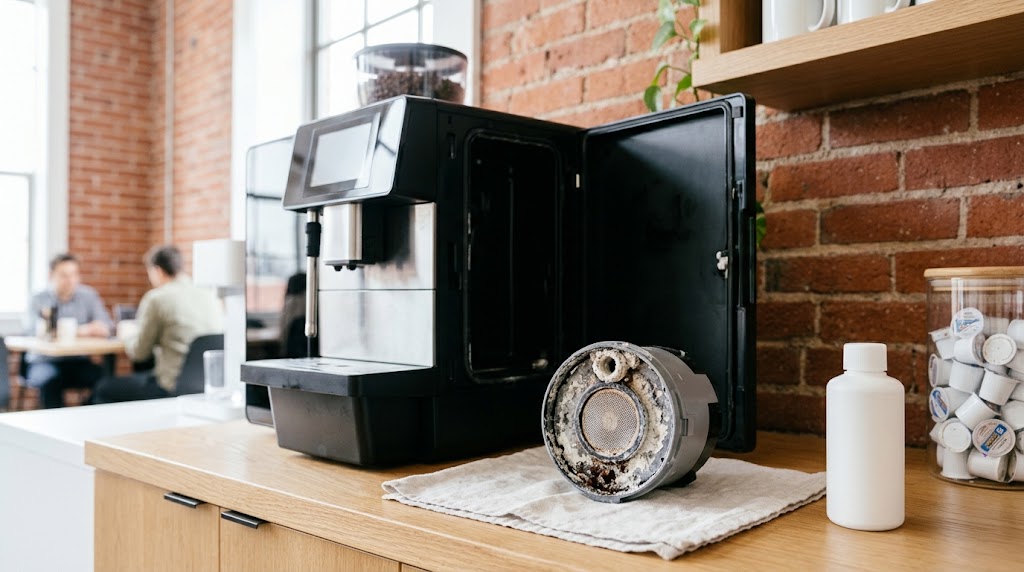
Hard water, which is a real factor on the Front Range, leaves mineral scale inside boilers and internal lines. A machine with scale build-up can run hotter or slower than usual and take longer to recover between shots.
Electrical and Control Board Faults
Error messages, failure to heat, or erratic behavior usually point to an electrical or control board issue. Rather than resetting an unfamiliar error yourself, note what the display says and call it in.
Grinder Repair: Burrs, Motors, and Calibration
A grinder problem can look like an espresso problem. When shots taste sour or bitter and the recipe hasn’t changed, many operators keep adjusting the grind setting, when the real cause is the condition of the burrs. Mention it to the technician and ask them to look.
Burr Wear and Alignment Drift
As burrs wear, the grind can become inconsistent even at a steady setting. The result is uneven extraction and espresso that tastes off regardless of dose or timing.
Grinder Motor Faults
A noisy grinder, one that hesitates, or one that stops mid-grind points to a motor issue. That’s a repair question, not something a grind adjustment can fix.
Calibration After Burr Replacement or a Bean Change
After new burrs are fitted or you switch to a very different bean, dose weight and extraction time can shift. A technician can recalibrate the grinder to your target output, so you’re not left dialing it in by trial and error.
If your grinder is part of the problem, you don’t need a separate visit for it. Denver Beverage’s technicians service coffee equipment, including grinders, so a grinder fault can go on the same service call as a machine problem.
What Professional Espresso Machine Repair Looks Like
Denver Beverage’s own CFESA-trained technicians handle the repair work, not subcontractors. The service covers coffee brewers and espresso machines, and Denver Beverage also installs and services espresso and specialty coffee equipment. Coverage runs across the Front Range and the I-70 corridor, with 7-day service coverage and a 24-hour service response.
Every repair carries a 90-day labor warranty. For more on how the service works, see Denver Beverage’s commercial kitchen and beverage equipment repair page.
If you run more than one machine, such as in a café, an office, or a larger facility, working with the same local team pays off in practice. A team that already knows your equipment doesn’t have to start from scratch on the next call, so repeat visits tend to move faster.
Repair or Replace? How to Think About It
A second or third breakdown on an older machine isn’t automatically a reason to replace it. Three things matter most when you’re deciding:
- Repeat faults: Does the same component keep failing?
- Parts availability: Are parts still easy to get, especially for discontinued models?
- Boiler condition: How healthy is the boiler?
The easiest way to settle it is to have someone look at the machine. A Denver Beverage technician can assess its condition and give you a straight answer, and that assessment is part of the service conversation. If you’re leaning toward a replacement, the coffee brewing equipment page shows the machine types Denver Beverage offers, and the office coffee service page explains how a coffee program works for offices.
Get Your Espresso Machine Back in Service
When your machine is down, every hour costs you drinks and wears on your team. If yours is leaking, losing pressure, or just not behaving, call Denver Beverage at 303-295-3737 to request a service visit, or ask about our coffee equipment programs. You can also request a quote online, and you’ll hear back within 24 hours.
Frequently Asked Questions
What causes a commercial espresso machine to lose pressure?
A worn pump, a group head solenoid problem, or a blocked portafilter basket is the usual cause. Wear on any of these shows up as thin shots or a low gauge reading, and a technician can isolate which component is responsible.
How often should a commercial espresso machine be serviced?
Most commercial machines benefit from preventive maintenance at least once a year, and high-volume environments need it more often. The right interval depends on the machine, how many drinks it makes each day, and the water it runs on. Denver Beverage’s own technicians handle preventive maintenance, so call 303-295-3737 to ask about your equipment.
My grinder is making a grinding or rattling noise. Is that a repair job or a replacement?
It’s usually worth a repair assessment first. Unusual noise often points to a motor issue or burr misalignment. Whether replacement makes more sense depends on the machine’s age, parts availability, and the condition of the burr set.
Is it worth repairing an espresso machine that’s broken down more than once, or should I replace it?
It depends on what keeps failing. Repeated breakdowns on the same component deserve serious attention, but they don’t automatically mean replace, and a different fault each time is a different situation. The answer also turns on whether parts are still available and the condition of the boiler. Call 303-295-3737 and ask a technician to assess it before you decide.