
Beverage equipment sits in a compliance grey zone for many healthcare facilities. It’s patient-facing; it touches food safety, and it’s inspected by surveyors who use dietary standards and infection control frameworks simultaneously. Many facilities discover gaps in their documentation during an inspection, not before. This is the pre-inspection walkthrough.
Which Regulatory Bodies Have Authority Over Healthcare Beverage Equipment
Several distinct regulatory frameworks apply to healthcare beverage programs in Colorado-licensed facilities. Understanding which authority governs which equipment in your facility is more useful than memorizing citation numbers.
CMS Conditions of Participation §482.28 (Food and Dietetic Services)
Conditions of Participation §482.28 applies to hospitals participating in Medicare or Medicaid.. Dietary equipment, including beverage dispensers, ice machines, coffee systems, and juice units, falls under the food safety and sanitation requirements it enforces. Surveyors examine both equipment condition and maintenance documentation. If your facility bills Medicare or Medicaid, this standard applies to your dietary department in full.
Joint Commission Environment of Care Standard EC.02.05.01
Joint Commission Environment of Care Standard EC.02.05.01 covers utility systems generally, including water supply to ice machines and beverage dispensers. It’s relevant for Joint Commission-accredited hospitals and long-term care facilities.
Water management plans, specifically the programs that control Legionella and other waterborne pathogens, fall under a related, more specific standard, EC.02.05.02, effective since January 2022. If your ice machine connects to a utility water system covered by a water management plan, that plan’s documentation must include it under EC.02.05.02.
NSF/ANSI Standard 18
NSF/ANSI Standard 18 is the equipment-level certification standard governing manual food and beverage equipment. NSF International certification on a beverage dispenser, coffee machine, or ice maker signals to inspectors that the equipment meets sanitation-by-design criteria. Verify this certification at the point of purchase or lease, not after installation.
FDA 21 CFR Part 110
FDA 21 CFR Part 110, the current good manufacturing practice rule, applies to the operational sanitation of beverage equipment in food service settings, including healthcare. “Sanitation validation” in practice means documented cleaning procedures and frequency, not equipment that simply looks clean.
Colorado CDPHE (Department of Public Health and Environment) Dietary Inspection Standards
Dietary inspections in Colorado-licensed facilities, including nursing homes, assisted living, and rehabilitation facilities, are conducted against Colorado Board of Health dietary service rules. These layer on top of federal CMS requirements. Denver Beverage holds preferred vendor status with the State of Colorado for healthcare facilities, which means our service documentation is structured to align with both state and federal inspection frameworks.
What Dietary Inspectors Actually Look For: Equipment by Equipment
Inspectors typically move through the dietary department categorically. The following is a walkthrough by equipment type, covering what the specific inspection concern is and what documentation or condition a surveyor expects to find.
Ice Machines
Ice machines carry the highest compliance stakes of any beverage equipment in a healthcare setting. CDC HICPAC guidance identifies ice machines as a documented vector for Pseudomonas aeruginosa, Listeria, and Legionella pneumophila in immunocompromised patient populations. ASHRAE Standard 188 extends water management plan requirements to ice-making equipment in healthcare buildings.
Given these infection control stakes, an ice machine inspection checks for:
- Cleaning and sanitizing logs with documented frequency: in healthcare settings, ice machines typically require monthly or more frequent cleaning per manufacturer specifications and infection control protocols
- Filter change records: with dates and filter model numbers
- Water quality testing documentation
- Corrective action records: if a positive environmental culture has ever been identified
- Evidence that the ice machine is included in the facility’s water management plan: if one is active, under Joint Commission EC.02.05.02
Our filtered water and ice programs for healthcare accounts include documented filter service records and cleaning logs formatted to match facility inspection requirements.
Coffee Brewing Equipment
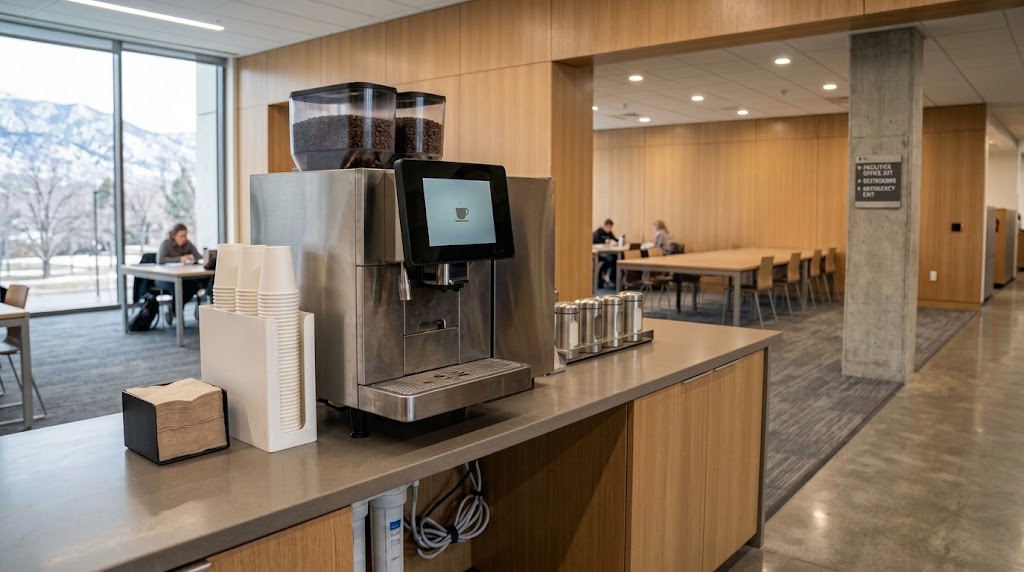
Coffee brewing equipment carries a lower infection-control risk profile than ice machines, but it’s still inspected for sanitation protocol compliance in clinical environments. Inspectors look for evidence of a documented cleaning schedule and use of NSF-certified or manufacturer-approved cleaning agents.
In healthcare settings specifically, shared-use equipment in patient-adjacent areas may be subject to additional facility infection control protocols. Commercial brewers with internal water filtration, including many models available through coffee brewing equipment programs, require filter change documentation. An expired or undocumented filter is a straightforward citation target.
Specific to coffee equipment, inspectors confirm:
- A documented cleaning schedule: with staff sign-off
- NSF-certified or manufacturer-approved cleaning agents: confirmed in use
- Filter change records: with dates for any brewer with integrated filtration
- Compliance with facility infection control protocols: for shared-use equipment
Fountain and Beverage Dispensers
Fountain and beverage dispensers in cafeterias, patient family lounges, and staff break areas must have documented sanitation protocols. Beverage dispenser cleaning procedures, including daily wipe-down, weekly nozzle and drip tray cleaning, and periodic deep cleaning, must be logged, not just scheduled.
CO2 and beverage gas supply systems connected to fountain units are a secondary inspection concern. Inspectors may flag gas equipment in poor condition or without proper labeling, though this is typically noted under facilities rather than dietary.
For fountain and beverage dispensers, the review covers:
- Documented daily and weekly sanitation logs: for nozzles, drip trays, and splash guards
- Evidence that beverage dispenser cleaning procedures follow a consistent posted schedule
- Beverage gas equipment in good condition with proper labeling
Water Coolers and Point-of-Use Water Dispensers
Point-of-use water dispensers are frequently overlooked in pre-inspection preparation. In healthcare, dispensers serving patient areas or dietary prep areas require documented filter maintenance. Standing water in drip trays is a common citation in skilled nursing and assisted living inspections.
If your facility has an active ASHRAE 188 water management plan, inspectors may ask whether point-of-use dispensers in patient-adjacent areas are included in that plan’s water quality testing scope.
For water coolers and point-of-use dispensers, documentation review confirms:
- Filter service dates: current and retrievable
- No standing water in drip trays
- Inclusion in water management plan documentation: where applicable
The Documentation That Makes or Breaks an Inspection
You can have fully compliant equipment and still fail an inspection if the records aren’t there. The following documentation checklist covers what surveyors expect to find and what gaps they’re trained to notice.
Preventive Maintenance Logs
Quarterly PM (preventive maintenance) is the standard expectation for commercial beverage equipment. Ice machines and filtration systems often require more frequent documented service. Each PM log entry must include the date of service, the technician’s name and credentials or employer, the work performed, and any corrective actions taken. An undated or unsigned PM record carries the same inspection risk as no record at all.
Sanitation Logs
Sanitation logs are separate from PM records and must be completed at the point of service, typically by dietary staff. Inspectors distinguish between equipment that is supposed to be sanitized per a posted schedule and equipment where the log actually confirms it was. Gaps in a sanitation log are more damaging than a late entry because unexplained gaps suggest the task wasn’t done at all.
Filter Change Records
Every filter replacement must be documented with the date of replacement, filter model, and the name of the person who performed the change. This applies to ice machines, coffee brewers with coffee brewing equipment integrated filtration, and point-of-use water dispensers.
Water Quality Test Results
Facilities operating under an ASHRAE 188 water management plan must retain water quality testing results for systems feeding beverage equipment. Even without a formal water management plan, facilities serving immunocompromised populations may be asked to show evidence of periodic water quality monitoring.
Vendor Service Records
Third-party vendors must meet the same documentation standard as your own staff, under CMS Conditions of Participation §482.12(e). A vendor providing commercial kitchen and beverage equipment repair must supply legible, dated service records listing the work performed, technician credentials, and confirmation that NSF-certified cleaning agents were used. Inspectors may ask to see all of this. A vendor who doesn’t document their work leaves your facility holding the compliance gap.
Facilities using vendors for dish and laundry chemical programs should also confirm that chemical documentation is consistent with the sanitation protocols logged by dietary staff. Our dish and laundry chemical programs include product documentation that supports this requirement.
A Pre-Inspection Checklist for Beverage Equipment
Run through this list two to four weeks before a scheduled survey. That window is long enough to address any gaps you find, but not so early that new issues can arise before the inspection date.
Equipment Condition
- Ice machine interior free of scale, mold, or biofilm; bin liner intact.
- Coffee equipment nozzles, drip trays, and carafes are clean; no mineral buildup on visible surfaces.
- Fountain and beverage dispenser nozzles and splash guards are cleaned per schedule.
- Point-of-use water dispensers free of standing water in drip trays.
- Filter service dates visible or retrievable for all filtered equipment.
Documentation
- PM logs current, dated, signed, and covering at least the past 12 months.
- Sanitation logs completed with no unexplained gaps.
- Filter change records on file with dates and filter model numbers.
- Water quality test results are filed and available if a water management plan applies.
- Vendor service records are legible, dated, and list the work performed.
- Vendor credentials on file, including technician qualifications and proof of NSF-approved cleaning agents.
How Denver Beverage Supports Healthcare Compliance Programs
Denver Beverage is a State of Colorado preferred vendor for healthcare facilities, serving skilled nursing, assisted living, rehabilitation, independent living, and small hospital segments statewide. Equipment service works differently: our 13 field technicians cover the Front Range 7 days a week, and every service visit generates a dated, legible record that meets Joint Commission contracted-services documentation standards.
Our healthcare accounts receive:
- Preventive maintenance: Quarterly PM programs with facility-formatted documentation ready for surveyor review
- Cleaning protocols: NSF-certified cleaning agents and protocols used on all healthcare equipment
- Documentation: Filter change records and sanitation logs that match the documentation format inspectors expect
- Program scope: Healthcare beverage programs covering coffee systems, filtered water and ice, and beverage dispensing, with compliance documentation built into the service relationship from day one
If you’re preparing for an upcoming dietary survey and want to know where your beverage equipment documentation stands, our team is available Monday through Sunday across the Front Range. Contact us and we’ll walk through what your current setup covers, and where the gaps are.
Frequently Asked Questions
What regulations govern beverage equipment in healthcare facilities?
Healthcare facility beverage equipment falls under CMS Conditions of Participation §482.28 for hospitals in Medicare or Medicaid programs, Joint Commission EC.02.05.01 for accredited facilities, NSF/ANSI Standard 18 for equipment certification, and FDA 21 CFR Part 110 for operational sanitation. Colorado-licensed facilities are also subject to CDPHE dietary inspection standards, which layer on top of federal CMS requirements.
How often should beverage dispensers be cleaned and sanitized in hospitals?
Beverage dispenser cleaning procedures in healthcare settings typically require daily surface wipe-down and weekly nozzle and drip tray cleaning, with periodic deep cleaning documented at set intervals. Ice machines in healthcare environments generally require monthly cleaning or more frequent service, per manufacturer specifications and infection control standards for clinical environments. Frequency must be documented in a sanitation log, not just posted as a schedule.
What certifications should healthcare beverage equipment have?
NSF International certification under NSF/ANSI Standard 18 is the primary equipment-level credential inspectors look for. NSF certification signals that the equipment meets sanitation-by-design criteria and is appropriate for food service and healthcare foodservice management settings. Verify certification at the point of purchase or lease, and retain documentation confirming it, since inspectors may ask for it during a survey.
How does the Joint Commission evaluate food and beverage safety in hospitals?
Joint Commission surveyors evaluate beverage equipment mainly through EC.02.05.01, the utility systems standard covered above, which brings water supply to ice machines and beverage dispensers into scope. Ice machines get a second layer of scrutiny under EC.02.05.02: if your facility has an active water management plan under ASHRAE 188, ice-making equipment must be included in it. Surveyors may also review dietary department records separately, checking food handling and equipment sanitation practices against the facility’s own posted procedures.
What records does a dietary inspector expect to see for beverage equipment maintenance?
Inspectors expect to find PM logs covering at least the past 12 months, with each entry dated, signed, and noting work performed. Separate sanitation logs must show regular dietary staff sign-off with no unexplained gaps. Filter change records must list the date, filter model, and technician.
Water quality testing results are required if a water management plan is active. For any third-party service vendor, inspectors may also request vendor credentials and confirmation that NSF-certified cleaning agents were used during each service visit.