Choosing between a bean-to-cup coffee machine and a traditional brewer isn’t really a question about coffee preference. It’s a business decision that touches your budget, your building, your staff’s time, and what your team actually drinks every day. Both are valid choices, and the right answer depends on factors that most product listings never bother to address.
This guide walks through those factors directly so you can make a call that holds up when you’re justifying the spend to finance or writing a new office coffee service agreement.
What’s the Actual Difference Between Bean-to-Cup and Traditional Brewers?
Before comparing them on cost or maintenance, it helps to understand what each type of machine is actually doing.
Bean-to-Cup Machines
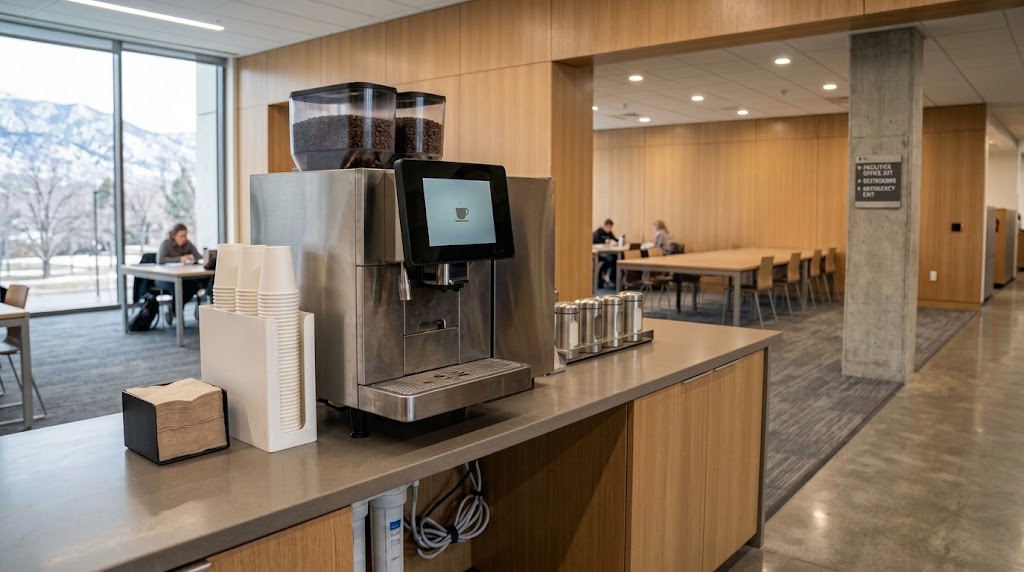
A bean-to-cup coffee machine, also called an automatic coffee machine, stores whole coffee beans in a hopper. When someone places an order, the built-in grinder mills the beans fresh, and the machine brews immediately. The result is freshly ground coffee for every single cup, plus access to espresso-based drinks: lattes, cappuccinos, Americanos, flat whites. Staff operate most units with one or two button presses.
Denver Beverage carries De Jong Duke and Bravilor Bonamat machines in this category. These are commercial-grade units built for office environments, not consumer appliances from a big-box store, and technicians calibrate grind settings during installation to match your bean supply and volume. They require professional installation and a scheduled preventive maintenance program. They are not plug-and-play in the way a drip brewer is.
Traditional Brewers
A traditional brewer loads pre-ground coffee into a filter basket and brews a full pot or batch. Bunn, Curtis, and Newco are the industry workhorses here. These machines are proven, high-volume, and straightforward to operate and clean. They cost less upfront, have fewer moving parts, and take almost no staff training to run.
The trade-offs are clear: no espresso, no milk-based drinks, and coffee quality is capped by what pre-ground beans can deliver. For many offices, that’s still more than enough.
The Decision Factors That Actually Matter
Here are the six factors worth working through before you decide.
Office Size and Daily Cup Volume
Every commercial coffee machine is rated for a specific cups-per-day output. Exceeding that rating doesn’t just reduce coffee quality. It shortens grinder life significantly on bean-to-cup units and can void service agreements on traditional brewers.
A practical breakdown by office size:
- Under 50 employees: A single traditional brewer (Bunn or Curtis) typically handles demand without issue. Bean-to-cup is an option if drink variety matters, but the volume case for it is weaker.
- 50 to 150 employees: This is the range where bean-to-cup starts making operational sense. Demand is high enough to justify the machine’s output and spread the cost per cup across more users.
- 150-plus employees: High-volume sites often need multiple units or a commercial batch-brew setup. A single machine, either type, is rarely the right answer at this scale.
Coffee Quality and Drink Variety
Bean-to-cup delivers freshly ground coffee and a full espresso menu: lattes, cappuccinos, flat whites, Americanos. Traditional brewers deliver good drip coffee, and that’s it.
The quality gap is real but narrower than marketing materials suggest. A quality pre-ground coffee run through a well-maintained Curtis or Newco brewer produces a reliably good cup. If your team mostly drinks plain black coffee or basic drip, a traditional brewer covers that need well.
The clearest signal to look at bean-to-cup: people are walking out of your office to spend money at a coffee shop next door for milk-based drinks. That off-site spend is the cost comparison that usually tips the decision.
Total Cost of Ownership
This is the factor most competitors’ content skips entirely. The purchase price is just one line item.
- Upfront cost: Bean-to-cup commercial machines, De Jong Duke and Bravilor Bonamat units included, run significantly higher than traditional brewers. These aren’t consumer appliances. Traditional brewers have a lower entry cost and a shorter procurement process.
- Ongoing costs: Both machine types require water filter replacements, descaling chemicals, and filter or coffee bean supply. Bean-to-cup machines add grinder maintenance to that list. Cost per cup at scale favors bean-to-cup once daily volume is high enough to offset the machine cost.
- Service model: Bean-to-cup machines require professional service intervals on a scheduled basis. Traditional brewers have simpler service needs but still benefit from a preventive maintenance schedule. Denver Beverage’s 13 field technicians handle both across the Front Range, seven days a week.
Maintenance Burden on Office Staff
Neither machine type is zero-maintenance. The real question is whether your office has the staff capacity and accountability to handle daily upkeep, or whether that responsibility needs to sit with a service provider.
- Bean-to-cup machines: Daily cleaning of the drip tray and milk system if equipped, plus weekly deep cleans and descaling on a set schedule. Most commercial units prompt this automatically, which helps.
- Traditional brewers: Daily carafe and basket cleaning, plus periodic descaling. Simpler, but not zero effort.
If your office can commit someone to a consistent maintenance routine, either machine works. If that’s not realistic, build the service agreement accordingly. Cups, filters, and cleaning supplies all fall under breakroom supplies programs that Denver Beverage manages alongside the equipment itself.
Milk-Based Drinks: Fresh Milk vs. Powdered Milk Systems
Powdered milk systems are easier to maintain; fresh milk systems produce better drinks. That trade-off is usually what decides this for an office.
- Powdered milk system: No refrigeration requirement, lower hygiene risk, and an easy milk supply to manage. The trade-off is drink quality, a functional latte, not a great one.
- Fresh milk system: Produces better drinks through an integrated milk frother, but adds a daily cleaning obligation for the milk circuit and requires a fresh milk supply on-site. In an office where no one owns that task, it becomes a hygiene liability, not a benefit.
Physical Footprint and Installation
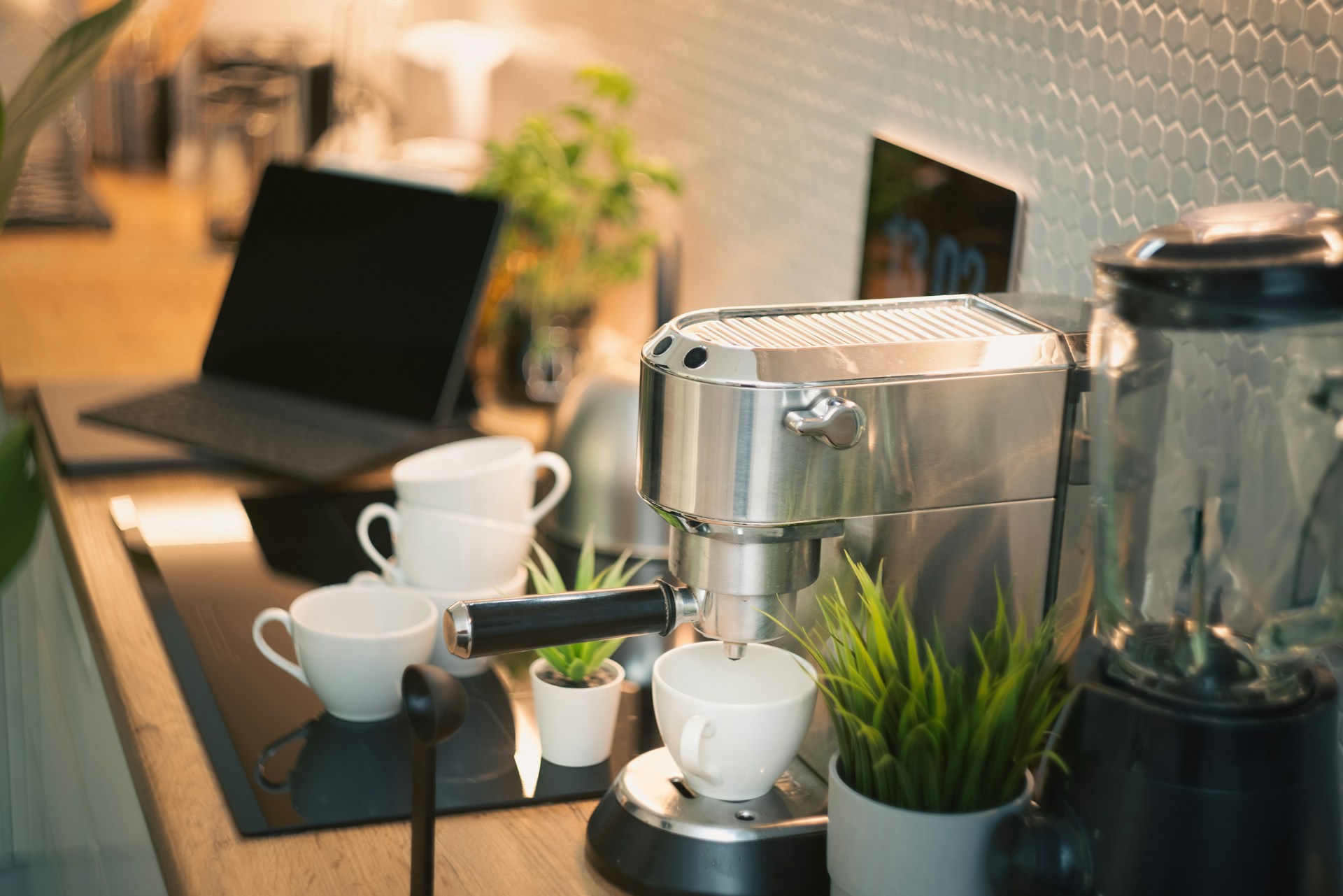
Bean-to-cup machines generally need more space and often require plumbing; traditional brewers are simpler countertop units with no such requirement. Available space and plumbing access typically decide this one.
- Bean-to-cup machines: Physically larger than most traditional brewers. Many commercial units are plumbed in, requiring a water line connection and a drain. Plumbed-in units eliminate manual reservoir refills, which matters at high volume, but they require building management sign-off and plumbing access before installation. Units that aren’t plumbed in run on a large water tank that needs regular manual refilling, a staff task at high daily volume.
- Traditional brewers: Typically countertop units with no plumbing requirements. They install quickly and don’t require coordination with building management. If a plumbed connection isn’t available or practical in your space, a traditional brewer removes that constraint entirely.
A Quick Guide by Office Type
If you want a direct starting point before working through the full comparison, here’s where most offices land:
- Under 50 employees, modest coffee culture: A traditional brewer, Bunn or Curtis, is the right call for most offices in this range. Lower cost, lower maintenance overhead, proven reliability.
- 50 to 200 employees, team expects café-quality drinks: A bean-to-cup coffee machine, De Jong Duke or Bravilor Bonamat, makes sense when drink variety and freshly ground coffee are genuine team priorities. The cost and complexity are justified when the demand is there.
- 200-plus employees or high-volume sites: The right answer at this scale depends on usage patterns that are hard to assess without seeing the space. Denver Beverage can evaluate your site and daily volume and recommend a configuration that actually fits.
What Denver Beverage Brings to This Decision
Denver Beverage supplies both equipment categories statewide, with installation, preventive maintenance, and repair on bean-to-cup and traditional commercial coffee machines handled by our 13 field technicians across the Front Range, seven days a week.
We also supply the coffee itself. Denver Beverage is the exclusive Boyer’s Coffee partner for office programs and also carries:
- Ozo Organic Coffee
- Queen City Collective
- Boulder Organic
Denver Beverage is an authorized Starbucks placement provider for offices that want a named brand on the machine. You can review the full range of options on our coffee programs page.
That means the equipment recommendation and the coffee supply can be aligned from day one through a single provider.
If you’re not sure which direction fits your office, Denver Beverage can assess your site, your daily volume, and your team’s actual drink habits and give you a direct recommendation. Not a product list. A recommendation.
For a full picture of what an office coffee program can include beyond the machine itself, the office coffee services overview is a practical next read.
FAQ
What is the best bean-to-cup coffee machine for a small office?
For offices under 50 people, look at units rated for lower daily cup volumes. Denver Beverage carries De Jong Duke and Bravilor Bonamat options suited to smaller sites. The most important question to answer first is whether your team wants espresso-based drinks or good drip coffee. That single question shapes the rest of the recommendation.
How many cups per day can a bean-to-cup office coffee machine produce?
Output varies by model. Entry-level commercial units typically handle 30 to 50 cups per day. Mid-range units manage 100 to 150. High-volume commercial machines exceed 200. Matching rated output to actual daily demand is the most important spec to verify before purchasing. Running a machine beyond its rated capacity shortens grinder life significantly.
Are bean-to-cup coffee machines worth it for offices?
For offices where staff would otherwise leave the building for espresso drinks, the cost per cup math often favors bringing that spend in-house. For offices where plain drip coffee covers most of the demand, a quality traditional brewer at a lower cost is usually the better investment. The answer depends on what your team actually drinks.
How do you maintain a bean-to-cup coffee machine in an office setting?
Daily maintenance and cleaning involve emptying the drip tray, rinsing milk components if the machine has a milk frother, and wiping the exterior. Weekly: run a full cleaning cycle, which most commercial units prompt automatically. Monthly to quarterly: descaling, grinder check, and filter replacement. A service technician handles the scheduled maintenance intervals under a preventive maintenance agreement.
What’s the difference between a bean-to-cup machine and a pod coffee machine for the office?
A bean-to-cup machine grinds whole coffee beans fresh for each cup. A pod machine uses pre-sealed capsules.
Coffee quality favors bean-to-cup, while pod machines win on speed and convenience. Cost per cup also favors bean-to-cup at scale, where pod machines carry a higher ongoing cost per cup. Drink variety follows the same pattern: bean-to-cup offers more options, including espresso-based drinks, while pod machines have limited variety for milk-based drinks.
For offices of 50 or more people, bean-to-cup or traditional batch brew is almost always the more cost-effective choice.