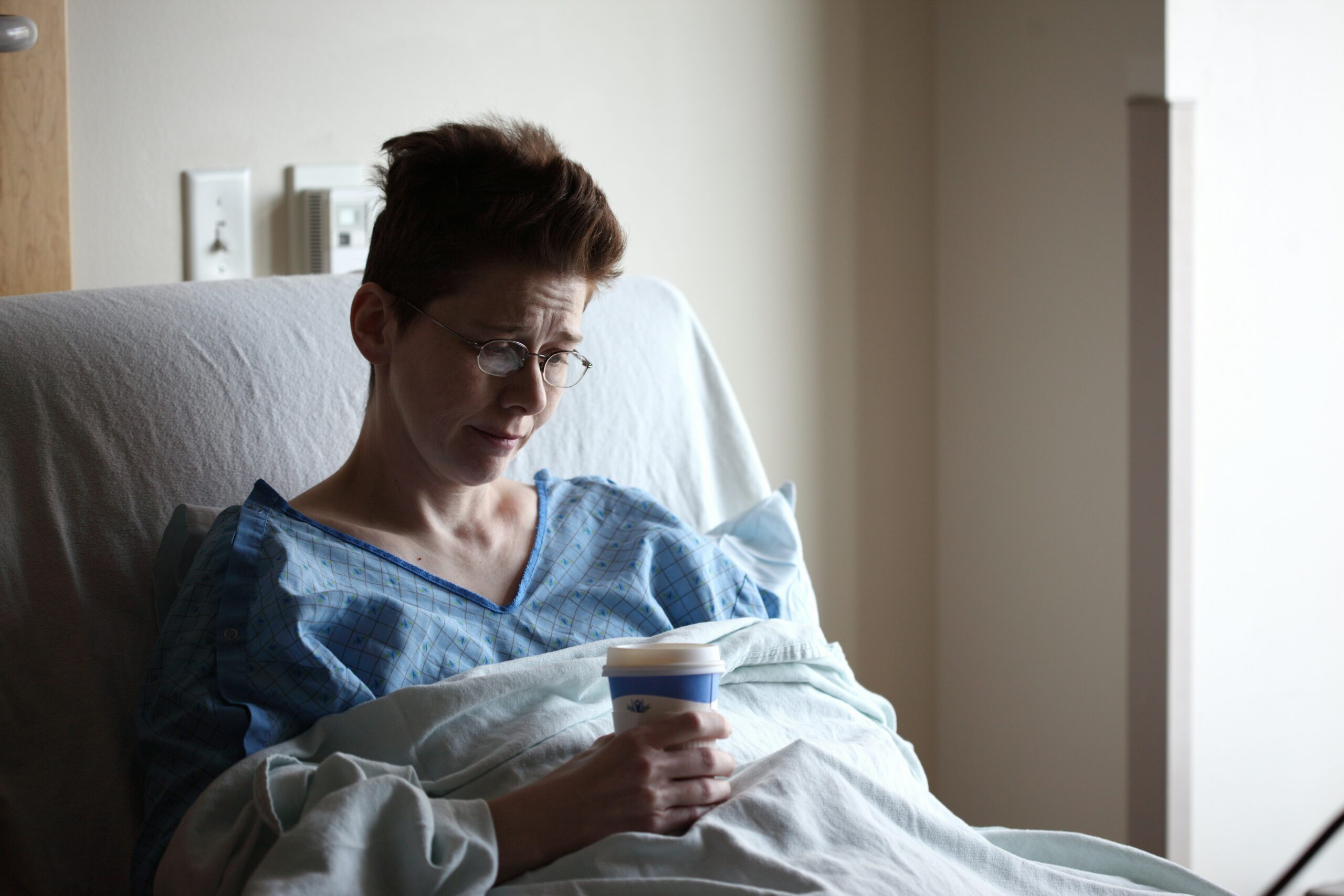
A beverage program in a healthcare facility carries clinical, regulatory, and reputational weight that a coffee setup in a hotel lobby simply does not. Residents depend on consistent, appropriate beverage service. Patients need hydration options aligned with their care plans. Staff need reliable coffee throughput at 6 AM during a shift change, not a machine that’s been down since yesterday.
This guide covers the full scope of beverage program management for Colorado healthcare facilities, including what a well-run program actually looks like, what to demand from a vendor, and where most facilities are leaving gaps. If you are evaluating your current program or comparing suppliers, this is written for you.
What a Healthcare Beverage Program Actually Covers
Most facilities operate beverage programs far more complex than their procurement process reflects. A dietary director managing these as five separate vendor relationships is spending time and administrative overhead that a single-source supplier eliminates.
A fully scoped healthcare beverage program includes:
- Coffee programs: Staff coffee service at nursing stations and break rooms, hot beverage dispensing for dietary service, and resident or visitor coffee where appropriate. These are distinct programs with different equipment requirements.
- Cold beverages: Juices, flavored waters, and low-sugar options aligned with dietary restrictions common in long-term care (LTC) and skilled nursing settings.
- Filtered water and ice: Often underspecified in procurement, directly relevant to infection control compliance and resident hydration standards.
- Beverage gas supply: CO2 supply for any carbonated dispensing within the facility.
- Dish and laundry chemical programs: Not a beverage product, but in dietary and kitchen operations these procurement decisions overlap directly with the beverage vendor relationship and CMS compliance requirements.
Denver Beverage supplies all of these from a single Colorado-based account. One invoice, one service relationship, one point of contact for compliance documentation.
Coffee Service in Healthcare, What Works, What Doesn’t
Healthcare coffee service runs on two distinct tracks inside a single facility: staff programs built for volume and uptime, and resident or visitor programs shaped by dietary and regulatory considerations.
Staff Coffee Programs
Staff coffee is the anchor of any healthcare coffee service program. A coffee machine that goes down at 6 AM during a shift change is a staff satisfaction and retention problem, not a minor inconvenience. This is the strongest use case for proactive maintenance over reactive service calls.
- Equipment depends on the setting:
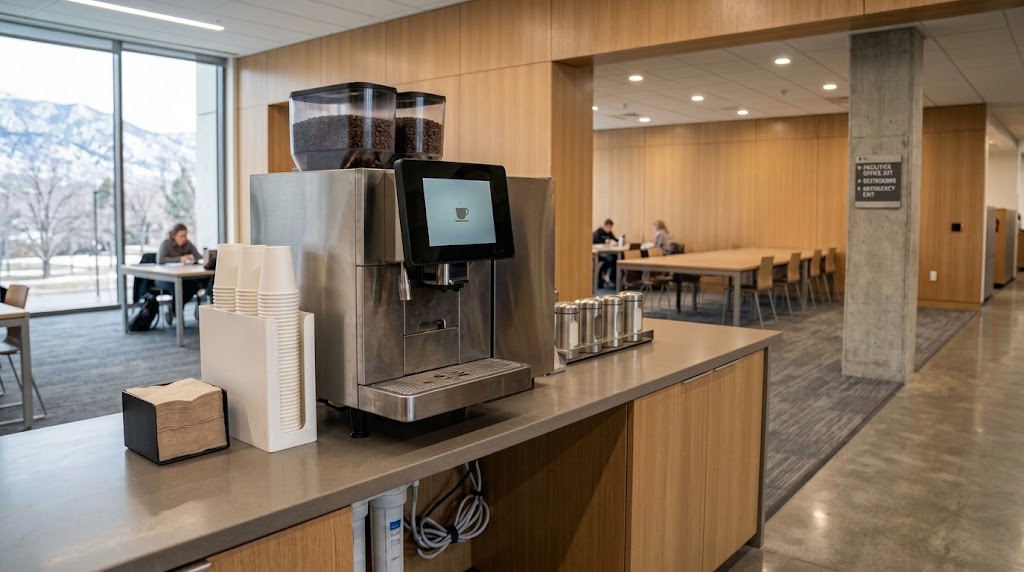
- De Jong Duke bean-to-cup machines are built for high-volume nursing station use, where individual cups need to be consistent and fast without requiring staff to manage a batch-brew cycle.
- Bravilor Bonamat and Bunn batch-brew units are the standard for dietary break rooms, where a full pot is the norm and throughput matters more than single-serve flexibility.
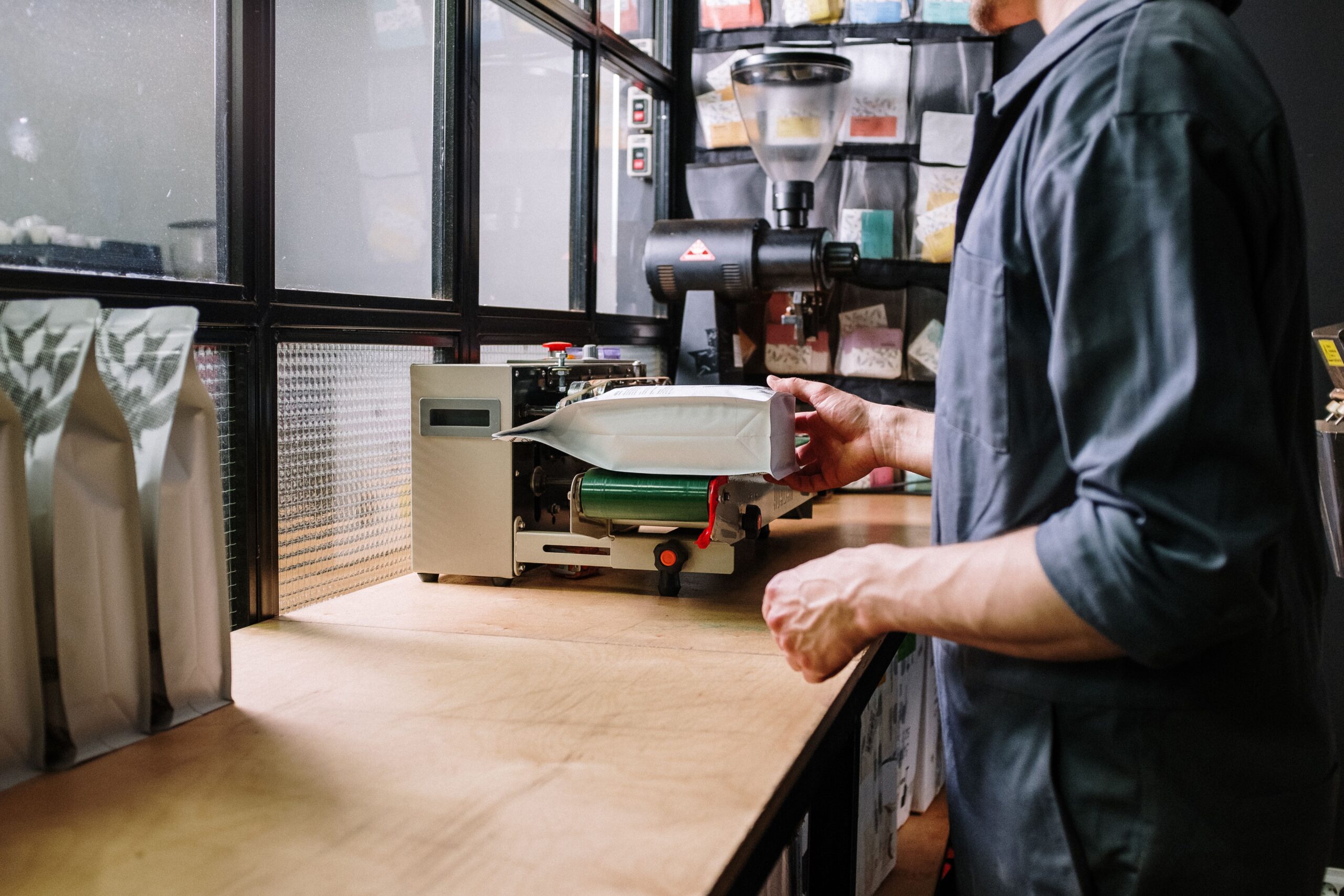
- The coffee itself: Boyer’s Coffee, a Colorado-roasted brand for which Denver Beverage is the exclusive foodservice distributor, is available in drip, single-serve, and commercial formats. Boyer’s is fair trade and ethically sourced, a real product attribute for healthcare staff who care about what’s in the machines.
- Availability: Boyer’s is available across all coffee brewing equipment formats Denver Beverage supplies.
Resident and Visitor Beverage Programs
Beverage provision for residents in skilled nursing, assisted living, and long-term care settings carries dietary and regulatory considerations that staff programs do not. Dietary directors working in memory care or post-stroke rehabilitation settings will be familiar with IDDSI (International Dysphagia Diet Standardisation Initiative) standards for texture-modified and thickened beverages. A vendor who does not know what IDDSI means cannot competently serve a skilled nursing facility’s dietary program.
CMS requirements under 42 CFR §483.60 govern nutritional adequacy in skilled nursing facilities, including beverage provision. The documentation those requirements generate, specifically service records, filter change logs, and product records, is something your vendor should produce as a standard deliverable, not on special request.
Equipment Maintenance: The Real Differentiator in Healthcare Settings
Reactive equipment service is the default model from broadline distributors: call when it breaks, wait for a technician. In a healthcare setting, a broken hot beverage dispenser during morning dietary rounds affects patient and visitor experience, staff morale, and potentially the documentation trail a CMS auditor will review.
- Denver Beverage’s model: Proactive preventive maintenance, not reactive service calls.
- Coverage: Thirteen field technicians provide 7-day service coverage across the Front Range, covering Denver Metro, Boulder County, Fort Collins, Colorado Springs, Pueblo, and the I-70 corridor. Distribution extends statewide across Colorado, but equipment service is not statewide, so facilities outside the Front Range should confirm coverage before signing.
Maintenance and servicing agreements with Denver Beverage include:
- Scheduled cleaning and descaling of coffee and hot beverage equipment
- CO2 pressure checks for any carbonated dispensing
- Filter replacement for filtered water and ice systems
- Documented service visit records, suitable for CMS compliance review
That last point is undercovered in every competitor relationship. A dietary director preparing for a CMS survey needs service records on hand, and Denver Beverage provides them as a standard part of the account, not as a special request. For facilities already managing commercial kitchen and beverage equipment repair through multiple vendors, consolidating into a single service agreement eliminates the documentation gap entirely.
What to Evaluate in a Healthcare Beverage Vendor
The criteria below are a practical evaluation framework for assessing your current vendor or comparing options. Apply them to any supplier, including Denver Beverage.
- Single-source capability: Does the vendor supply coffee, water, juice, gas, chemicals, and equipment service, or are you managing four invoices for what should be one account? Fragmented vendor relationships increase administrative overhead and create gaps in compliance documentation.
- Proactive vs. reactive service model: Does the vendor schedule preventive maintenance visits, or do they appear only when you call? What is the actual response-time commitment in writing? A verbal assurance is not a service agreement.
- Compliance documentation: Can the vendor produce service records, filter replacement logs, and chemical safety data sheets on request? In a CMS survey environment, “we’ll look into it” is not an acceptable answer.
- Colorado-specific credentials: Denver Beverage holds State of Colorado preferred vendor status for healthcare supply. This is a real procurement credential that matters for facilities running state procurement processes. Not every distributor holds it, and the distinction is relevant at the contracting stage.
- Product alignment with resident dietary needs: Does the vendor understand that a healthcare facility’s beverage product mix is not identical to a hotel’s or a restaurant’s? A supplier who cannot offer low-sugar options, fortified juices, and condition-appropriate formats alongside the commercial coffee program is not a healthcare vendor. They are a broadline distributor selling to you the same way they sell to a sports bar.
- Geographic coverage match: A vendor who services Denver but not Fort Collins or Pueblo is not a single-source solution for a multi-facility healthcare group. Confirm the actual service territory before the contract stage.
Beverage Product Standards in Healthcare Settings
The Harvard T.H. Chan School of Public Health’s Beverage Guidance Panel establishes a tiered hierarchy for beverage quality: water at the top, followed by tea and coffee, then low-fat milk and fortified soy beverages, then noncalorically sweetened drinks, then caloric beverages with some nutritional value, and sugar-sweetened beverages at the base. The full framework is published by Harvard Nutrition Source and reflects a broad research consensus, not a single institution’s preference.
For a healthcare facility administrator, this hierarchy has direct operational implications:
- Water and filtered water access should be the default for residents throughout the day. This has both clinical grounding and regulatory relevance under CMS dietary standards.
- Coffee and tea are appropriate for most residents and all staff in quantities consistent with individual care plans. Neither is a restricted category requiring special justification for inclusion in a beverage program.
- Juice, flavored water, and low-sugar options are a legitimate part of a facility’s mix but require label attention to sugar content, particularly for diabetic and pre-diabetic residents, a common population in skilled nursing and LTC settings.
- High-sugar carbonated beverages are not appropriate as a primary resident beverage offering. Every credible source on the SERP already establishes this. A vendor who pushes the opposite is not aligned with the facility’s clinical obligations.
The practical test: a beverage vendor who does not ask about your resident population’s dietary needs before proposing a product mix is not operating as a healthcare vendor.
If your facility is managing coffee, water, beverage gas, and chemical programs as separate vendor relationships, or you’re not sure your current provider could produce service records if a CMS auditor asked tomorrow, it’s worth a conversation.
Talk to Denver Beverage about what a single-source beverage program would actually look like for your facility.
Frequently Asked Questions
What types of coffee equipment work best for hospital and long-term care break rooms?
De Jong Duke bean-to-cup machines are the right fit for high-volume nursing station use, where consistency and speed matter without requiring staff to manage a batch-brew cycle. Bravilor Bonamat or Bunn batch-brew units are the standard for dietary break rooms. Denver Beverage supplies Boyer’s Coffee in all compatible formats and owns and maintains the commercial coffee equipment under a preventive maintenance agreement. There is no capital outlay for the facility.
What hygiene and infection control requirements apply to coffee machines in healthcare settings?
Infection control compliance for commercial coffee equipment requires regular descaling, external surface sanitization consistent with the facility’s protocols, and filter changes on a documented schedule. Denver Beverage’s maintenance and servicing agreements include service documentation formatted for compliance review, so records are available before a CMS auditor asks.
How does a fully managed coffee service work for a healthcare facility?
Denver Beverage supplies the equipment, the Boyer’s Coffee product, CO2 for any carbonated dispensing, and handles all scheduled maintenance. The facility receives a single invoice and a scheduled service visit. There is no patchwork of vendor relationships to coordinate and no gap in service documentation.
Does Denver Beverage serve healthcare facilities outside Denver?
Equipment service is concentrated on the Front Range, covering Denver Metro, Boulder County, Fort Collins, Colorado Springs, Pueblo, and the I-70 corridor. Product distribution covers statewide Colorado, from Grand Junction to Sterling and Cheyenne to Pueblo. Facilities outside the Front Range should confirm equipment service coverage directly before contracting.
What is the State of Colorado preferred vendor credential, and why does it matter?
State of Colorado preferred vendor status is a procurement credential held by Denver Beverage for healthcare supply. It is relevant for facilities that run state procurement processes for dietary and beverage supply, streamlining the contracting process and satisfying procurement compliance requirements that a non-credentialed distributor cannot meet.