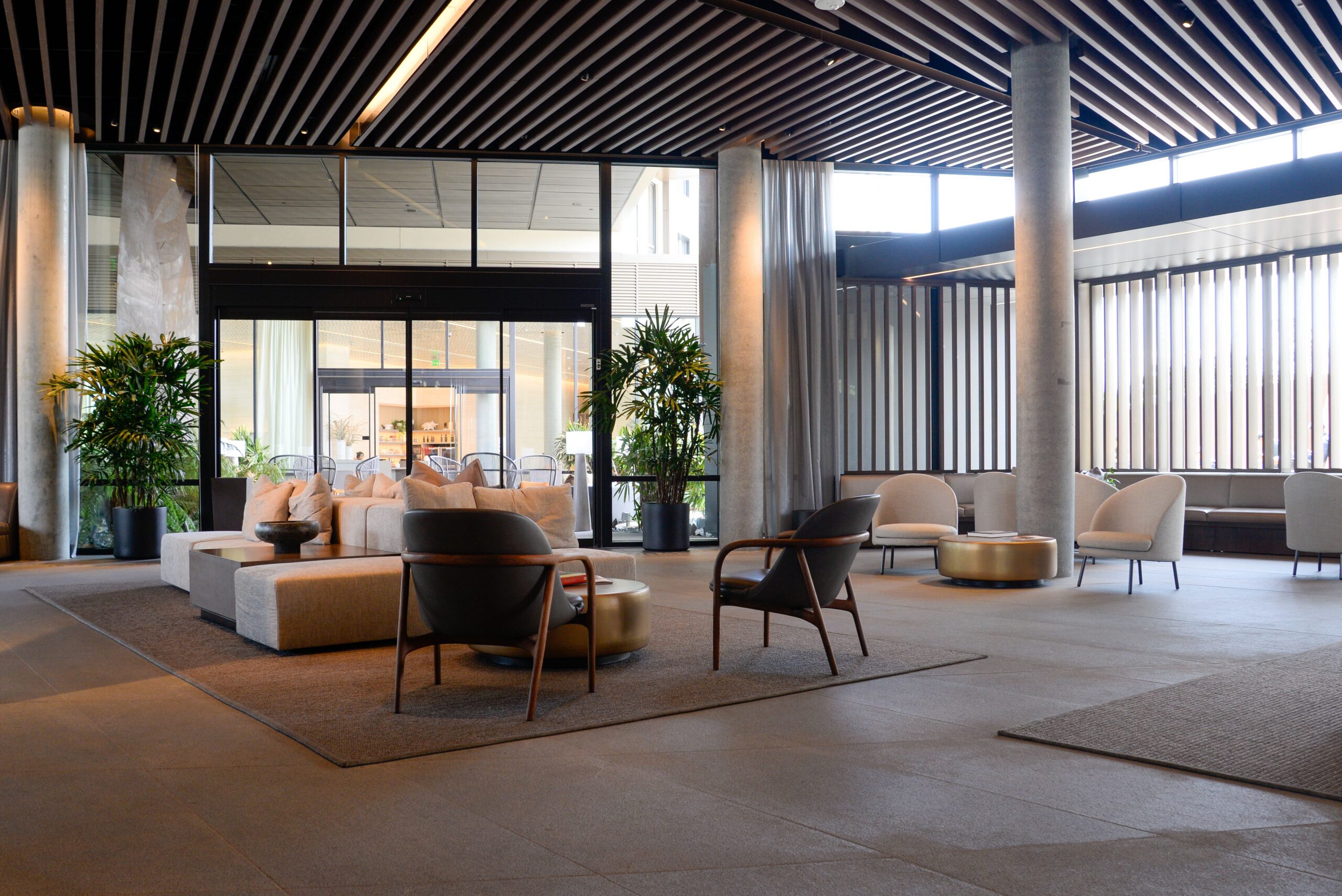
A lobby coffee station that runs dry by 7 AM or serves flat coffee at 6 PM costs more in guest satisfaction than any equipment savings justify. Peak check-in runs 3 to 7 PM, exactly when a failing machine does the most damage, and without a service relationship already in place, a downed unit means no backup and guests noticing.
The right equipment decision isn’t about finding the best machine on a spec sheet. It’s about matching the format to your service model, your staffing reality, and what a failure actually costs you. Denver Beverage has structured hotel beverage and supply services for Colorado hotels since 1986, and lobby coffee is the most common starting point.
The Three Equipment Types Worth Considering for a Hotel Lobby
Most hotel lobby coffee decisions come down to three formats. Each one carries a different set of operational trade-offs, and the right choice depends on your room count, staffing model, and how much of the overnight period you need covered.
Bean-to-Cup Format
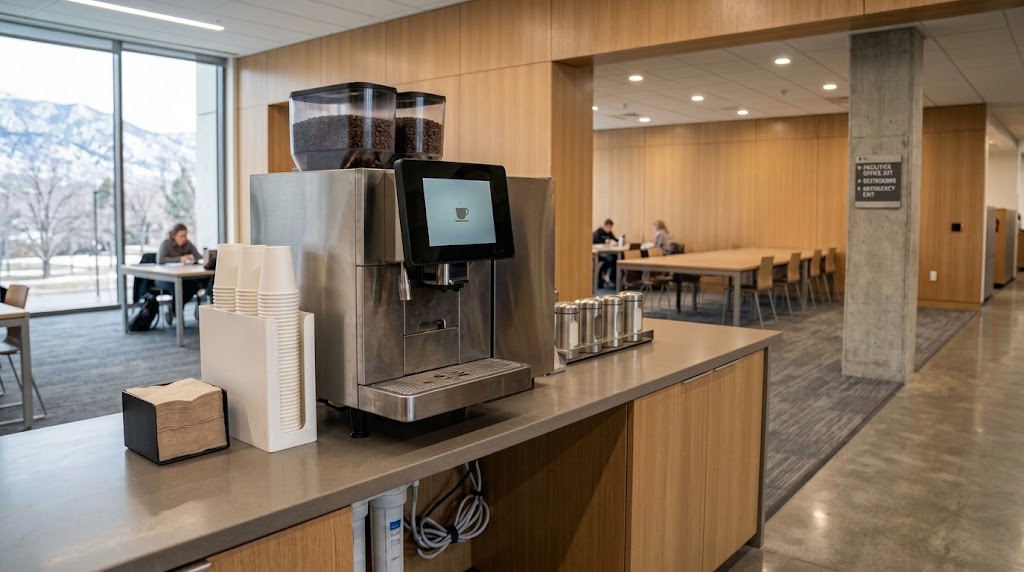
Bean-to-cup machines grind fresh per cup and produce barista-quality beverages without a trained operator. A touchscreen coffee machine interface means guests can self-serve without staff involvement at any hour. Equipment in this category includes the De Jong Duke and Bravilor Bonamat commercial units, both of which Denver Beverage installs and services.
The bean-to-cup machine format carries a higher equipment cost than batch brew, but it eliminates the labor cost of staffing a coffee bar overnight. Best fit for: full-service hotels with 100 or more rooms where lobby traffic runs continuously and overnight staffing of a coffee station isn’t feasible.
Batch Brew with Airpots
Batch brewers paired with airpots are high-volume, operationally simple, and carry the lowest equipment cost of the three formats. Airpots hold temperature for two to four hours, which works well when a team member is on-site to cycle product on a schedule. Commercial brewers in this category include Bunn and Curtis models.
This format is not suited for unattended overnight service because product freshness degrades after the hold window. Best fit for: limited-service hotels with a defined breakfast window (typically 6 AM to 10 AM) and staff present to manage freshness and restocking.
Commercial Espresso / Staffed Café Setup
A commercial espresso machine requires a trained operator. This format is appropriate for a staffed café or coffee bar inside the lobby, not a self-service station. Running a commercial espresso machine unattended is not operationally viable.
Best fit for: full-service hotels with a dedicated F&B outlet, a lobby café, or branded coffee bar staffed during defined hours.
| Format | Self-Service Ready | Best Hotel Type | Service Complexity |
| Bean-to-cup | Yes | Full-service, 100+ rooms | Low (auto-clean cycle) |
| Batch brew / airpots | No | Limited-service, defined breakfast | Low (manual, staff-managed) |
| Commercial espresso | No | Full-service with staffed café | High (trained operator required) |
Self-Service vs. Staffed: The Decision That Drives Everything Else
The equipment format question and the service model question are connected. Choosing one without deciding the other creates operational gaps that show up during peak hours.
What Self-Service Requires from the Equipment
A self-serve coffee bar running unattended in a hotel lobby has specific procurement requirements that go beyond machine specs.
- Certification: Equipment used in guest-facing food zones should carry NSF/ANSI certification standards for food equipment materials and surfaces. This is a procurement verification step, not a preference, confirm NSF/ANSI status with the vendor before purchase or program sign-up.
- Equipment features: A reliable auto-clean cycle, drip tray management that doesn’t require constant staff attention, and a touchscreen interface guests can navigate without instructions.
- Counter configuration: The reach range requirements under the 2010 ADA Standards, Section 308 affect touch-panel height, drip tray clearance, and cup dispenser placement in a guest-accessible self-service station. These are design and equipment selection constraints that affect both machine choice and counter build-out.
Verify the specifics with your facilities team or legal counsel before finalizing the installation layout.
What Staffed Service Requires from the Property
A staffed batch brew program requires trained staff coverage during service hours, a restocking cadence tied to guest volume, and a defined service window. That coverage is a real labor cost, not incidental to the equipment choice, unlike a bean-to-cup machine running unattended.
Outside the service window, guests have no coffee access unless a secondary self-serve option is available.
The Hybrid Model
Many full-service Colorado hotels run a hybrid: a bean-to-cup machine operating unattended from 5 PM through 7 AM, covering the high-traffic environment of check-in and late arrivals, with a staffed batch brew program during breakfast service from 6 AM to 10 AM.
This model covers the full 24-hour period, uses each format where it performs best, and keeps staff labor focused on the breakfast window where it adds the most to guest experience.
What a Managed Coffee Program Covers (and What Equipment-Only Doesn’t)
The cost comparison between an equipment-only purchase and a managed program isn’t just about price. It’s about which line items are fixed and which are unpredictable. See Denver Beverage’s coffee programs for full program details.
Equipment-Only Purchase (Dealer or Distributor)
- Machine is delivered; installation is the property’s responsibility.
- Coffee supply, cups, and filters are sourced separately from a different vendor.
- Water filtration is typically the property’s responsibility. Hard water without certified filtration voids most commercial machine warranties and can create local health code compliance issues. Denver is a hard-water market, and this cost is routinely overlooked in purchase-price comparisons.
- When the machine fails, the property contacts the manufacturer. Response time varies by manufacturer and service territory.
- Total cost of ownership includes the purchase price plus filtration, descaling supplies, repair response time, and staff labor to manage restocking. These are unpredictable line items on a per-incident basis.
Managed Program with Denver Beverage
- Equipment is placed, installed, and configured by Denver Beverage’s field technicians. The team covers 13 technicians operating seven days a week across the Front Range (Denver Metro, Boulder County, Fort Collins, Colorado Springs, Pueblo, and the I-70 corridor).
- Boyer’s Coffee supply is included. Boyer’s is Colorado-roasted and operates under an exclusive partnership with Denver Beverage. This is specialty coffee with a regional identity, not a generic private-label product.
- Starbucks authorized placement is available for properties where brand recognition is a driver. This is the Starbucks We Proudly Serve program, which licenses the brand and product for hotel coffee brewing equipment programs. It is not a licensed café buildout.
- Preventive maintenance runs on a scheduled cycle, not reactively after a failure.
- Water filtration is addressed at installation as part of the program, not treated as an afterthought.
- A single point of contact covers equipment, supply, and service for the hotel food and beverage program.
A managed program structures most cost variables as fixed rather than unpredictable. The equipment-only route trades that predictability for lower initial cost and less vendor dependency.
How a Lobby Coffee Program Fits Into a Broader Hotel Beverage Relationship
Lobby coffee is frequently the entry point into a broader supply relationship for Colorado hotels. A property that adds a Boyer’s or Starbucks We Proudly Serve coffee program through Denver Beverage typically has the option to expand into adjacent services without adding vendors.
Common expansions include:
- Banquet and meeting room coffee service, using the same supply relationship already in place
- Hotel micro markets, extending the self-serve model beyond beverages to snacks and essentials, available 24 hours without staff involvement. A Colorado Springs hotel that replaced an underperforming lobby store with a Denver Beverage micro market generated approximately $3,000 in monthly profit with no equipment, labor, or ordering cost to the property.
- Draft beer services, covering system installation, CO2 supply, and ongoing service for hotel bars and banquet operations
Each of these adds value to the hotel amenities profile without adding separate vendors to manage.
Ready to see which of these fits your property? Contact Denver Beverage to walk through equipment options, service models, and how lobby coffee connects to the rest of your hotel’s beverage program.
Questions Hotels Ask Before Choosing Lobby Coffee Equipment
What is the best coffee machine for a hotel lobby?
There is no single best machine. The right choice depends on hotel size and service model. A full-service hotel with 100 or more rooms and unattended overnight lobby coverage is best served by a bean-to-cup machine such as the De Jong Duke or Bravilor Bonamat. A limited-service property with a staffed breakfast window typically performs well with a Bunn or Curtis batch brewer and airpots. Match the format to your staffing and service hours before evaluating brands.
How do hotels set up a self-serve coffee station in the lobby?
Setting up a hotel lobby coffee station requires equipment selection, water filtration (required for machine warranty compliance and typically for local health code), counter configuration with ADA clearance verified for reach range and dispenser height, and a supply stocking cadence. A managed program handles installation and setup. A dealer purchase leaves those logistics to the property.
What coffee brands do hotels typically serve in their lobbies?
Service tier and ownership structure drive brand choice. Full-service branded hotels commonly use the Starbucks We Proudly Serve program for guest recognition. Independent and lifestyle properties across the Front Range frequently use Boyer’s Coffee, Colorado-roasted and available through Denver Beverage as an exclusive supply partner. Specialty coffee with a regional identity has become a differentiator in the hospitality industry, particularly for properties competing on guest experience rather than brand affiliation.
How much does hotel lobby coffee equipment cost?
Commercial bean-to-cup machines for hotel use range from approximately $8,000 to $25,000 for outright purchase. Managed program pricing varies by equipment model and supply volume. In a managed program, equipment is typically placed without upfront cost in exchange for an ongoing supply relationship. The full cost comparison should include filtration, maintenance, and service response time, not just the purchase price.
How do you maintain commercial coffee machines in a hotel lobby?
Bean-to-cup machines run an auto-clean cycle that handles daily maintenance without staff involvement. Batch brewers require manual cleaning on a daily basis. High-use machines in Denver and other hard-water Colorado markets need weekly descaling. Hard water without certified filtration voids most commercial equipment warranties, making filtration a cost-of-ownership factor rather than an optional upgrade. Scheduled preventive maintenance through a managed program covers the full maintenance and cleaning cycle. For repair needs outside a managed program, Denver Beverage’s commercial kitchen and beverage equipment repair service covers the Front Range seven days a week.