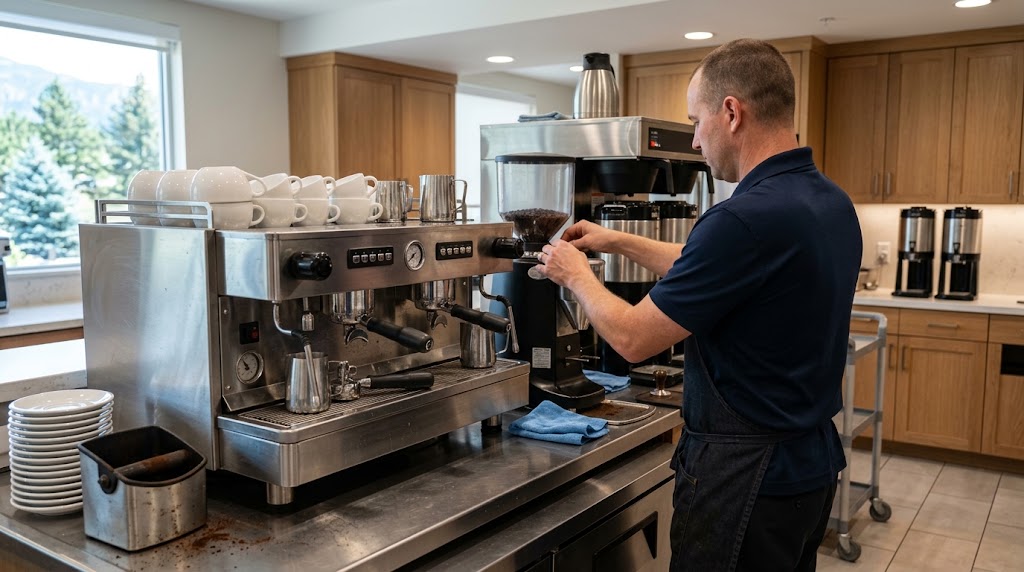
A hotel GM, a healthcare dietary director, or an office facilities manager hears some version of the same question all the time: Can we get Starbucks in here? The answer is yes, but the harder question comes right after it: We Proudly Serve or a licensed Starbucks store, and what does your operation actually have to take on to run either one?
Most of what’s written about this online comes from a customer’s point of view, explaining why the coffee at the hospital tastes a little different from the one downtown. That’s not what you’re trying to figure out. This piece breaks down what each model actually costs, what it asks of your team, and which one makes sense for your property.
We Proudly Serve vs. a Licensed Starbucks Store: What They Actually Are
Before comparing them, it’s worth being clear about what distinguishes these two structures. They’re often treated as variations on the same thing. They’re not.
We Proudly Serve Starbucks (WPS)
We Proudly Serve is a wholesale licensing program administered through Nestlé’s Global Coffee Alliance, the 2018 partnership that gave Nestlé the rights to market, sell, and distribute Starbucks products across consumer packaged goods and foodservice channels worldwide, per Starbucks’ own announcement of the Global Coffee Alliance. Under that framework:
- How it works: An operator purchases Starbucks-branded coffee, espresso beans, syrups, and approved equipment through authorized channels, then serves those products under the WPS mark.
- Oversight: No direct Starbucks oversight, no Starbucks-mandated barista training, and no corporate POS integration.
- Who runs it: The operator runs the program on their own terms, with their own staff.
A Licensed Starbucks Store
A licensed store is a formal licensing agreement entered into directly with Starbucks, a structure Starbucks’ own SEC filings describe as a distinct operating channel from company-operated stores.
- Where it’s used: Almost exclusively in high-volume, captive-audience environments, major airports, large university campuses, flagship hospital systems, and military installations.
- Staffing and menu: Staff are trained to Starbucks operational standards, and the full Starbucks menu is available.
- Compliance: Corporate POS integration and Starbucks Rewards program access depend on the specific agreement structure, but the entire operation runs under Starbucks compliance and periodic audits.
One clarification that matters before going further: neither model is a franchise. Starbucks does not franchise in the U.S. or Canada. A licensed store is not ownership. It’s a contractual right to operate under the Starbucks brand, on terms that Starbucks controls.
The Real Differences Operators Need to Weigh
Here’s how the two models compare across the five factors that actually drive this decision.
Cost and Investment Threshold
- Licensed Starbucks store: Requires significant capital outlay, commonly cited at $300,000 or more depending on location size, fit-out requirements, and equipment specifications, plus ongoing royalties and compliance costs.
- WPS program: A fraction of that. Costs cover equipment procurement (espresso machines, brewers, grinders), a product supply agreement, and initial setup, with no franchise fee, no royalty on sales, and no minimum revenue threshold imposed by Starbucks directly.
Operational Requirements and Staffing
- Licensed Starbucks store: Requires staff who can meet Starbucks’ operational standards, including training protocols, recipe adherence, and customer experience benchmarks that Starbucks audits against.
- WPS program: Runs entirely on the operator’s own staffing model. Your team makes the drinks using Starbucks-sourced ingredients and equipment, with no mandatory barista certification from Starbucks corporate and no audit process to prepare for.
Menu Access and Product Availability
- Licensed Starbucks store: Carries the full Starbucks menu, including seasonal and limited-run items and the complete product lineup.
- WPS program: Carries core Starbucks products, the beans, the syrups, the branded cups, and the equipment to make espresso drinks. Menu depth depends on what equipment is on-site and what the operator chooses to offer; a hotel lobby WPS coffee station isn’t going to replicate the seasonal Frappuccino lineup of a licensed café, and operators should go in knowing that.
Brand Standards, Oversight, and Pricing Autonomy
- Licensed Starbucks store: Operates under ongoing Starbucks oversight, which cuts both ways, stronger brand credibility and consistency guarantees for guests loyal to the Starbucks experience, but the operator gives up meaningful control.
- WPS program: More flexibility in pricing, menu customization, and day-to-day operations, with no external compliance obligations. Critically, WPS operators set their own retail prices; Starbucks does not control what a WPS location charges per cup, which is why a hospital lobby coffee sometimes costs more than a downtown Starbucks and is a meaningful margin advantage for operators pricing for their context.
Starbucks App, Mobile Ordering, and Rewards Integration
- WPS locations: At most We Proudly Serve Starbucks locations, guests cannot earn Stars or redeem rewards through the Starbucks app.
- Official Starbucks locations: Mobile ordering and Starbucks Rewards integration are typically available only at corporate-owned or licensed stores. If your guests are Starbucks Rewards members who expect to earn Stars on every purchase, that’s a real and material difference between these two models, one worth factoring directly into your decision.
Which Model Fits Which Business?
The right model comes down to your venue’s scale and traffic pattern, not a general preference for one brand experience over another. Here’s how that breaks down by business type.
WPS is typically the right fit for:
- Hotels: A branded coffee experience in the lobby, breakfast area, or grab-and-go market is the goal, but a full Starbucks café operation isn’t operationally or financially viable. WPS delivers the brand recognition guests respond to without the compliance overhead of a licensed store. Smaller and mid-scale properties gain a lot more from WPS than they’d gain from chasing a licensed store agreement Starbucks is unlikely to approve at that scale.
- Healthcare facilities and senior living communities: These operators want a recognizable brand for residents, patients, and staff without the complexity of a direct Starbucks licensing relationship. WPS fits within existing staffing and foodservice structures without requiring a dedicated café team, and our healthcare beverage programs are designed to work within the procurement frameworks most healthcare facilities are already operating inside. Denver Beverage is a State of Colorado preferred vendor, which simplifies procurement for healthcare operators working within state-managed supplier frameworks.
- Offices and corporate campuses: An office looking to upgrade from a standard breakroom coffee program to something employees recognize and value. WPS delivers Starbucks quality without the real estate footprint, investment threshold, or staffing model that a licensed store requires, and office coffee service through a WPS-enabled setup fits naturally into a broader breakroom refresh.
- Restaurants and bars: Operators who want Starbucks espresso on the menu without operating a separate café concept. WPS lets them add a recognizable coffee program within their existing service model.
A licensed Starbucks Store may be worth evaluating if:
- Venue scale and traffic: The location is a major destination with captive, high-volume foot traffic, a large regional hospital system, a flagship hotel with 500 or more rooms and significant conference business, or a large university campus with multiple food service locations.
- Staffing and capital capacity: The operator has dedicated staffing, capital, and compliance capacity available to support the agreement.
- Brand differentiation: The brand experience, including Rewards integration and full menu access, is a genuine competitive differentiator for guests, not just a nice-to-have.
The honest reality for most Colorado operators is this: a licensed Starbucks store is a significant undertaking that Starbucks approves selectively and deliberately. WPS is the accessible, lower-overhead path to offering genuine Starbucks products, and for most hotel, healthcare, and office applications, it’s the more practical answer.
How Denver Beverage Supports WPS Programs in Colorado
Denver Beverage is an authorized WPS program supplier, which means equipment procurement, product supply, installation, and ongoing service, not just delivery. Here’s what that looks like in practice:
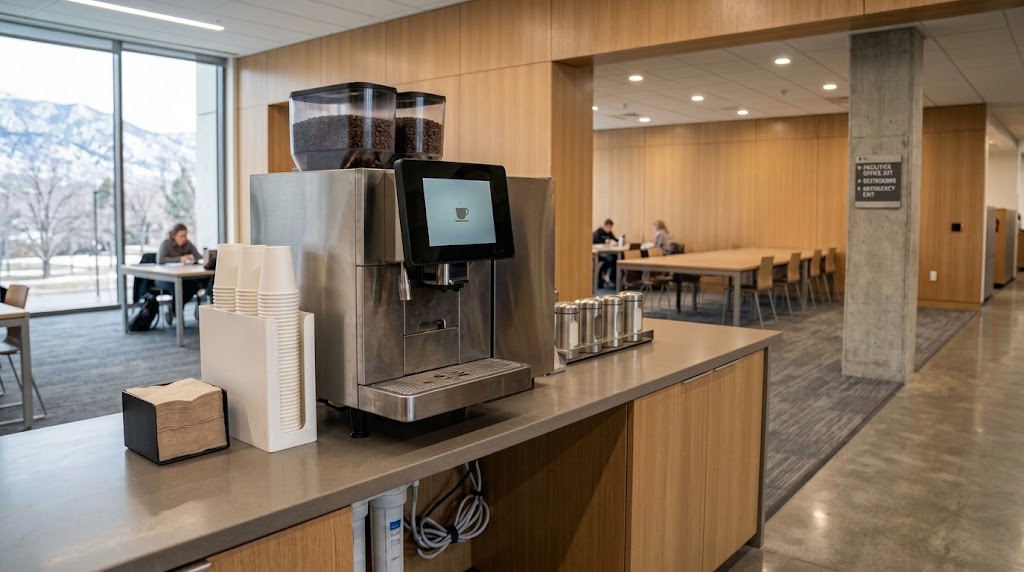
- Equipment selection and procurement: We match equipment to the property’s specific format, whether that’s a lobby coffee station, a full café counter, or a grab-and-go kiosk. Our coffee brewing equipment options cover the full range of espresso machines, brewers, and grinders that a WPS setup requires.
- Boyer’s Coffee as a local complement: Boyer’s Coffee, a Colorado-roasted brand for which Denver Beverage is the exclusive foodservice distributor, is available alongside the WPS program for properties that want a local premium option or a blended coffee program. That said, our full local and premium coffee roster also includes Ozo Organic Coffee, Queen City Collective, and Boulder Organic, depending on what fits the property’s program.
- 7-day equipment service coverage across the Front Range: If the espresso machine goes down on a Saturday morning, it doesn’t stay down through the weekend. Our field technicians cover the Front Range seven days a week.
- Statewide Colorado product supply: Distribution runs from Grand Junction to Sterling, Cheyenne to Pueblo, and through the I-70 corridor, so product availability isn’t limited to metro locations.
WPS is just one part of a bigger picture here. Our coffee programs page covers everything else we support, from local specialty roasts to bean-to-cup equipment. For hotels specifically, that sits inside an even broader single-source program, our hotel beverage and supply services also cover draft beer systems, micro markets, beverage gas, and breakroom supply.
Getting a WPS Program Set Up for Your Property
Whether you’re weighing WPS against a licensed store or already know it’s the right call, the specifics come down to your property’s format and footprint. Talk to Denver Beverage’s coffee team about what a WPS setup would look like for you.
Frequently Asked Questions
What is the difference between a We Proudly Serve Starbucks and a licensed Starbucks store?
We Proudly Serve Starbucks is a wholesale licensing program operated through the Nestlé partnership described above, which gave Nestlé rights to distribute Starbucks products in foodservice channels starting in 2018. A WPS operator buys Starbucks products through authorized suppliers and serves them under the WPS mark, with no direct Starbucks oversight. A licensed Starbucks store is a formal agreement with Starbucks directly, requiring full compliance with Starbucks operational standards, dedicated trained staff, and ongoing brand audits. The two look similar to a guest, but they’re very different for the operator running them.
Can guests earn Starbucks Rewards at a We Proudly Serve location?
Generally, no. Starbucks Rewards and Starbucks app integration, including the ability to earn Stars and redeem rewards, are typically available only at official Starbucks locations, meaning corporate-owned or licensed stores. Most WPS locations aren’t connected to the Rewards program, which is a real distinction for hospitality operators whose guests are active Rewards members.
Do We Proudly Serve locations have the full Starbucks menu?
No. WPS locations carry core Starbucks products, the coffee and espresso beans, branded syrups, and cups, but menu depth depends on the equipment on-site and what the operator chooses to offer. Seasonal and limited-run items, the full Frappuccino lineup, and certain specialty menu items are typically available only at licensed or corporate-owned stores with direct Starbucks product supply.
How much does it cost to set up a We Proudly Serve Starbucks program?
WPS costs cover equipment procurement, a product supply agreement, and setup, with no franchise fee or royalty on sales. The total varies by property format, a single lobby station versus a full café counter, but it’s a fraction of the $300,000-plus investment commonly associated with a licensed Starbucks store. WPS operators also set their own retail prices, so pricing decisions stay with the operator, not with Starbucks.
Does Denver Beverage help with We Proudly Serve equipment and supply in Colorado?
Yes. Denver Beverage is an authorized WPS program supplier, covering equipment selection, procurement, installation, product supply, and 7-day equipment service across the Front Range. Product distribution runs statewide, from Grand Junction to Pueblo and Cheyenne to the I-70 corridor. If you’re evaluating whether a WPS program fits your hotel, healthcare facility, or office location in Colorado, Denver Beverage is a practical starting point for that conversation.