Your vending contract is coming up for renewal, or ownership is asking whether the break area on the third floor is actually earning its square footage. Either way, you’re facing a real operational decision with financial consequences, one you’ll need to make a clear recommendation on before it lands on your desk again.
This article breaks down what separates a micro market from a vending machine across five practical dimensions: product range, user experience, revenue potential, technology, and management burden.
What Makes a Micro Market Different
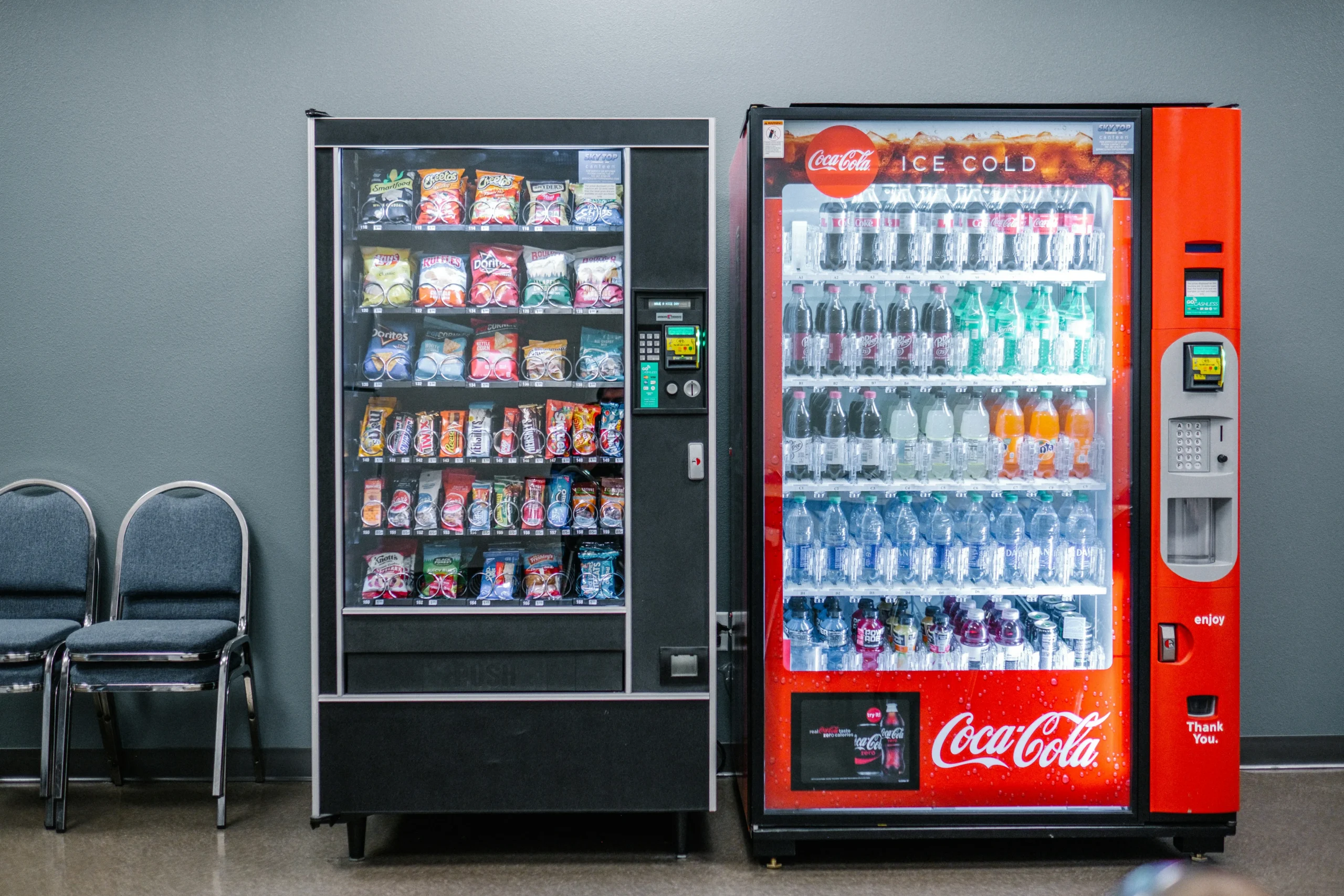
A vending machine is an enclosed unit. A customer selects a numbered item, pays at the machine, and the item drops. A micro market replaces that model with an open-concept retail space: open shelving, refrigerated shelving and coolers, and a freestanding self-checkout kiosk where customers scan items and pay.
The entire footprint is accessible without inserting money into a single machine. There is no glass between the customer and the product. That structural difference drives every other advantage and every operational consideration that follows.
Micro Market vs. Vending Machine: Side-by-Side Comparison
Here is how the two models compare across the dimensions that matter most to a property manager deciding what to put in a workplace breakroom, hotel floor, or healthcare facility.
| Dimension | Micro Market | Vending Machine |
| Product range | Fresh food options, refrigerated shelving, hot items, branded beverages, personal care items | Pre-packaged snacks and cold beverages only |
| User experience | Browse freely, open shelving, self-checkout kiosk, cashless payment | Select by number, pay at each machine, no browsing |
| Revenue potential | 3 to 5 times higher per location than vending | Lower per-location revenue baseline |
| Technology | Remote monitoring, inventory management platform, cashless payment, sales data reporting | Mechanical counters, manual restocking logs, limited data |
| Management burden | Fully managed operator handles restocking, ordering, and repairs | Property contacts vending vendor directly for every service need |
- Product range: A micro market can carry fresh food options, chilled meals, protein bars, energy drinks, personal care items, and full-size beverages. A vending machine carries pre-packaged snacks and canned or bottled cold drinks, constrained by the machine’s physical configuration.
- User experience: A micro market gives customers the ability to browse before choosing. A self-checkout kiosk handles the transaction for the entire basket in one step. Vending machines require a separate transaction at each unit, with no ability to browse alternatives once a selection is made.
- Revenue potential: According to the National Automatic Merchandising Association, micro markets generate up to five times more revenue per location than traditional vending machines. The format drives higher average transaction values because customers can see, browse, and combine items before paying.
- Technology: Micro markets run on an inventory management platform with remote monitoring, real-time sales data, and cashless payment as standard. A vending management system at the operator level pulls restocking data automatically. Traditional vending machines rely on mechanical counters and manual logs, with no visibility into what sold until someone physically visits the machine.
- Point-of-sale technology: The self-checkout kiosk in a micro market accepts credit, debit, and mobile payments. Older vending machines still require coins or bills at many locations, though newer units increasingly add card readers. The micro market kiosk centralizes all transactions in one place, generating a complete purchase record rather than per-machine counts.
For a property manager, the technology gap matters most when ownership asks what the amenity is actually earning. A micro market gives you that data. A vending machine often does not.
You can also extend a micro market program into adjacent breakroom supplies beyond the kiosk itself, covering paper goods, cleaning supplies, and pantry items in the same managed footprint.
The Operational Question Vendors Don’t Answer
Vendor websites explain what a micro market is. They rarely explain what happens the morning the kiosk goes down or who calls whom when the cooler runs warm. These are the three questions a property manager needs answered before recommending either solution.
Who handles restocking? Under Denver Beverage’s hotel micro market program using the GrabScanGo platform, the property manager does not touch inventory, ordering, or equipment. Denver Beverage’s team handles restocking frequency, product mix, and replenishment based on sales data pulled from the platform.
For office coffee and breakroom services on an office campus, the same model applies: the operator manages the program, the property does not. With a traditional vending machine, restocking schedules depend entirely on the vendor’s route and how frequently they visit, which varies by contract and location volume.
What happens when equipment breaks? Denver Beverage runs 13 field technicians with 7-day service coverage across the Front Range. If a kiosk or cooler in a Denver-area hotel or office has a problem, a technician is dispatched on the same schedule, including weekends. With a standalone vending machine, the property calls whichever vendor sold or placed the unit. Response time and accountability vary by vendor, and there is often no guaranteed service window.
What does it cost to get started? Under Denver Beverage’s fully managed model, the property does not own the equipment and carries no upfront installation cost. The operator owns and maintains the hardware. That is a different financial arrangement from purchasing or leasing kiosk equipment outright, which is how some micro market platforms are sold. A property manager evaluating options should ask directly whether the arrangement is managed service or equipment sale before comparing startup costs.
When a Vending Machine Still Makes Sense
A credible comparison has to name the cases where vending wins. There are three.
Very low foot traffic locations cannot justify the product volume a micro market requires to operate profitably. A micro market needs enough daily transactions to keep fresh food options rotating before they expire. If the location does not generate that volume, a vending machine is the right fit.
Insufficient square footage rules out the open-concept retail format entirely. A micro market needs room for open shelving, refrigerated coolers, and a self-checkout kiosk. Some locations simply do not have it.
Loss prevention risk is a real consideration in an open-format micro market. The honor system is built into the model: customers take items from open shelving and pay at the kiosk. Shrinkage is not zero. Remote monitoring and camera-based deterrence reduce it significantly, but a property where access is difficult to control and loss prevention risk is high may be better served by an enclosed vending machine that physically holds product until payment is made.
If any of these conditions apply to your property, say so when talking to an operator. A reputable food service operator will tell you honestly which format fits the location.
What to Ask Your Operator Before Deciding
Before signing with any vending or micro market operator, put these questions directly:
- Who owns the equipment? Managed service and equipment purchase are different financial arrangements. Clarify which model is being offered before comparing costs across operators.
- What is the restocking frequency? A micro market carrying fresh food options needs more frequent service than a snack vending machine. Confirm the schedule matches your location’s volume.
- Is there a revenue share, and how is it calculated? Some operators offer a commission on sales. Understand the percentage and the reporting cycle before agreeing to terms.
- What is the guaranteed service response time if the kiosk goes down? Ask for a specific commitment, not a general assurance. A kiosk that is down on a Friday afternoon needs a response that does not wait until Monday.
- Is cashless payment standard or an add-on? Cashless payment should be standard on any micro market kiosk placed today. If it is listed as an upgrade, factor that into the total cost.
- Does the operator provide sales data and inventory management reporting? A managed micro market should give the property regular data on what sells, what doesn’t, and what the location is earning. If the operator cannot provide this, the inventory management platform is not functioning as advertised.
For most property managers overseeing a hotel, office campus, or healthcare facility with sufficient foot traffic, a fully managed micro market outperforms vending on product variety, revenue, and guest or employee satisfaction. It also removes the operational burden that makes vending feel simpler.
The hotel lobby micro market installation at a Colorado Springs hotel produced $3,000 per month in profit, eliminated $50,000 in dead stock, and restored 24/7 access for guests without adding any staff workload. That is what a well-run managed micro market actually looks like in practice. For details on Denver Beverage’s specific program, visit our hotel micro market program page.
If you’re weighing these two formats for your property, the questions above are the fastest way to separate a real managed program from a platform sale. Talk to Denver Beverage and run them past an actual operator.
Frequently Asked Questions
What is the difference between a micro market and a vending machine?
A vending machine is an enclosed unit that dispenses one item at a time after payment. A micro market is an open-concept retail space with shelving, refrigerated coolers, and a self-checkout kiosk where customers browse freely and pay for their full selection in one transaction. The key structural differences are open product access and centralized point-of-sale technology, rather than per-machine dispensing.
Are micro markets more profitable than vending machines?
Yes, by a significant margin. Micro markets generate three to five times more revenue per location than traditional vending machines, as covered above. Higher average transaction values, broader product variety including fresh food options, and a browsing experience that encourages larger purchases all contribute to that gap.
How much does it cost to set up a micro market?
The answer depends on the arrangement. Under a fully managed model like Denver Beverage’s GrabScanGo program, the property manager carries no upfront installation cost and does not own the equipment. The operator owns and maintains the hardware. If a business is purchasing or leasing kiosk equipment outright from a platform vendor, startup costs are significantly higher. Always clarify which model is on the table before comparing figures across operators.
What are the disadvantages of micro markets compared to vending machines?
Three disadvantages are worth naming directly. First, micro markets require more square footage than a vending machine. Second, loss prevention is a real operational consideration: the open-format model relies on customers scanning items honestly at the self-checkout kiosk. Remote monitoring and cameras reduce shrinkage but do not eliminate it. Third, a micro market needs sufficient foot traffic to keep fresh food options rotating before expiration. Low-traffic locations are generally better suited to vending.
Which is better for a workplace breakroom, a micro market or a vending machine?
For a workplace breakroom serving 100 or more employees on-site daily, a micro market will outperform a vending machine on product variety, employee satisfaction, and revenue. The open shelving and self-checkout kiosk format allows employees to find what they want quickly without interacting with staff. For smaller offices or locations with low daily traffic, a vending machine may be the more practical fit. The decision comes down to volume, available square footage, and how much operational involvement the property is willing to take on.