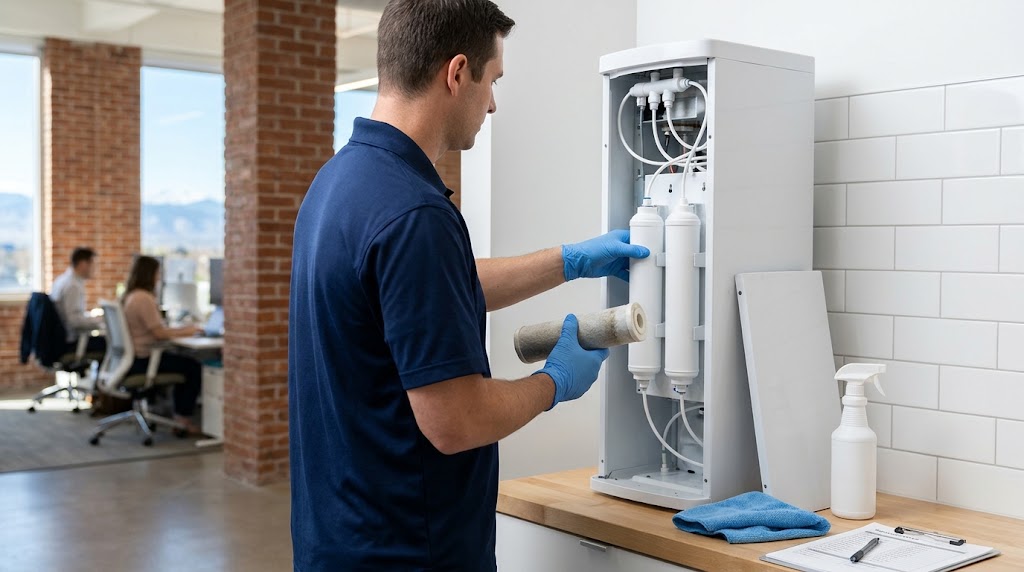
Buying a water cooler is the easy part. What you’re really signing up for is the service behind it: who installs the unit, who keeps it running, and who fixes it when it breaks. Those are the pieces an office water cooler service program covers, and knowing which of them a provider commits to makes for a better conversation than asking “what do you offer?”
What a Managed Program Includes
Hydration matters at work, and a program that runs in the background keeps employees productive and hydrated without anyone on your team managing it. A good program breaks down into a few core components. Each one is worth asking any provider about:
- Installation and initial setup: Your provider places the equipment, connects it to a water line, and installs the first filter. With Denver Beverage, installation is done by its own technicians.
- Scheduled filter changes: Filtration treats your building’s water before it reaches the dispenser, and you need to change the filter over time. How soon depends on how much water your office uses and your local water quality, which is why it helps to have a provider managing it.
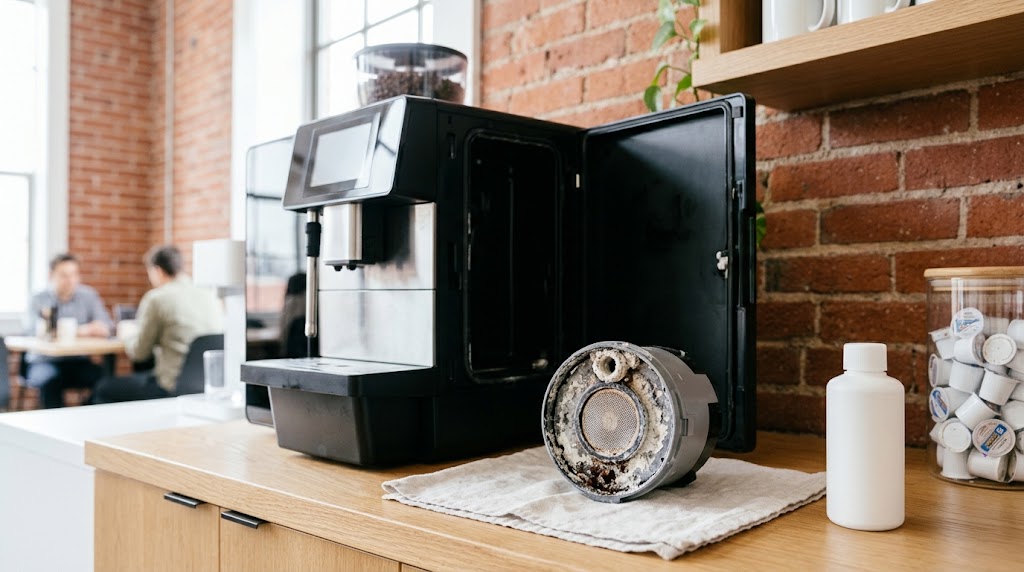
- Cleaning and sanitation: A water cooler has surfaces that touch drinking water, so cleaning matters. Routine cleaning is different from a full sanitation visit, and who handles which tasks is something the Denver Beverage team explains when your program is set up.
- Preventive maintenance and repair: Preventive maintenance means catching a small fault before it becomes a breakdown, with functional checks of the cooling and heating elements and the dispensing mechanism. When equipment does stop working, you want to know who responds and how quickly.
- Restocking consumables: Where it applies, such as cups, the program can cover restocking so your staff isn’t running out to buy them.
How Often Does Each Service Element Happen?
How often each service happens is where programs differ most, and it’s the part many providers leave vague. Here’s what a good program typically looks like, so you have something to compare against:
- Filters: On a set schedule tied to usage and water quality. A common industry range is every 6 to 12 months, so treat that as a range to evaluate, not a fixed promise from any one provider.
- Sanitation: At least once a year, and more often in high-use settings.
- Preventive maintenance checks: Built into filter-change visits, so one visit covers both.
Questions to Ask Your Water Service Provider
Providers often describe service in broad terms. These questions turn it into specifics you can compare side by side:
- What does a service visit include, and is it bundled with filter changes or scheduled separately?
- Who performs the service: the provider’s own technicians, or a third-party contractor?
- What’s the response time if the equipment stops working?
- Is the equipment provided, or do you supply your own?
- What happens if water quality changes and the filter needs to change sooner?
Ask for the answers in writing before you sign anything, so you can compare programs on equal footing.
How Denver Beverage’s Water Service Program Works
Denver Beverage has served 2,400+ commercial customers on the Front Range and the I-70 corridor since 1986. Its water program includes Bevi smart water machines, along with water filtration, water coolers, bottleless water systems, and ice machine service, all installed and serviced by Denver Beverage.
Its own technicians handle every installation and service visit, with no third-party contractors. The team has 13 service technicians who are CFESA-trained, and it offers 7-day service coverage and a 24-hour service response. Repairs carry a 90-day labor warranty.
If you’re building out a broader office program, Denver Beverage also supplies office coffee service and snacks and pantry supply. Equipment is provided for qualified accounts.
Ready to Compare Water Programs?
You now have the questions to ask, so the next step is putting them to a real program. If you’re evaluating water cooler service for your office on the Front Range, the Denver Beverage team can walk you through what the program covers, from installation to filter changes to repairs. Call 303-295-3737 or request a quote, and you’ll hear back within 24 hours.
FAQ
What’s the difference between a water filtration service and a water delivery service?
A filtration service connects to your building’s water supply and filters it at the point of dispense, while a delivery service brings bottled water to your office. Filtration avoids the storage and handling that bottles require.
How do I know when my office water cooler filter needs to be changed?
A common industry range is every 6 to 12 months, but it depends on how much water your office uses and your local water quality. In a managed program, filter changes are part of the service, so your staff doesn’t have to track them. The Denver Beverage team can explain how this works for your program, so call 303-295-3737.
Does my office need a water line for a bottleless cooler?
Yes. A bottleless cooler connects to a water line instead of using delivered bottles. If your office doesn’t have a line near the spot you want, raise it before installation is planned, since installs take planning and are rarely immediate.
What happens if the equipment breaks down?
With Denver Beverage, its own CFESA-trained technicians handle beverage equipment repair, with a 24-hour service response and 7-day service coverage. Repairs also carry a 90-day labor warranty. With other providers, who repairs it depends on their model, so it’s worth asking before you sign.