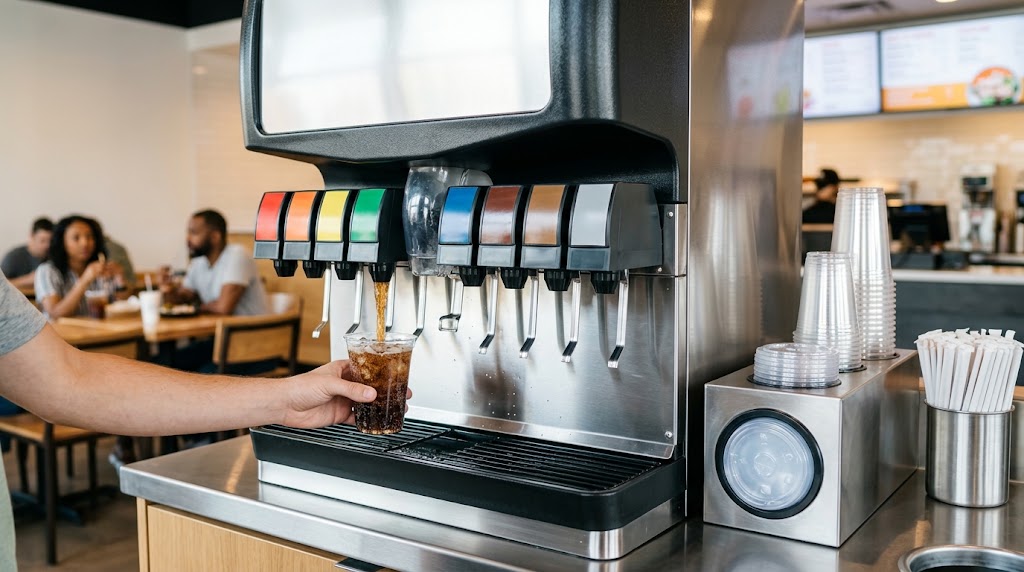
When restaurant owners call us, they usually ask for a “six-product Coke machine” or an “eight-flavor soda setup.” Those are exactly the right questions, to an extent. Once we get past flavor count, there are a few more decisions that affect your counter space, your ice setup, and how the whole system gets installed.
This guide is for commercial accounts: restaurants, bars, hotels, and similar businesses. Denver Beverage works with commercial customers only, so if you’re looking for a home soda machine, we’re not the right supplier.
For commercial operators, we’ll cover every soda fountain machine type in plain language. That includes what valve count means behind the counter, how countertop and drop-in units differ in practice, and how the program works when you’re ready to get set up.
What “6-Valve” and “8-Valve” Actually Mean
Valve count tells you how many drink options your machine can dispense. A 6-valve soda fountain machine typically covers Coke, Diet Coke, Sprite, a lemon-lime or flavored option, a juice or tea, and water. An 8-valve setup adds two more positions. Sports bars and busy restaurants commonly use the extra positions for additional flavors.
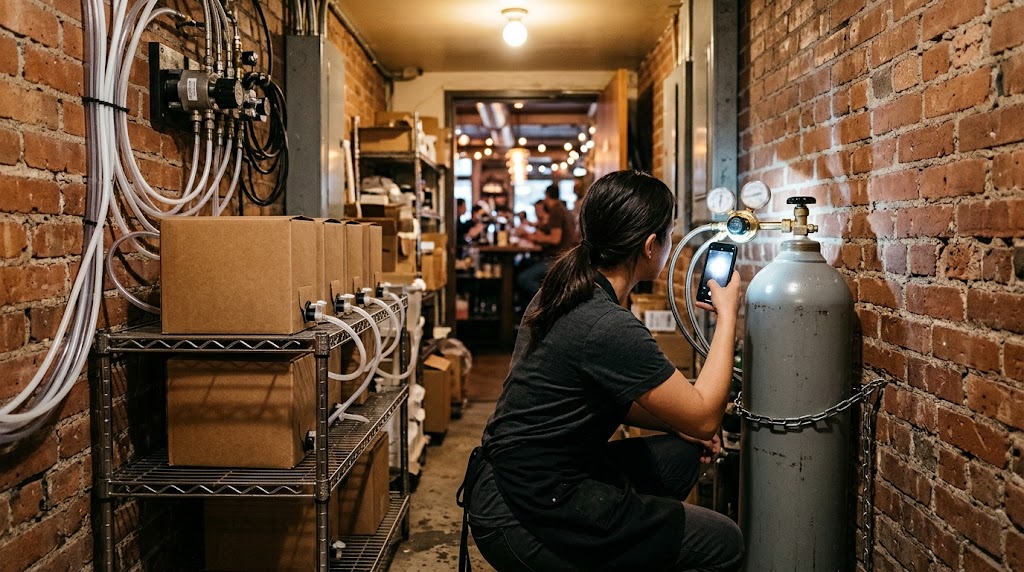
Each valve connects to one bag-in-box (BIB) syrup pouch stored under or behind the counter. A post-mix dispenser combines syrup and carbonated water at the nozzle. That’s the standard today. Pre-mix dispensers, where syrup and water arrive pre-blended, are rarely used in modern commercial installations.
Here’s what the valve count means for your back-of-house setup:
- 6-valve: Six BIB syrup pouches and one shared carbonation system. Storage footprint is manageable for most bars and mid-size restaurants.
- 8-valve: Eight BIB pouches, which means more under-counter or back-of-house storage. Your CO2 supply, which is part of the fountain program, handles carbonation for all valves from one source.
- Product management: More valves mean more product to track, reorder, and swap when a BIB runs out.
Before you default to “more is better,” think about how many fountain drink flavors your customers actually order. A restaurant with a short drink menu might stay at 6 valves. A sports bar or busy restaurant with a wider menu might want 8. We’ll help you size it correctly during account setup.
Countertop vs. Drop-In: What’s the Difference?
This is the decision that shapes your counter, your ice setup, and your install. Countertop and drop-in units are both standard commercial formats. They differ in how they chill your drinks and what your counter needs to support them.
- Countertop (counter electric): Sits on top of the counter with its own self-contained chilling unit, and draws water and CO2 from connected lines. No counter modification is required. It fits locations with limited under-counter space or machines that may need to be repositioned. The footprint is compact, and the unit doesn’t depend on your ice supply for drink temperature.
- Drop-in (ice and beverage): Installs into a cut opening in the counter, with the dispenser head flush with the counter surface. Ice and beverages dispense from the same unit. The cold plate under the ice bin chills the syrup lines as ice melts over it, so no separate chiller unit is needed. The ice must stay stocked, because drink quality drops quickly if the bin runs low. It’s common in high-volume bars and restaurants with built-in counter infrastructure and a steady ice supply.
- Bar gun (soda gun): A third form factor worth putting in the same conversation. It’s a hand-held multi-flavor dispenser mounted behind the bar and connected to a remote chiller unit. It’s the right call when counter space is the binding constraint. For a closer look at how bar gun systems work technically, our fountain and bar gun troubleshooting guide covers diagnostics and operation in detail.
A drop-in dispenser needs a cut counter before the install happens, and that takes planning. Installs are rarely immediate regardless of which format you choose.
Self-Serve vs. Staff-Served Setups
Where the machine sits in your space determines who operates it. That shapes which form factor makes sense.
- Self-serve soda station: Countertop units work well here, positioned on a quick-service counter or in the dining room. Guests fill their own cups, which reduces staff involvement in drink service.
- Staff-served behind the bar or pass-through: Drop-in units and bar guns are the natural fit. Staff controls the dispense, and bar guns are staff-only by design.
- Coca-Cola Freestyle: A distinct category of self-serve touchscreen drink dispenser with a much wider fountain drink flavors menu than a standard 6 or 8-valve machine. It operates through a specific program arrangement with The Coca-Cola Company, and not every account qualifies. If you’re interested in a Freestyle for your restaurant, talk with us during account setup, and we can help you determine eligibility.
For a complete look at our restaurant and bar beverage programs, including how Coca-Cola fountain fits into the full account picture, see that page.
How the Whole System Works (BIBs, CO2, and Water)
A post-mix dispenser draws from three sources: bag-in-box syrup, a CO2 tank, and your water supply. The carbonation system mixes CO2 and water under pressure before they reach the nozzle. Syrup is added at the nozzle to create the finished fountain drink.
CO2 is supplied as part of the fountain program, alongside your BIB supply. We don’t market it separately. Water quality affects both taste and equipment longevity, so we assess the install location before setup to catch issues early.
Want to see what else comes with your account? Browse all beverages we supply, including juice, draft beer, and other program options.
What It Takes to Get a Fountain Soda System (and What It Costs)
This is where most operators want a straight answer. Here’s how a restaurant beverage system through Denver Beverage works.
- Equipment: Dispensing equipment is provided at no charge for qualified commercial accounts. You don’t buy the machine outright, and Denver Beverage owns and maintains it.
- Product: BIBs and CO2 are purchased through Denver Beverage as part of the account. Pricing, minimums, and contract terms are discussed during account setup
- Installation: Done by Denver Beverage’s own CFESA-trained technicians, not third-party subcontractors. Installs take planning and are rarely immediate, and we’ll walk you through the timeline when you call.
- Service: 13 technicians cover the Front Range and the I-70 corridor, with 7-day service coverage and a 24-hour service response. Repairs carry a 90-day labor warranty.
- Account scope: A fountain soda program typically comes alongside other account elements, like chemicals or restroom products. It’s worth knowing before you call, and it keeps everything under one account.
Running draft beer alongside your fountain? Here’s how we handle draft beer system installation and service. If you have questions about equipment repair, our commercial kitchen and beverage equipment repair page explains what we service and how.
Beverage gas comes with your fountain and draft programs rather than as a standalone product. Beverage gas supply is simply part of the same account.
Get a Quote
Ready to talk about what setup makes sense for your restaurant or bar? Call us at 303-295-3737 or request a quote, and we’ll respond within 24 hours to walk you through which configuration fits your space and volume.
FAQ
What’s the difference between a 6-valve and 8-valve soda machine?
A 6-valve machine dispenses six drink options and an 8-valve machine dispenses eight, each connected to its own bag-in-box syrup pouch. The right count depends on your menu and how much under-counter BIB storage you have. An 8-valve setup needs more storage space and more product management behind the counter.
What is a drop-in soda fountain, and do I need a special counter for it?
A drop-in ice and beverage dispenser installs into a cut opening in your counter, with the dispenser head sitting flush at counter level. The ice bin chills the syrup lines through a cold plate underneath it. Yes, you need a counter with a cut opening sized to the unit. That modification has to happen before installation, so this format requires more lead time and planning than a countertop unit.
Does a restaurant need to buy the soda fountain machine, or is it provided?
The equipment is provided at no charge for qualified commercial accounts, so you don’t purchase the machine. Denver Beverage owns it and maintains it.
How does a post-mix soda dispenser work?
A post-mix dispenser combines syrup and carbonated water at the nozzle when you dispense. CO2 carbonates the water through the carbonation system, and the syrup stays separate until you press the button. This is the standard for commercial fountain drink setups today.
Can I get a Coca-Cola Freestyle machine for my restaurant?
Coca-Cola Freestyle is available for qualifying accounts, and eligibility is controlled by The Coca-Cola Company. It’s a touchscreen drink dispenser with a wide fountain drink flavors menu. If you’re interested in one for your location on the Front Range or the I-70 corridor, call us at 303-295-3737 and we can walk you through whether your account and location are a fit.