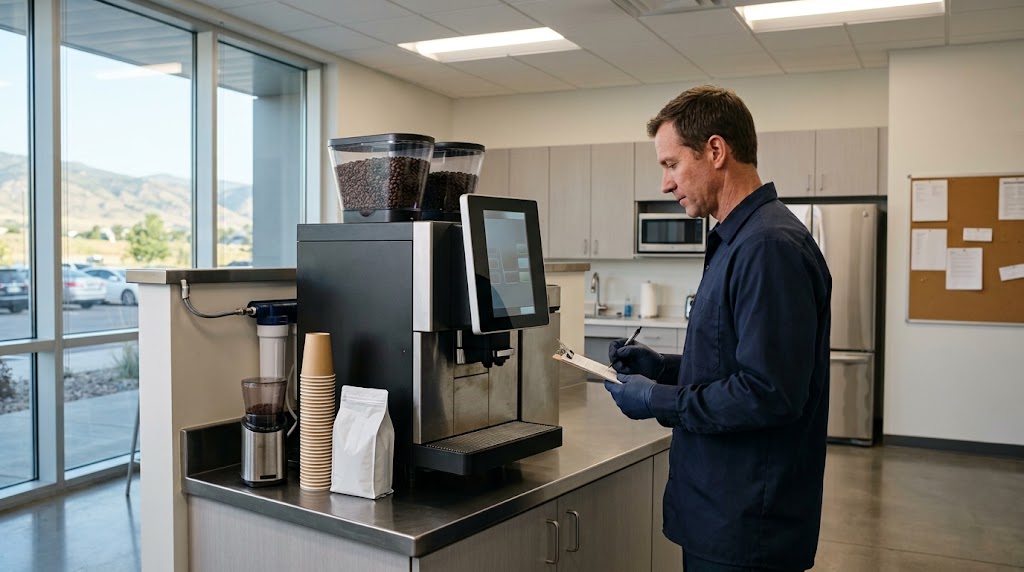
You’ve decided a Starbucks bean-to-cup machine is the right fit for your location’s coffee program. Now the real question is which model. Two WPS-approved machines cover most commercial deployments across the program: the Starbucks Serenade and the iCup Touchscreen, and they’re built for different volumes, spaces, and staffing models.
Choose wrong and you either get a bottleneck during peak hours or more machine than your location will ever need. Denver Beverage is an authorized We Proudly Serve (WPS) placement partner in Colorado. Here’s a spec-by-spec look at both machine categories, so you understand the trade-offs before your first conversation with a rep, who’ll confirm exactly which models are available for your site.
What “WPS-Approved” Actually Means
A lot of buyers searching for a “Starbucks coffee machine for business” assume they can source one through a standard equipment channel or a big-box retailer. That’s not how the We Proudly Serve program works.
WPS machines are factory-specified and commercially rated. They require an authorized placement partner to install, commission, and maintain them. Buying a Starbucks-branded machine off a retail shelf doesn’t get you:
- WPS-approved beans
- A certified installation
- A service relationship
It gets you a consumer appliance.
What an authorized partner brings to the placement is the full program:
- Starbucks-licensed equipment
- Approved whole-bean supply
- Professional installation
- Ongoing preventive maintenance
Denver Beverage holds WPS authorization for Colorado. That credential is what makes the rest of the coffee programs described on our main coffee page possible for Colorado businesses.
If you’re evaluating the Starbucks coffee program for the first time, start here rather than with a product listing. The machine is only one part of what you’re actually buying into. For the full range of coffee brewing equipment Denver Beverage installs and services across Colorado, beyond Starbucks placements, that’s the page to browse.
The Starbucks Serenade Bean-to-Cup Machine: Specs and Fit
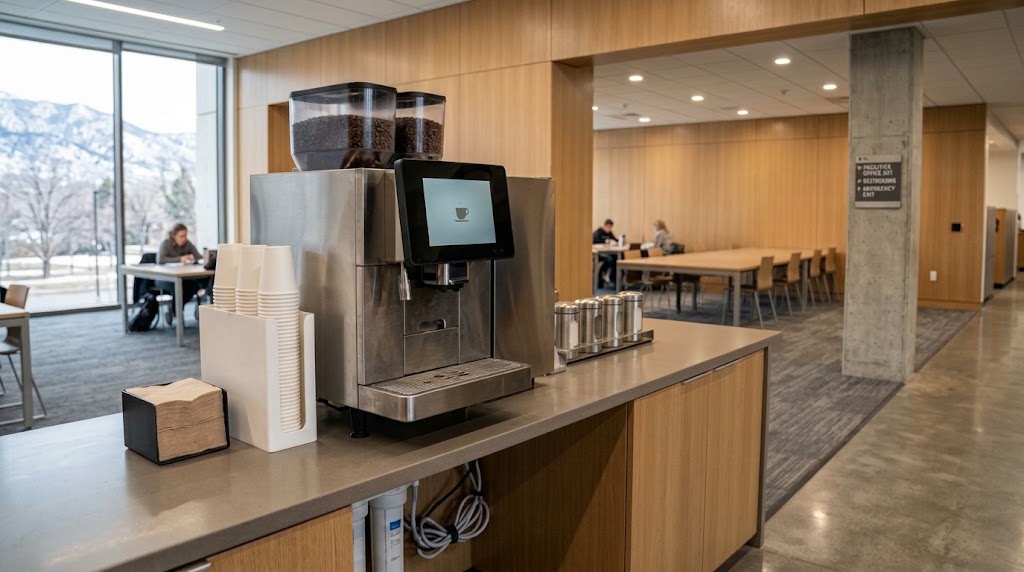
The Serenade is built for high-traffic, self-serve spots, places where it has to run largely unattended and keep up with peak demand without anyone standing by to operate it. Hotel lobbies, healthcare waiting areas, large office breakrooms, and convenience store coffee stations are exactly where this machine is designed to work.
- Touchscreen: A 17″ high-definition display walks guests and employees through the full beverage menu themselves, no staff assistance needed.
- Beverage range: Hot coffee across multiple Starbucks bean options, plus iced coffee, chai latte, and hot chocolate. One machine covers real hot and cold options, which matters when your location serves a wide mix of guests.
- Built-in grinder: A whole-bean hopper feeds a grinder that grinds fresh per cup, that’s what separates a real bean-to-cup machine from a pod or pre-ground system. You get freshly ground coffee in every cup, at volume, with no barista needed. That’s what “barista-quality coffee” actually means here: it’s backed by the machine’s espresso extraction process, not marketing language.
- Throughput: 50 cups per hour, a number most supplier pages don’t even publish, but it’s the one that tells you whether the Serenade can handle your location’s peak demand. A hotel lobby pushing 200 guests through the morning rush needs a machine that keeps up, and at 50 cups per hour, the Serenade does.
- Power: 120V/15A, a standard outlet in most commercial settings. Whether you’ll need a dedicated circuit depends on the electrical conditions at your specific site, so Denver Beverage confirms that at site assessment instead of guessing with a blanket rule.
- Payment flexibility: A credit card reader supports fully unattended deployments, including convenience stores and self-serve lobbies where cashless payment is the default.
- Best-fit locations: Hotel lobbies and common areas through Denver Beverage’s hotel beverage and supply services, healthcare waiting rooms and public-facing areas through healthcare beverage programs, large office breakrooms (300+ employees), and convenience store coffee stations.
The iCup Touchscreen: Specs and Fit
The iCup Touchscreen is the smaller-footprint option in the WPS lineup. It’s designed for locations where a dedicated, attended or semi-attended coffee station makes more sense than a fully self-serve kiosk. Mid-size office breakrooms, hotel executive lounges, healthcare staff areas, and smaller restaurant or bar applications are the typical fit.
- Touchscreen interface: 10″ display. The UI is intuitive for an attended setup where a staff member or designated user is typically making selections rather than a revolving door of self-serve guests.
- Beverage range: Hot coffee, specialty coffee drinks, and milk-based options through the machine’s milk frothing system. If a location’s staff want cappuccinos and lattes alongside standard drip-style coffee, the iCup’s milk capability covers that without a separate espresso machine.
- Built-in grinder: Same whole-bean, grind-per-cup approach as the Serenade. Freshly ground coffee in every cup, whether the machine is serving a breakroom of 150 or a hotel executive lounge with lighter daily volume.
- Throughput: If your site evaluation is hinging on a specific cups-per-hour figure for the iCup, Denver Beverage can confirm throughput specs at site assessment. Citing an unverified number here would give you a false baseline for an equipment decision. Don’t design your program around a figure that hasn’t been confirmed against your specific model and configuration.
- Footprint vs. Serenade: Smaller physical footprint, smaller display, no cashless payment integration as a standard feature. It’s the right machine for spaces where self-serve cashier capability isn’t needed and the larger Serenade would be oversized for both the location and the volume.
- Best-fit locations: Mid-size offices (100 to 300 employees) as an office coffee service solution, hotel executive lounges, healthcare staff areas, and smaller restaurant or bar applications where a compact, attended automatic espresso machine fits the workflow.
Maintenance, Installation, and Ongoing Service: Denver Beverage’s Role
Machine specs are the easy part of this decision. What actually determines whether a WPS placement runs well over two or three years is the installation, the preventive maintenance program, and the service relationship behind it, the part of the evaluation that’s easiest to overlook.
Installation: Denver Beverage handles the full installation, not a drop-ship shipment you have to manage yourself. That includes:
- Site assessment
- Equipment placement
- Initial setup
- Starbucks-approved commissioning
You’re not project-managing a technician sent by a national distributor who’s never seen your location before. Our team has been installing commercial beverage equipment in Colorado since 1986, and the WPS placement process runs on that same experience.
Preventive maintenance: WPS machines need scheduled PM, and that’s not optional; it’s not something you add later once the machine starts acting up. Denver Beverage sets your PM intervals at program onboarding and handles them through our 13 field technicians, who cover Colorado with 7-day service availability. If you’re on the Front Range, that means same-market technicians who already know these machines. Outside the Denver metro, our statewide distribution network keeps commercial kitchen and beverage equipment repair support running even where direct technician coverage stays Front Range-concentrated.
Machine maintenance and cleaning: The brew path on both the Serenade and the iCup runs a self-cleaning cycle, so the internal brew system takes care of itself. The milk system on milk-capable models is different; it needs a separate cleaning cadence, and that job sits with the operator, not the machine. Denver Beverage walks through both cleaning requirements at installation, so your team isn’t guessing.
Two compliance questions worth raising at the same time:
- Machines deployed in semi-public settings like hotel lobbies and healthcare waiting areas fall under local health department sanitation requirements, including FDA Food Code guidance on cleaning and sanitizing food-contact surfaces.
- NSF/ANSI 18 certification status for specific WPS machine models is a fair procurement question for facilities managers, and it’s one Denver Beverage can confirm for your model at site assessment rather than generalizing across the whole program.
Bean supply: WPS-approved Starbucks whole beans are part of the program, and Denver Beverage handles that supply through the same delivery relationship as the rest of your beverage program. In practice, that means:
- One supplier account
- One delivery relationship
- No separate Nestlé Professional account to manage alongside everything else
7-day service coverage: Equipment service runs 7 days a week across the Front Range through our field technician team. Outside that service area, our statewide distribution network keeps your program supplied, though on-site technician response stays concentrated in the Front Range. Source a WPS machine through a national distributor with no local presence instead, and you’re the one managing service calls remotely.
Matching the Right Machine to Your Location
The decision between the Serenade and the iCup comes down to three things: traffic volume, staffing model, and whether you need cashless payment integration.
High-traffic, self-serve locations (hotel lobbies, healthcare waiting rooms, offices with 300 or more employees, convenience store coffee stations): The Serenade at 50 cups per hour with its 17″ touchscreen and cashless payment capability is the right fit. It’s built to run unattended and keep up.
Mid-size, attended or semi-attended locations (offices with 100 to 300 employees, hotel executive lounges, healthcare staff areas, smaller restaurant or bar applications): The iCup Touchscreen is the right office coffee service machine for this footprint. Smaller footprint, attended UI, milk frothing system for specialty coffee drinks.
Not sure which machine fits: Denver Beverage does a site assessment before recommending a machine. Throughput requirements aren’t always obvious until someone measures actual traffic patterns at your location during peak hours. Don’t guess at a 50-cup-per-hour threshold and discover you need two machines six months into the program.
Talk to Denver Beverage About a Site Assessment
Matching the right Starbucks bean-to-cup machine to your location comes down to real traffic data, not a spec sheet guess. Denver Beverage’s coffee programs team can walk through a site assessment for your Colorado property and recommend the Serenade or iCup based on what your location actually needs
Frequently Asked Questions
Can you get a Starbucks coffee machine for your business?
Yes, but only through an authorized We Proudly Serve (WPS) placement partner like Denver Beverage, not through a standard retail channel. The We Proudly Serve program places commercially rated, factory-specified machines through authorized partners, a different procurement model from buying a consumer Starbucks-branded appliance at retail. An authorized placement gets you WPS-approved equipment, certified installation, approved bean supply, and an ongoing service relationship, none of which come with a retail purchase.
What drinks can a Starbucks commercial bean-to-cup machine make?
Both WPS-approved machines make a range of hot and cold coffee drinks, and the iCup Touchscreen adds milk-based specialty drinks the Serenade doesn’t cover. The iCup’s milk frothing system makes cappuccinos and lattes alongside standard coffee, a lineup the Serenade’s doesn’t include. Both machines grind fresh coffee per cup from a built-in grinder and bean hopper, rather than pods or pre-ground supply.
How much does a Starbucks bean-to-cup machine cost for a business?
WPS machines aren’t priced as retail purchases; they’re placed through a commercial lease or purchase agreement that includes equipment, installation, approved bean supply, and the service relationship. Cost per cup depends on your volume, your program configuration, and how the agreement is structured, and Denver Beverage can provide program pricing at a site assessment. If you’ve seen a retail price for a Starbucks commercial coffee machine listed online, it’s likely from a non-US market or a non-WPS channel, and it won’t reflect what the program actually costs in Colorado.
How do you maintain and clean a Starbucks bean-to-cup machine?
The brew path cleans itself automatically through a built-in self-cleaning cycle, while the milk system on milk-capable models like the iCup is a separate cleaning task the operator handles on its own cadence. Denver Beverage covers both cleaning requirements in full at installation, so your team isn’t guessing from a manual. Scheduled preventive maintenance is handled by Denver Beverage technicians, not the operator.
What’s the difference between a Starbucks bean-to-cup machine and a traditional espresso machine?
A traditional espresso machine needs a trained barista to dose, tamp, and pull shots by hand, while a Starbucks bean-to-cup machine automates that entire process. Its built-in grinder feeds from a bean hopper, dosing and grinding fresh per cup before the espresso extraction happens automatically. You get the same freshly ground coffee and espresso-based drinks without needing barista staffing, which is what makes an automatic espresso machine the right fit for a hotel lobby or healthcare waiting area that can’t staff a barista station.