You’re weighing two legitimate options, and neither one is obviously wrong. Local roasters signal quality and community investment. National brands signal consistency and immediate recognition. Both are real advantages, and the right choice depends on what your office actually needs, not on a universal preference for one or the other.
This article walks through five decision factors that separate the two and then addresses something most buyers don’t realize going in: you may not have to choose at all.
Local vs. National Office Coffee: The Five Factors That Actually Matter
No single factor settles this comparison. The answer depends on how you weight these five criteria against each other, because a 200-person tech company in Denver and a 40-person professional services firm in Fort Collins are going to land in different places. Work through each factor relative to your situation, and the right direction becomes clearer.
1. Coffee Quality and Freshness
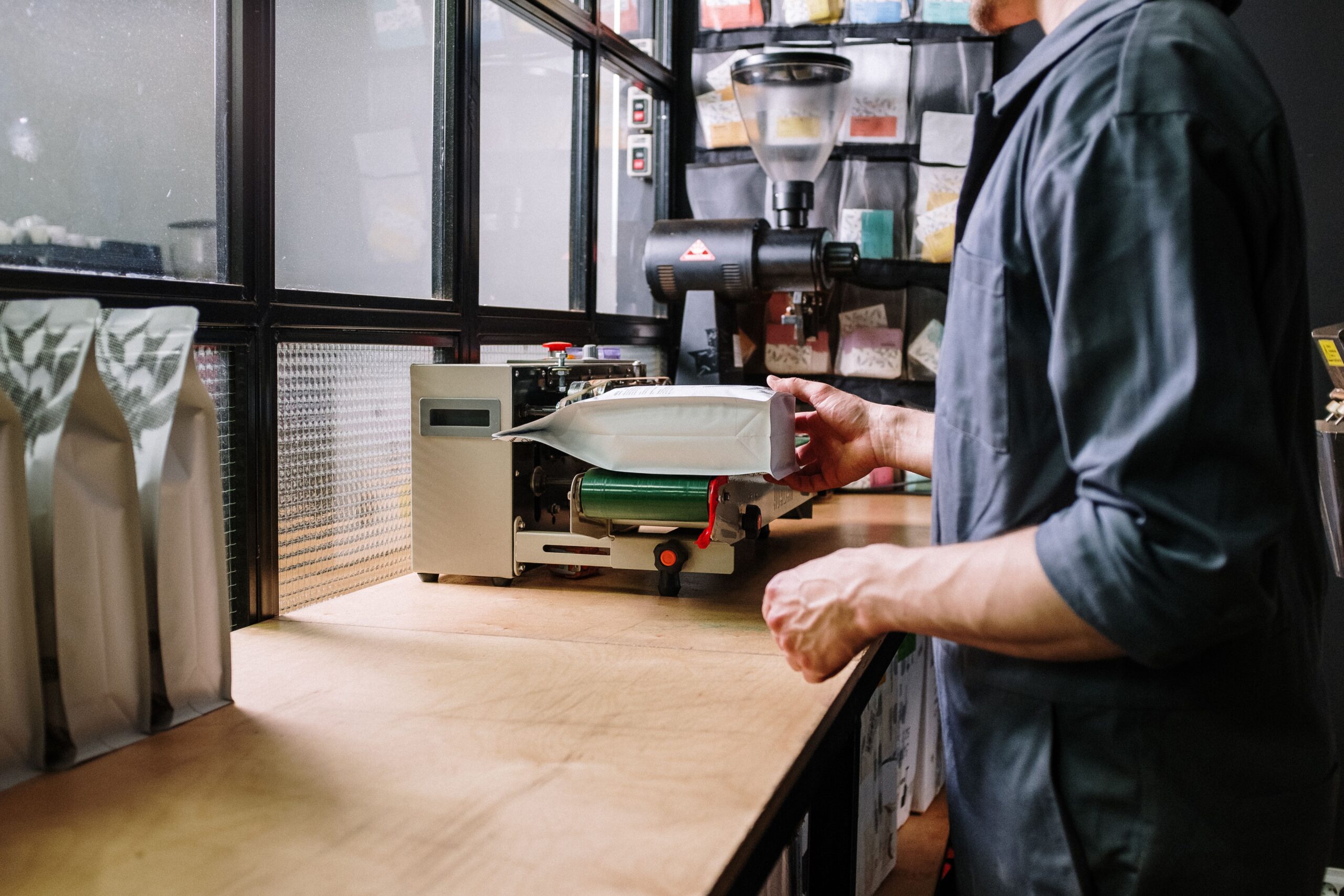
This is where the local roaster argument is strongest, so it’s worth laying out the actual mechanism. Local roasters like Boyer’s Coffee roast in smaller batches and typically ship within days of roasting, and that timeline matters because freshness drops off fast once beans are roasted:
- CO2 off-gases
- Aromatic compounds fade
- Flavor flattens
In a bean-to-cup or whole-bean program, where your equipment is grinding fresh, you can actually taste the difference between a two-day-old roast and a three-week-old one.
National brands bring a genuine counter-argument here. Lavazza, Peet’s, and Starbucks have invested heavily in roasting consistency across massive production volumes, so a cup of their product tastes the same in Denver as it does anywhere else. For offices where consistent flavor across different staff, different shifts, and varying commercial coffee equipment matters more than peak freshness, that repeatability is a real advantage. It comes down to whether you’re optimizing for the best possible cup or the most predictable one.
2. Brand Recognition and Employee Perception
There’s a legitimate business case for putting a national coffee brand in your breakroom, and it’s worth naming directly: employees recognize Starbucks, Peet’s, and Lavazza, and that recognition carries real psychological weight. A familiar logo on the machine says “we invested in your coffee” without you having to explain anything. If you’re trying to signal a premium perk to staff, or impress clients in a conference room, brand recognition does real work.
Local roasters carry a different kind of status signal. Ozo Organic Coffee, Queen City Collective, and Boulder Organic read as intentional choices rather than default procurement decisions. In Front Range offices where employees skew toward specialty coffee awareness, a local roaster can outperform a national brand on perceived quality, even if nobody’s heard the name before. Single-origin coffee on a breakroom counter says something different than a national franchise logo, and neither signal is wrong, they just speak to different workplace cultures.
3. Cost Per Cup and Pricing Transparency
Cost per cup is the right unit to compare, but it’s harder to calculate than most buyers expect. The real variables are:
- Volume purchased
- Whether the equipment is provided, leased, or owned
- Whether the program bundles supplies like filters, cups, and creamers
- Contract length
National programs frequently bundle these costs in ways that make the per-cup figure hard to isolate, while local roasters tend to offer more transparent line-item pricing, especially for smaller offices.
Bulk coffee pricing from a national brand doesn’t automatically mean a lower cost per cup once equipment, delivery frequency, and supply chain markup are factored in. A regional provider who consolidates coffee, breakroom supplies, and snacks into one account can cut administrative overhead in a way that offsets a per-pound price difference. The real comparison isn’t the bag price, it’s the total cost of running the program, and any corporate coffee contract worth signing should make those line items visible upfront.
4. Supply Reliability and Service Continuity
Supply reliability is where national brands have traditionally claimed the advantage, and that claim deserves some honest scrutiny. Large national distributors have broad supply chains, but centralized logistics can also mean:
- Longer lead times
- Less local inventory flexibility
- Customer service routed through a call center instead of a local account rep
A regional provider with a consistent supply chain covering statewide Colorado, from Grand Junction to Sterling and from Fort Collins to Pueblo, can respond faster to restocking needs and equipment issues. Denver Beverage runs 13 field technicians with 7-day equipment service coverage across the Front Range, so when a machine goes down on a Thursday, that coverage matters more than a national brand’s theoretical supply chain breadth. For a workplace coffee program, the last mile is where reliability actually gets tested.
5. Customization and Program Flexibility
National coffee programs are designed for scale, which tends to mean:
- Standardized options
- Predictable delivery cadences
- Limited ability to mix brands, adjust frequency, or change equipment mid-contract
If your office grows from 80 people to 150, or you want to add a cold brew option alongside your hot program, renegotiating a national corporate coffee contract can be slow and friction-heavy.
Local and regional providers typically offer more room to move. A well-structured office beverage solution can:
- Mix local and national brands in the same program
- Adjust delivery frequency as headcount changes
- Swap equipment without restarting the contract from scratch
That flexibility matters most if you’re not sure yet what your office actually wants and need room to shift as you learn, which sets up the next question directly.
Do You Actually Have to Choose?
You don’t, not if your provider carries both tiers under one program. Most buyers approach this as an either/or decision because most providers only carry one category or the other: a national-brand distributor won’t carry Boyer’s or Ozo Organic Coffee, and a local roaster won’t offer Starbucks authorized placement. So buyers end up choosing a vendor before they’ve fully worked out what they want.
Denver Beverage’s office coffee service covers both tiers under a single program:
- Local/premium lineup: Boyer’s Coffee, Ozo Organic Coffee, Queen City Collective, and Boulder Organic
- National tier: Starbucks (authorized placement), Lavazza, and Peet’s
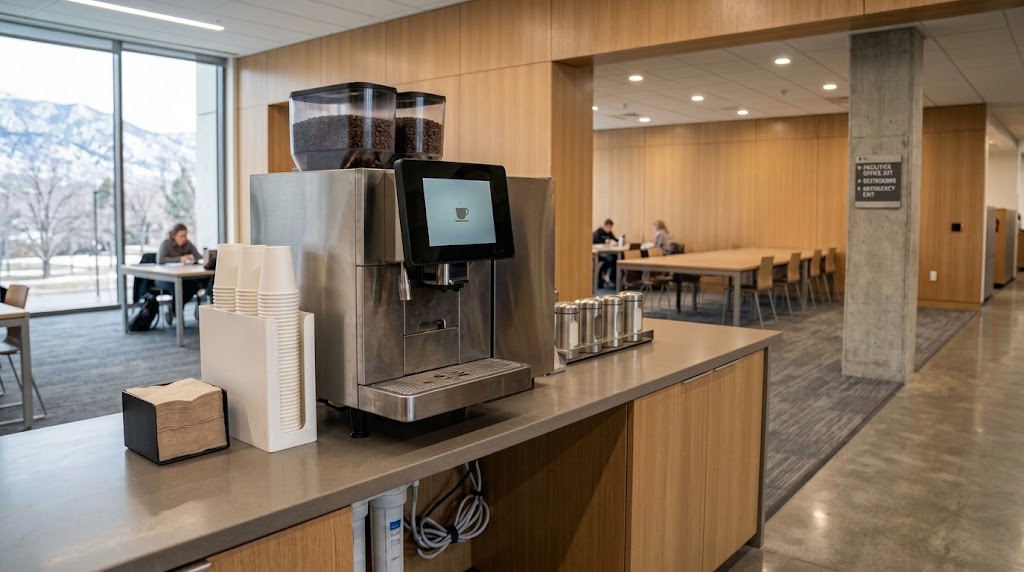
A Front Range office can run a Starbucks bean-to-cup machine in the lobby conference room and a Boyer’s or Queen City Collective program in the staff breakroom, brewed on a De Jong Duke or Bravilor Bonamat, or start with one and shift to the other as the office culture clarifies itself.
That dual roster matters because it removes the vendor-category decision from the brand decision. You don’t have to commit to “local” or “national” as a program philosophy before you know which brands your team actually responds to. From here:
- Visit coffee programs to see how the full lineup is structured
- Check coffee brewing equipment to match the right equipment to your program
- Add breakroom supplies under the same account to keep sourcing and invoicing consolidated
How to Make the Call for Your Office
The five factors above don’t all point the same direction, and they shouldn’t. Here’s a plain decision framework based on what matters most to your office:
- If employee perception of quality and brand origins matters to your team: Local roasters are the stronger signal. Boyer’s, Boulder Organic, Ozo Organic Coffee, and Queen City Collective all carry a Colorado story that travels well in workplaces where that context resonates
- If you’re equipping a conference room or client-facing space: Starbucks or Lavazza placement delivers immediate credibility without explanation. Brand recognition does the communication work for you.
- If supply reliability and local service response are the priority: look for a provider whose distribution footprint and technician coverage are actually statewide, not just national-in-name.
- If you want both options, or aren’t sure yet: choose a provider whose workplace coffee program covers both tiers so you don’t have to re-vendor when priorities shift.
Figuring Out the Right Coffee Mix for Your Office
If you’d like to talk through which combination fits your office specifically, Denver Beverage’s office coffee service team covers Front Range offices from Fort Collins to Pueblo and can structure a program around what you already know and what you’re still figuring out.
Frequently Asked Questions
What are the main advantages of a local office coffee roaster over a national brand?
A local coffee roaster typically delivers freshly roasted coffee within days of the roast date, producing noticeably better flavor in whole-bean and bean-to-cup programs. Local roasters also tend to offer more flexible programs, more transparent pricing, and a community story that resonates with employees in specialty-coffee-aware markets like Denver and the Front Range.
Is local office coffee more expensive than national commercial coffee brands?
Not necessarily, the real comparison is total program cost, not per-pound price. National bulk coffee pricing can look lower upfront, but once equipment, delivery frequency, supplies like creamers and filters, and administrative overhead are factored in, a local provider consolidating multiple categories into one account often lands at a comparable cost per cup.
Can a local coffee roaster reliably supply a large office on a regular schedule?
Yes, as long as the roaster or their distributor has the logistics infrastructure to back it up. A regional provider with statewide distribution and dedicated account management can match or exceed a national distributor’s reliability, particularly for Front Range offices where local warehousing and service technicians are nearby.
How do national coffee brands compare to local roasters in terms of freshness?
National brands like Starbucks, Lavazza, and Peet’s prioritize roasting consistency over peak freshness, which means a reliable flavor profile on every delivery but typically a longer gap between roast and cup. Local roasters like Boyer’s Coffee roast in smaller batches with shorter distribution timelines, and that freshness advantage is most perceptible in bean-to-cup and whole-bean programs where the equipment is grinding fresh rather than using pre-ground or pod-format coffee.
What should I look for when choosing between a local and national office coffee provider?
Weigh five things: how coffee quality holds up against your brewing equipment, how your employees and clients respond to brand recognition, your total cost per cup including supplies and equipment, the provider’s actual service and restocking reliability in your area, and whether the program can flex as your headcount or preferences change. A regional or small business coffee vendor who carries both local and national brands in the same program removes the need to make a permanent category decision before you’re ready.