Denver Beverage is an authorized Starbucks placement partner and a State of Colorado preferred vendor for healthcare facilities. If you’ve been trying to source a legitimate, licensed Starbucks coffee program through a verified Colorado vendor, this page covers exactly that.
Most facilities that want Starbucks end up buying beans through a food distributor or a retail channel instead, and that’s a different thing entirely. It doesn’t come with licensed branding, approved equipment, or a service relationship, just the beans. Here’s what an authorized program actually looks like, how it maps to the real spaces in your facility, and what the vendor credential means for your procurement process.
What an Authorized Starbucks Coffee Program Includes
An authorized Starbucks placement is different from simply purchasing Starbucks-branded products through a grocery or food distribution channel. Starbucks licenses its brand for on-site placement through a formal program, and that licensing covers more than just the coffee itself.
- Licensed branding: Authorized placements can carry the Starbucks name and visual identity at the point of service. A facility sourcing outside this channel isn’t entitled to that branding, regardless of which products they’re buying.
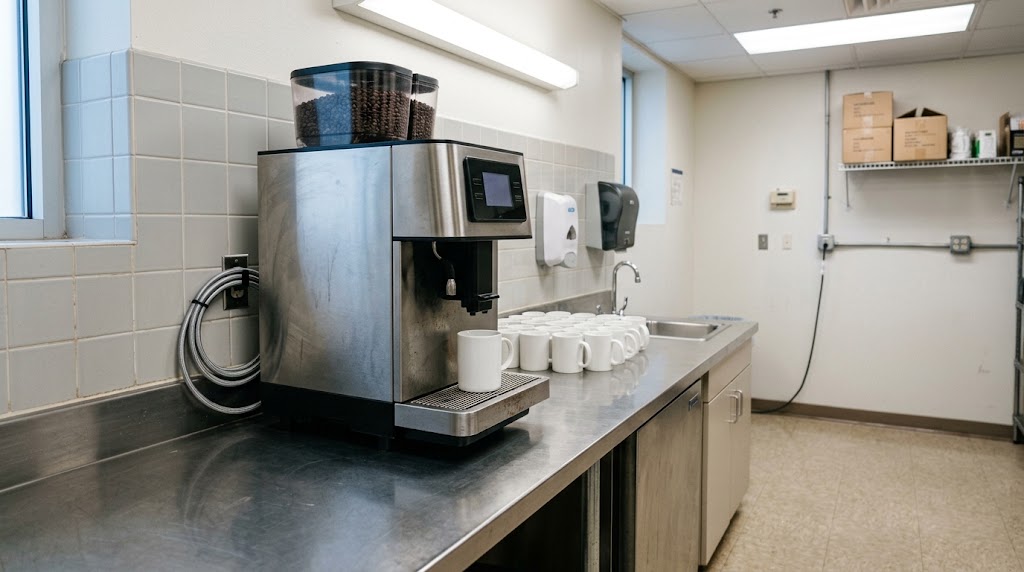
- Approved equipment: The program specifies which brewing equipment qualifies for authorized placement. Bean-to-cup machines, high-volume batch brewers, and single-serve systems each have approved configurations, and the equipment must be set up and maintained to program standards.
- Consistent product sourcing: Authorized partners source Starbucks coffee through the licensed supply chain, not through retail or secondary distributors. This is where product consistency and traceability come from.
- Ongoing service relationship: An authorized placement includes equipment service, not just a one-time install. Denver Beverage’s 13 field technicians provide 7-day equipment service coverage across the Front Range, which means a cafeteria line going down on a Saturday morning doesn’t have to wait until Monday for a response.
Starbucks Coffee Solutions by Facility Touchpoint
Healthcare facilities aren’t single environments. A cafeteria serving 300 meals a day has completely different throughput needs than a waiting room kiosk or a nursing station break room. An authorized Starbucks program should map to each of those spaces, not impose a single solution across all of them.
Cafeteria and Dining Room:
High-volume cafeterias need equipment rated for continuous output, either bean-to-cup machines or high-volume batch brewers, matched to your daily cover count and traffic pattern.
- Bean-to-cup machines: brew each cup fresh on demand, which keeps quality consistent across a long service window and handles variable demand well
- High-volume batch brewers (Bunn, Curtis): hold a larger volume of brewed coffee ready to serve when the pace requires it
Denver Beverage works with your dietary director to match equipment category to your cafeteria’s daily cover count and traffic pattern.
Waiting Areas and Lobbies:
Waiting areas call for unattended, single-serve solutions, since visitors and patient family members are the primary users here, not staff.
- No staff involvement required to operate day to day
- Smaller equipment footprint, with no ongoing staff time needed to manage water levels or cleaning cycles
- A recognizable brand at a touchpoint the facility can’t realistically staff
Nursing Stations and Break Rooms:
Nursing stations need compact, staff-facing equipment built around shift-change convenience, not cafeteria-level output.
- Compact bean-to-cup or pod-based single-serve units fit the counter space available at most nursing stations
- No staff time needed to manage water levels or cleaning cycles between shifts
If your facility is also evaluating breakroom supplies beyond coffee equipment, Denver Beverage supplies those as part of the same program, which simplifies ordering and vendor management for your team.
Why Vendor Authorization Matters in Healthcare Procurement
Healthcare facilities operate under procurement requirements that most other industries don’t. State contracts, multi-site portfolio management, and compliance-driven purchasing all create a real exposure when a vendor isn’t properly vetted.
Denver Beverage’s State of Colorado preferred vendor status means:
- No full RFP required: state-contracted facilities can engage with us without running a full RFP process.
- Vetting already done: the procurement vetting has already been completed through the state’s vendor qualification process.
- Lower compliance risk: for administrators managing state-funded facilities or operating under Colorado procurement guidelines, this removes a significant barrier and reduces the risk that comes with sourcing from an unverified channel.
- Faster multi-site rollout: the credential travels, so multi-facility portfolio managers aren’t re-qualifying a vendor at every location.
Part of a Complete Healthcare Beverage Program
Starbucks coffee is one component of what most healthcare facilities actually need from a beverage vendor. Dietary directors and facility managers typically aren’t looking to add another vendor relationship. They’re looking to reduce them.
Denver Beverage’s healthcare beverage programs cover the full range of facility needs: filtered water, patient room beverages, dietary-compliant beverages for patient trays, disposables, and breakroom supply.
The Starbucks program runs on the same vendor relationship as everything else, which means one point of contact for ordering, service, and account management across your entire beverage operation.
For facilities evaluating coffee brewing equipment across multiple touchpoints, the equipment selection, installation, and ongoing service are all part of the same relationship. There’s no separate equipment vendor to manage alongside your beverage supply.
If you’re also evaluating the broader coffee programs available through Denver Beverage, the Starbucks placement sits alongside Boyer’s Coffee (a Colorado-roasted brand for which Denver Beverage is the exclusive foodservice distributor), Boulder Organic, Ozo Organic Coffee, and Queen City Collective in the local and premium lineup, plus national brands like Lavazza and Peet’s, depending on what each touchpoint in your facility calls for.
Talk to Denver Beverage About Your Facility’s Program
Ready to see what an authorized Starbucks program would look like at your facility? Talk to Denver Beverage’s healthcare team about touchpoints, equipment, and setup.
Frequently Asked Questions
Does Denver Beverage supply Starbucks coffee to healthcare facilities across all of Colorado?
Yes, distribution reaches healthcare facilities statewide, from Grand Junction to Sterling and the Wyoming border down to Pueblo. Equipment installation and 7-day service coverage are concentrated on the Front Range, including Denver Metro, Boulder County, Fort Collins, Colorado Springs, and the I-70 corridor. If your facility sits outside the Front Range, talk to our team about what service looks like for your specific location before committing.
What’s the difference between an authorized Starbucks placement and buying Starbucks products through a food distributor?
Buying Starbucks coffee through a food distributor or retail channel gets you the product, not the authorization to carry the Starbucks brand at your point of service. An authorized placement adds licensed branding for signage and service points, approved equipment configurations, sourcing through the official licensed supply chain, and an ongoing service relationship. That distinction matters most where the branded presentation is part of the value, and where compliance documentation is part of the procurement requirement.
Can a single vendor handle both Starbucks coffee and other beverage needs for a healthcare facility?
Yes. Denver Beverage operates as a single-source provider for Colorado healthcare facilities, covering the authorized Starbucks program alongside filtered water, patient room beverages, dietary-compliant tray beverages, disposables, and breakroom supply, one vendor, one account, one point of contact for service calls.
Is Denver Beverage’s healthcare program available for skilled nursing facilities and assisted living, or only hospitals?
It covers the full range of healthcare facility types: skilled nursing facilities, assisted living communities, rehab centers, independent living campuses, and small hospitals. Denver Beverage’s State of Colorado preferred vendor status for healthcare applies across all of these facility types, not just acute care settings.
What equipment is needed to run a Starbucks coffee program in a healthcare cafeteria?
The right equipment depends on your cafeteria’s daily volume and service window. High-volume cafeterias typically use bean-to-cup machines or high-volume batch brewers from manufacturers like Bunn or Curtis, set up to program specifications. Lower-traffic dining areas may work well with a smaller bean-to-cup unit. Denver Beverage assesses each touchpoint before recommending equipment, so the selection is based on your actual throughput, not a default configuration.