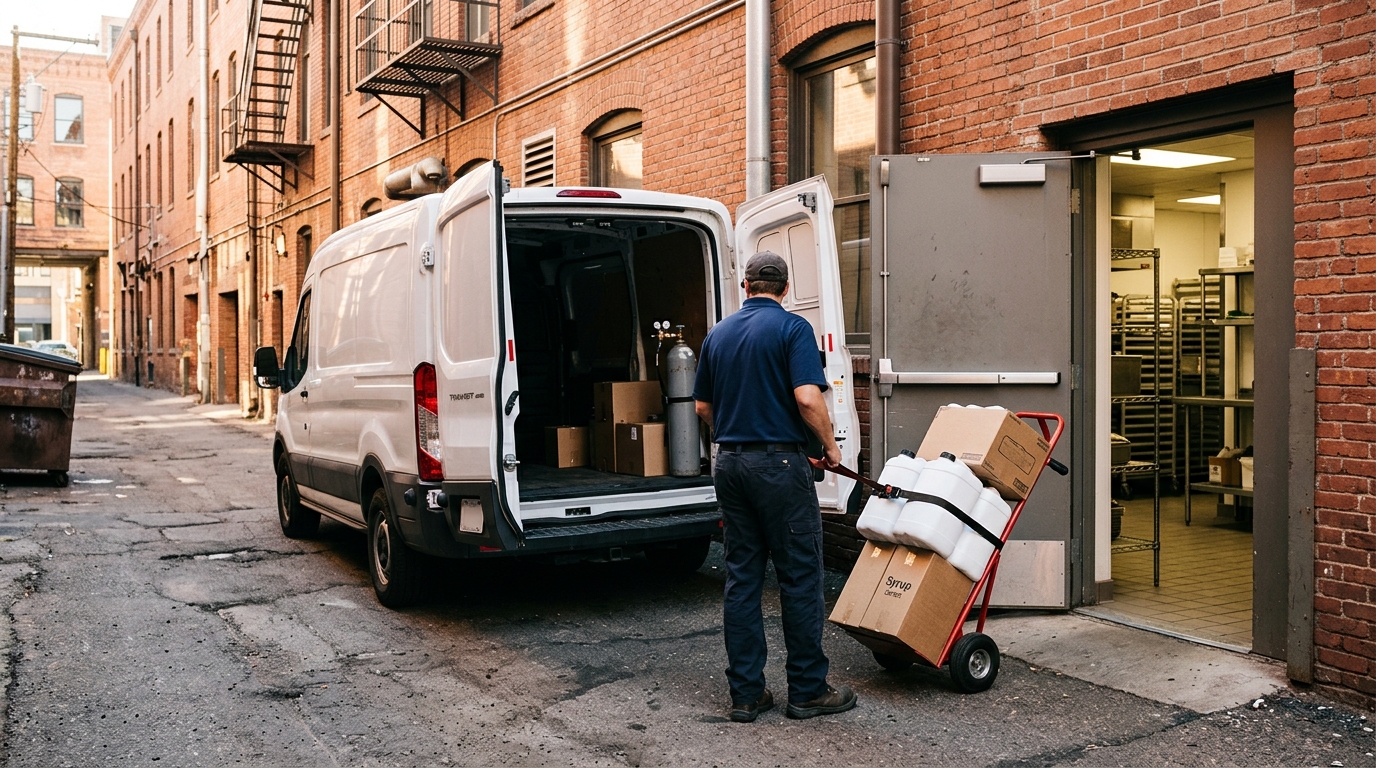
Picture a typical week in a restaurant or bar. The Coca-Cola rep and the CO2 delivery come from different places. The dish chemical company, the paper goods distributor and the draft beer installer each have their own contact. And when something breaks on a Friday at 6 PM, you’re calling yet another number for equipment repair. Every one of them is a separate relationship, a separate invoice and a separate response time. That’s vendor sprawl, and it’s one of the quieter costs of running back-of-house operations in restaurants and bars.
Vendor consolidation means moving as many of those supplier relationships as possible under one account. For a restaurant or bar, that typically means a single food service supplier handling beverages, gas, chemicals, paper goods and equipment, rather than five or six separate vendors splitting those categories. Done right, it simplifies ordering and cuts the number of calls you make when something goes wrong. It also puts accountability in one place instead of five or six.
What You’re Actually Managing When You Run Multiple Suppliers
Walk through a typical week. The Coca-Cola BIBs come from one company, and the CO2 that runs your fountain and draft lines comes from another. The bar gun, the draft system and the dish machine each have their own service contact. Paper goods and disposables sit on yet another account.
That’s five or six separate vendor relationships for categories that all touch the same part of your operation. Each has its own billing cycle, its own delivery schedule and its own service response time. When equipment fails, it’s easy for each vendor to point at someone else’s equipment or product. Juggling this many accounts doesn’t get simpler over time. It piles up.
The categories a restaurant or bar typically manages separately under a traditional model include:
- Fountain soda and Coca-Cola BIBs: Product supply.
- Beverage gas: CO2 supplied as part of fountain and draft systems, but often through a separate account.
- Bar gun setup and service: Installation and ongoing repair.
- Draft beer system installation and service: A distinct vendor relationship from fountain.
- Dish machine and chemicals: Often bundled, but frequently split between a machine lessor and a chemical company.
- Paper goods and disposables: A separate distributor relationship entirely.
Each of those is a legitimate, recurring cost. The real question is how many of them actually need to be separate.
Why the Number of Vendors Changes What Service Looks Like
This is where the real argument for consolidation sits, and it’s not primarily about cost. It’s about accountability. Here’s how having fewer vendors changes what service looks like when something goes wrong.
- One number to call: When your fountain equipment is owned, installed and serviced by the same company that supplies your Coca-Cola BIBs, there’s no ambiguity about who’s responsible when the dispenser goes down. You call one number. The person who answers knows your equipment, knows your account and can dispatch a technician without first figuring out whether the problem is “their side” or the other vendor’s side.
- The worst times: That matters most during a dinner rush, a Friday night at a bar or the first day of a festival weekend. Multi-vendor setups create a gap in accountability that shows up exactly when you can least afford it.
- The gap between vendors: If the fountain is down and the CO2 supplier says the pressure is fine but the equipment vendor hasn’t called back, you’re the one standing in the gap between them.
- Service coverage: Denver Beverage runs 13 service technicians across the Front Range and the I-70 corridor, with 7-day service coverage and a 24-hour service response. As a single-source account, all of that covers everything in your program, not just the one piece of equipment a narrower vendor happened to sell you.
- Warranty and training: Repairs carry a 90-day labor warranty, and technicians are CFESA-trained.
If you’ve had a fountain or bar gun issue and want to work through the symptoms before calling for service, the fountain and bar gun troubleshooting guide walks through the most common fault patterns.
What a Consolidated Supplier Account Actually Covers for a Restaurant
Most content on vendor consolidation stays abstract about what “fewer suppliers” means in practice. Here’s what a Denver Beverage restaurant account actually covers, category by category.
- Beverages and fountain: The Coca-Cola Company chose Denver Beverage, then Denver Syrup and Bar Supply, as its local fountain distribution partner. That’s the foundation of the account: Coca-Cola fountain systems, BIB supply and all beverages that run through a commercial fountain setup. Dispensing equipment is provided at no charge for qualified accounts, and installation is done by Denver Beverage’s own technicians, not subcontractors.
- Bar guns: Installation and service are part of the same program, with the same account and the same service team.
- Draft beer: Draft beer system installation and service is a distinct category with its own requirements, and it’s covered under the same account. Beverage gas is supplied as part of the fountain and draft programs.
- Dish machines and chemicals: The leased dish machine line is ADS (American Dish Service), starting from $129 a month with free repairs included. Dish and laundry programs include Purworks, the company’s own professional cleaning chemical line, made in Denver in concentrated 1.5-gallon containers. A free dish machine assessment is available.
- Paper goods and disposables: These sit on the same account, so you don’t need a separate distributor for them.
- Equipment repair: Repair for the equipment in your program (fountain systems, bar guns, draft systems and dish machines) is handled by the same technician team. That’s the single-source model in practice: one account, one service team, one call.
What Consolidation Doesn’t Fix, and What to Watch For
Consolidation is only as good as the supplier you consolidate to. Operators who call Denver Beverage aren’t usually looking for a different distributor in the abstract. They’re looking for one that picks up the phone.
One pattern comes up on sales calls again and again: a current supplier that stops returning calls. A single-source account with a supplier like that isn’t a simplification. It’s the same problem, centralized. Here’s what to check before you consolidate.
- The right question: Instead of asking “can you cover all these categories?”, ask “who actually services the equipment, and how fast do they respond when something breaks?”
- The warning sign: If the answer involves subcontractors, escalation tiers or national call centers, the accountability picture hasn’t changed. It’s just been repackaged.
- The Denver Beverage model: Local technicians, owned equipment and one account. It’s worth confirming that model still fits your specific location and program before switching.
- Existing agreements: If you’re currently locked into a dish machine provider or a multi-year agreement with another vendor, reviewing those agreements before you switch is a practical step, not a reason to delay the conversation.
Ready to Talk About Fewer Suppliers?
If you’re thinking about moving to one supplier, the easiest first step is a quote from the Denver Beverage team. Call 303-295-3737, or see what a restaurants and bars account includes. Quote requests get a response within 24 hours.
FAQ
What does vendor consolidation mean for a restaurant?
Vendor consolidation for a restaurant means reducing the number of separate suppliers you manage for core operating categories: beverages, gas, chemicals, paper goods and equipment. Instead of calling five vendors when something goes wrong, you call one. The goal is fewer invoices, clearer accountability and faster resolution when equipment fails.
How many suppliers should a restaurant work with?
A restaurant works best with as few suppliers as can reliably cover its core categories. If your fountain supplier, CO2 account, dish chemical company and paper goods distributor are all separate, that’s four relationships covering categories a single food service supplier can often handle. The practical question is whether the supplier you’d consolidate to is reliable across all of them.
Does consolidating to one supplier mean I have to buy everything from them?
With a Denver Beverage account, product is purchased through Denver Beverage as part of the program, while equipment is provided for qualified accounts. Terms vary by supplier, so ask any supplier you’re evaluating the same question. For current details on what an account covers, call 303-295-3737.
What happens when equipment breaks? Does one company handle that?
Denver Beverage’s own technicians repair the equipment they install, so one company handles it. That covers fountain systems, bar guns, draft systems and dish machines, with 7-day service coverage and a 24-hour service response. Repairs carry a 90-day labor warranty, and no third-party repair company is involved.
How do I know if a supplier can actually cover all these categories?
Two questions show whether a supplier can cover all these categories: who installs the equipment, and who shows up when it breaks. Those separate a true single-source supplier from one that hands part of the job to someone else. For Denver Beverage’s specific program scope and what it covers for your type of operation, call 303-295-3737.