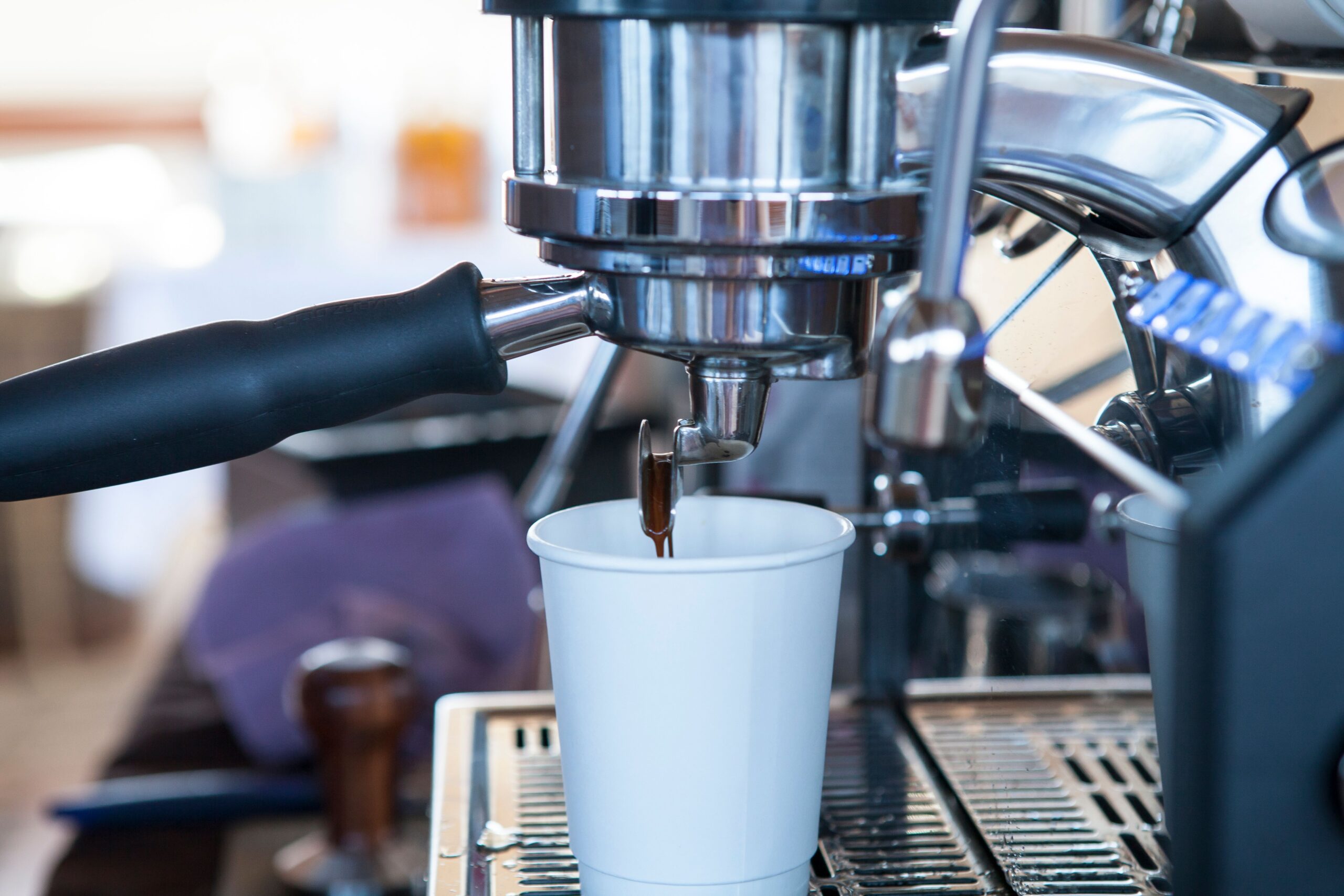
If you’ve searched “coffee vending” recently, you’re not alone, it’s still the phrase most people reach for when sorting out workplace coffee, and it made sense for what used to exist. But the market has shifted considerably, and the term no longer describes what most modern providers actually offer.
What’s available now is a fundamentally different service model, not just a newer machine. Our office coffee service overview covers the full picture, but this piece focuses on something no competitor spells out clearly: what the old vending model actually looked like, what replaced it, and why the difference matters for your office.
What the Old Coffee Vending Model Actually Looked Like
Most people have encountered this setup. A vending operator placed a machine in your breakroom at little or no upfront cost, and you barely had to think about it after that.
Here’s what that arrangement actually involved:
- The machine: A coin-operated or card-swipe unit, owned and stocked by the operator
- The coffee: Pre-ground commodity beans loaded into the machine, often sitting for weeks before use
- The pricing: Pay-per-cup, which adds up quickly for employees using it daily
- The maintenance: Reactive only. The machine broke, you called, someone came eventually
- The customization: None. Whatever the operator loaded was what you got
- The vendor’s incentive: Machine uptime and product margin, not your employees’ experience
This model wasn’t a failure. It was simply built around a different set of priorities: low operator overhead and passive placement revenue. Your team’s satisfaction with the coffee wasn’t the metric anyone was tracking.
What a Modern Managed Office Coffee Program Includes
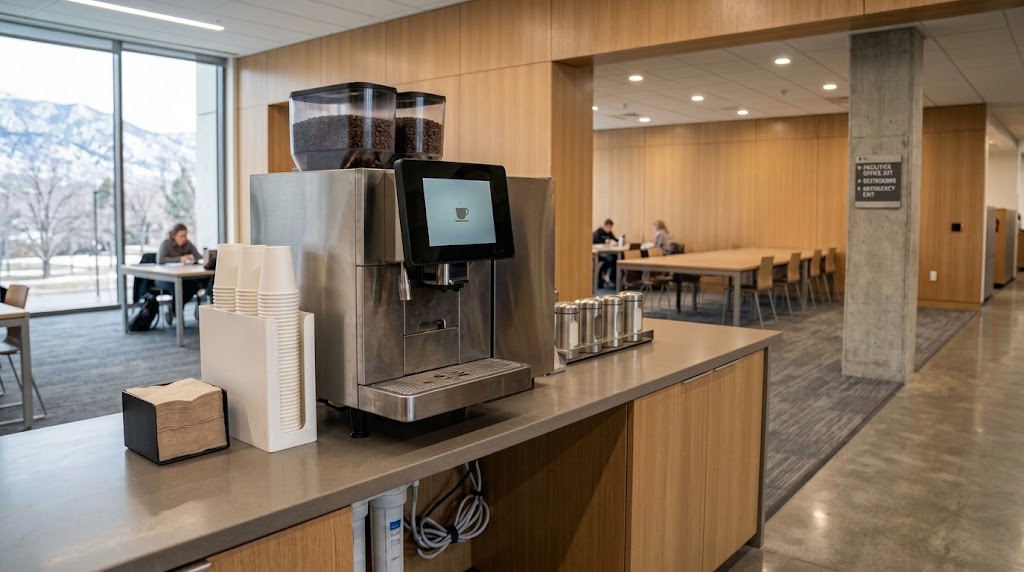
A managed office coffee program looks almost nothing like the old model. The service structure, the equipment quality, and the vendor’s incentives all shift, and this time they’re aligned with yours instead of running against them.
Here’s what a managed program typically includes:
- Commercial brewing equipment: Vendor-owned or leased machines from manufacturers like De Jong Duke, Bravilor Bonamat, Bunn, or Curtis. See our coffee brewing equipment page for specific options.
- Premium coffee from named roasters: Local options include Boyer’s, Ozo Organic Coffee, Queen City Collective, and Boulder Organic. National brands like Lavazza, Peet’s, and Starbucks are available as a separate category.
- Scheduled restocking: Tied to actual consumption patterns, not a fixed calendar. No empty pots on a Monday morning.
- Maintenance included: The vendor handles all equipment service. This is not your office manager’s problem.
- Breakroom supplies bundled in: Cups, lids, creamers, stirrers. Not a separate procurement task. Our breakroom supplies and snacks and pantry supply programs can run alongside the coffee program through a single vendor relationship.
- Aligned incentives: The vendor’s business depends on your team actually using and enjoying the coffee.
Nothing here is cosmetic. It’s a different structure from top to bottom.
Why the Shift Is Happening Now
Hybrid work schedules have changed what a breakroom needs to accomplish. When employees are choosing between working from home and commuting in, the in-office experience carries more weight than it used to. Coffee that tastes as if it came from a coin-op machine is a small but real daily friction point.
A quality breakroom signals something larger:
- The office is worth showing up to
- The company invests in the people who come in
- The experience on-site is meaningfully better than staying home
This isn’t about perks for their own sake. It’s about removing the small irritations that accumulate into a preference for staying remote.
What to Ask Before Choosing a Program
Before signing with any provider, these five questions cut through the marketing and show whether you’re getting a genuine managed program or a rebranded vending arrangement:
- Equipment ownership: Who owns the equipment, and what happens when it needs repair?
- Restocking: Is it scheduled proactively, or do you call when you run out?
- Brand choice: Can you choose your coffee brands, roast levels, and brewing format?
- Supplies: Are cups, creamers, and filters included or billed separately?
- Minimum scope: What’s the minimum headcount or number of locations required?
The answers to these questions will tell you more about a vendor’s actual service model than any marketing language will. Denver Beverage has been running office coffee programs across Colorado since 1986, and we’re happy to walk through what the right setup looks like for your office.
Frequently Asked Questions
Is a managed office coffee program more expensive than a vending machine?
Not necessarily, and the comparison isn’t straightforward. Traditional vending appears free because the operator recovers costs through the product margin on every cup your employees buy. A managed program may involve an equipment fee or a higher per-cup cost, but it typically includes maintenance, scheduled restocking, and supplies that vending doesn’t. When you account for the full cost of each model, managed programs are often comparable and deliver considerably better coffee.
What’s the minimum office size for a managed coffee program?
Denver Beverage’s office coffee programs are built for locations with 100 or more employees on-site. If your headcount falls below that, it’s still worth a conversation to see what could work for your space.
What coffee brands does Denver Beverage offer?
Local and premium options include Boyer’s, Ozo Organic Coffee, Queen City Collective, and Boulder Organic. National brands are available separately, including Lavazza, Peet’s, and Starbucks.
Who handles equipment repairs in a managed maintenance program?
Denver Beverage handles this directly. Our team includes 13 field technicians providing 7-day service coverage across the Front Range, so you’re not calling a manufacturer’s hotline or waiting on a third-party contractor.
Can we keep our existing coffee machine and just get a supply program?
In some cases, yes. That said, the equipment itself sets a real ceiling on quality. Running premium coffee through a consumer-grade brewer won’t produce the same result as pairing the right equipment with the right coffee, so it’s worth talking through your current setup before assuming the machine stays as is.