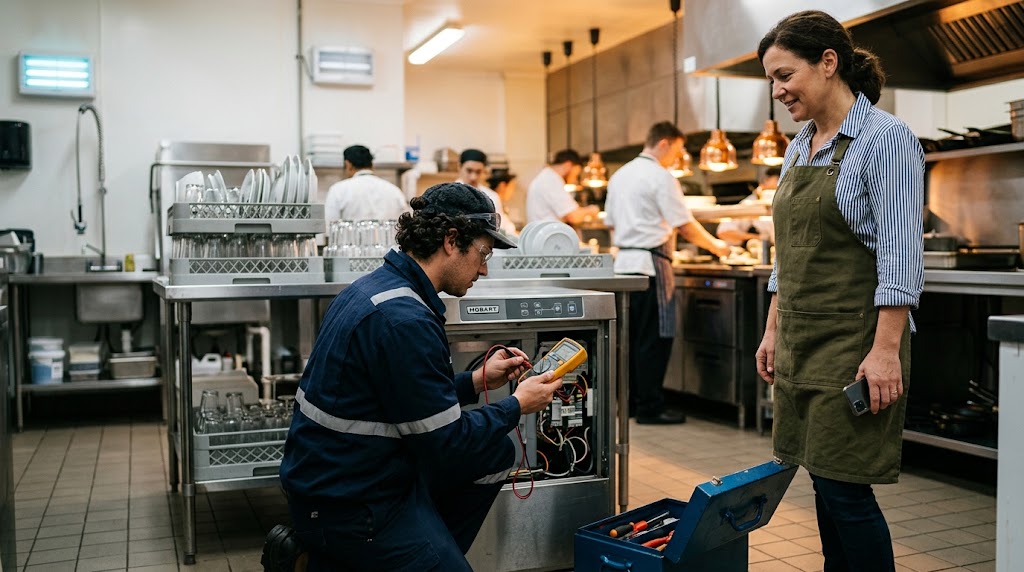
Deciding between a commercial dishwasher lease and buying outright usually comes down to more than the sticker price. It’s about what you pay each month, who’s on the hook when the machine breaks, and how the choice fits the way your kitchen runs. This guide walks through each of those, so you can see where a lease makes sense and where buying might.
What Does It Cost to Lease a Commercial Dishwasher?
The ADS line starts at $129 a month. That’s the floor, not a flat rate for every operation. Machine type and volume drive the final number, so a high-volume door-type dishwasher in a full-service restaurant will price differently than an undercounter dishwasher in a smaller bar or cafe. The right figure for your setup comes out of a free dish machine assessment, not a price list.
Here’s what the monthly figure includes:
- Machine: ADS equipment provided for qualified accounts, with no capital outlay required.
- Repairs: Free repairs, covered under the program and not billed separately.
- Response: 24-hour service response with 7-day service coverage on the Front Range and the I-70 corridor.
- Technicians: CFESA-trained and Denver Beverage’s own staff, not third-party subcontractors.
- Warranty: 90-day labor warranty on repairs.
Your monthly lease payments cover the machine plus maintenance and repair coverage, which matters most the night something breaks in the middle of service.
What’s Actually Included in a Commercial Dishwasher Lease?
A lease takes some of the work off your plate, but not all of it. Before you sign, it helps to know which tasks come with the machine and which stay with your team. Here’s how that split usually looks.
What the lease covers:
- Equipment: The ADS machine itself
- Repairs: Covered, including CFESA-trained technician labor
- Service: 24-hour service response and 7-day service coverage
- Warranty: 90-day labor warranty on completed repairs
What you’re still responsible for:
- Chemicals: Cleaning and sanitizing agents for every wash cycle
- Cleaning: Daily, weekly, and monthly cleaning cycles performed by your staff
- Water quality: Water quality and water softening if your location requires it
- Compliance: Health code compliance for your facility
Health code compliance is worth a closer look, because it stays with you under a lease. Commercial warewashing equipment is certified under NSF/ANSI Standard 3, and your local health department expects your facility to use NSF certified equipment and keep it maintained, no matter who owns the machine. What a lease does change is who looks after the machine. It’s maintained and repaired by a team that knows it, which takes a real operational risk off your plate.
Chemicals are the other piece that stays with you, and Denver Beverage can supply those too. Purworks is our own line of professional cleaning chemicals, made in Denver and sold in concentrated 1.5-gallon containers. If you’d like the machine and the chemicals under one account, our dish and laundry chemical programs keep it to one vendor and one call.
Lease vs. Buy: The Honest Comparison
Neither path is right for every operation, and the better fit depends on how your kitchen runs and how you manage cash. Leasing keeps money free and puts repairs in someone else’s hands. Buying means a bigger upfront spend, but you own the machine. Here’s how the two compare on cost, repairs, cash flow, rent-to-own, and machine type.
Upfront cost
Cost is where most operators start, and the gap between the two options is wide.
- Leasing: No upfront cost for qualified accounts
- Buying: Expect to spend roughly $5,000 to $20,000 or more on a commercial dishwasher, depending on the machine type. That’s a general market range, not a Denver Beverage price.
Repair responsibility
A dish machine works hard, so it’s worth knowing who pays when it breaks.
- Leasing: Repairs are included under the ADS program, with a 90-day labor warranty on the work. For commercial dishwasher repair service, that means one call to the same team that installed the machine.
- Buying: You own the repair bill, including technician labor, parts, and emergency service calls.
Cash flow management
This is where leasing and buying feel the most different month to month.
- Leasing: Predictable monthly lease payments, with no capital tied up in depreciating equipment.
- Buying: A larger upfront spend or a financing arrangement. Owned equipment builds an asset, but that asset depreciates and needs a repair budget.
Rent-to-own
Rent-to-own programs exist in the market and are worth understanding if ownership is your goal. They typically carry higher monthly costs than a straight lease, with an end-of-lease buyout option at the end. Terms vary widely, and service coverage isn’t always included. Before signing, confirm in writing whether repairs are covered, what the buyout price is, and what happens if the machine needs replacing mid-term.
High-temperature vs. low-temperature dishwashers
The machine you pick shapes more than your monthly payment. Choosing between a high-temperature and a low-temperature dishwasher also changes what you spend on chemicals and utilities over the life of the program. High-temp machines sanitize with heat and need a booster heater. Low-temp machines lean on chemicals to do that work instead. If you’re not sure which suits your kitchen, Denver Beverage’s free dish machine assessment includes a high vs. low-temp recommendation, so you’ll have a clear answer before you commit.
Who Leasing Makes the Most Sense For
Leasing fits some operations better than others, and the difference usually comes down to cash flow and how steadily the kitchen runs. Three situations stand out: a restaurant or bar opening fast, an event venue or seasonal operation, and an operator switching away from a supplier with poor service. Here’s why a lease tends to suit each one.
Restaurants and bars opening fast
New locations face a lot of capital demands at once. A lease gets your warewashing system in place from day one, without a large equipment line on the opening budget. Our restaurants and bars page shows how Denver Beverage works with operators in this situation. Installs take planning and aren’t immediate, so start the assessment early.
Event venues and seasonal operators
Owning a commercial dishwasher that sits idle for months means carrying its depreciation and its maintenance risk through the off-season too. Seasonal operators have to cover off-season costs with peak-season revenue, including equipment that isn’t earning anything. Leasing means you pay for a working warewashing system during your operating season, and you don’t carry an owned asset through the months the kitchen is dark.
Operators switching from a poor-service supplier
If your current machine is leased through a provider like Ecolab or AutoChlor, switching means a new program, not just a new supplier. Plan for some transition time, since installs take planning and aren’t immediate.
How the Denver Beverage Dish Program Works
A Denver Beverage dish program covers the machine, the chemicals, and the service in one arrangement, so you’re not coordinating separate vendors. Here’s how each piece works:
- Equipment: ADS equipment is provided for qualified accounts at no upfront cost.
- Chemicals: Sourced through Denver Beverage as part of the program, through our dish and laundry chemical programs.
- Installation and service: Handled by Denver Beverage’s own CFESA-trained technicians on the Front Range and the I-70 corridor.
- Repairs: The commercial kitchen and beverage equipment repair team offers a 24-hour service response and 7-day service coverage, with a 90-day labor warranty on the work.
The free dish machine assessment is where the conversation starts, and it includes a high vs. low-temp recommendation for your operation. Denver Beverage has served 2,400+ customers and has 13 technicians on staff.
Want to See What a Lease Would Look Like for Your Kitchen?
Call 303-295-3737 or request a free dish machine assessment and we’ll walk you through what a lease would look like for your setup. We serve operators on the Front Range and the I-70 corridor.
Frequently Asked Questions
How much does it cost to lease a commercial dishwasher per month?
A commercial dishwasher lease through Denver Beverage’s ADS program starts at $129 a month, billed 12 times a year. The exact figure depends on machine type and volume, so request a free dish machine assessment to get a quote for your setup.
What’s included in a commercial dishwasher lease? Are repairs covered?
Yes, repairs are included. Your monthly lease payments cover the equipment, free repairs, 24-hour service response, and CFESA-trained technician labor, with a 90-day labor warranty on repairs. Chemicals, daily cleaning, and health code compliance for your facility remain your responsibility.
Is it better to lease or buy a commercial dishwasher for a restaurant?
Leasing is often the stronger choice on cash flow, while buying suits operators who want to own the asset long term. Buying a commercial dishwasher can run $5,000 to $20,000 or more upfront, and you own the repair costs. A lease turns that into a predictable monthly expense with maintenance and repair coverage included.
What’s the difference between leasing and rent-to-own for commercial kitchen equipment?
A lease gives you the equipment and service program for the term with no ownership at the end, while rent-to-own includes an end-of-lease buyout option. Rent-to-own typically carries higher monthly costs, and terms vary widely. Confirm the buyout price and what’s included in service and repairs before you sign.
Does a leased dishwasher still need to pass a health inspection?
Yes, a leased dishwasher still has to pass inspection, because a lease doesn’t transfer the compliance obligation to the equipment provider. Your facility’s cleaning procedures, chemical use, and maintenance records remain your responsibility to document and maintain.