Choosing a hot and cold water dispenser for your office comes down to a few decisions, and the order you make them in matters. The first is whether to go bottleless or bottled. After that, it’s a matter of filtration, size, and whether ice belongs on the same unit. Here’s how to work through each one.
This guide is written for office managers buying for a shared workplace, not for home shoppers. Denver Beverage serves commercial accounts on the Front Range and the I-70 corridor, and every example here is anchored to an office setting.
Bottled vs. Bottleless: The Core Decision
For most offices, this is the most consequential choice you’ll make. Both options work, but they suit different situations, and settling it first makes every other decision easier.
- Bottled water dispensers: These use a 5-gallon jug on top of the unit and need no plumbing connection. That suits rented spaces where you can’t run a water line, or very small offices with light demand. The trade-off is bottle deliveries, storage for full and empty jugs, and the occasional scramble when a delivery runs late.
- Bottleless water coolers: Also called point-of-use water dispensers, these connect directly to your building’s water supply. There are no bottles to store, no deliveries to coordinate, and no empty-jug problem on a Friday afternoon. For an office with 20 or more people using one water point, bottleless is almost always the better fit on logistics alone.
If you go bottleless, Denver Beverage places three machines for commercial office accounts. Here’s a quick look at each.
- Bevi: A bottleless dispenser that also offers flavored water.
- Borg & Overström: The premium point-of-use option in our lineup.
- LaVit: Another bottleless option to compare for your space.
If you’re leaning toward bottleless, our filtered water and ice programs page is the place to see these units in more detail. One thing to plan for: bottleless units connect to a water line, and installs take planning, so they’re rarely immediate. If you’re setting up a new office, build that into your timeline early.
Floor-Standing vs. Countertop
Once you’ve chosen bottleless, the next decision is form factor. Office managers ask about this split often, and the right answer depends mostly on traffic and available space.
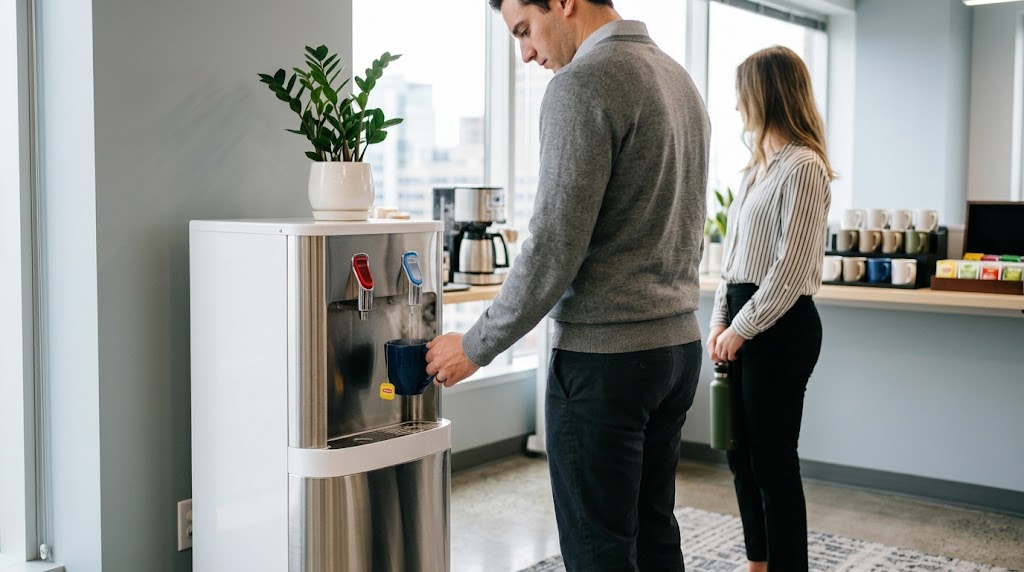
- Floor-standing (freestanding) water coolers: The right call for high-traffic break rooms, open-plan floors, or lobbies where a dedicated water station makes sense. They offer higher capacity and keep the dispenser off your counter space entirely.
- Countertop water dispensers: These suit smaller offices or supplementary stations on a large floor. They’re easier to relocate and work well as a second unit in a conference room or satellite office.
For most offices with 50 or more employees on a single floor, a floor-standing bottleless unit is the right primary setup. Countertop models earn their place as secondary units, or in smaller spaces where a freestanding cooler would feel oversized.
Filtration Types: Standard, RO, and Sparkling
Filtration is where the real differences in water quality show up. The right choice depends on your local water and on what your team expects from a glass of water. Here’s what each option does.
- Standard carbon filtration: Removes taste and odor, primarily chlorine, and is what most bottleless dispensers include as a baseline. If your building is on a well-managed municipal supply and nobody has complained about the water, it’s likely sufficient.
- Reverse osmosis (RO): An RO system pushes water through a semi-permeable membrane that removes dissolved solids, heavy metals, and a broader range of contaminants than a carbon filter can. If staff have flagged water quality or taste concerns, RO is worth the step up. In plain terms, standard filtration handles what you can taste, and RO handles what you can’t.
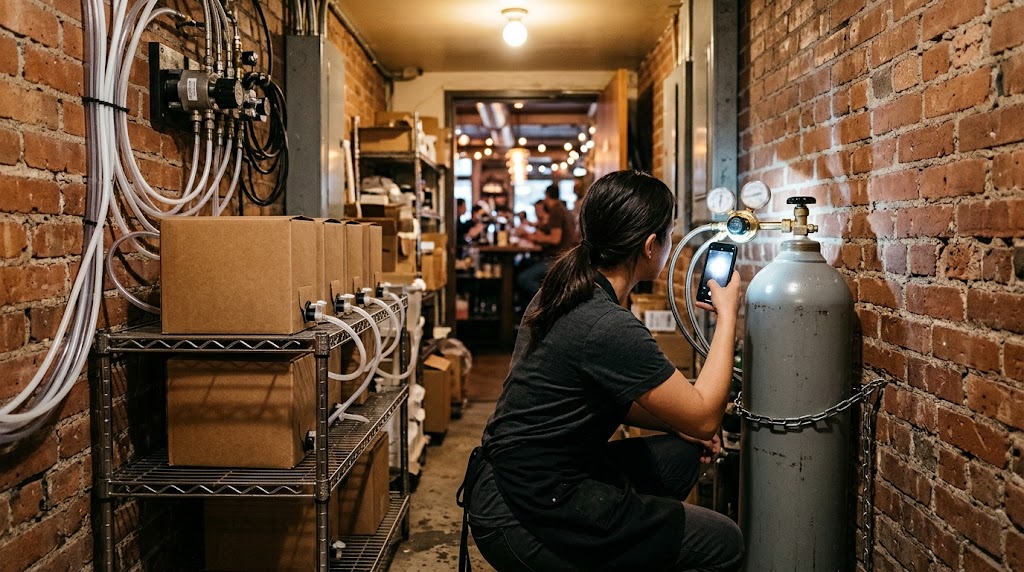
- Sparkling: CO2-carbonated water on demand, which is growing in office adoption as a complement to a coffee program. The CO2 is supplied as part of the program rather than arranged separately.
A note on NSF certification: When you compare filtration units from any supplier, ask whether the filtration components are NSF-certified. NSF/ANSI 42 covers taste and odor reduction, and NSF/ANSI 58 covers reverse osmosis systems. Both mean an independent body has tested the product against its claims, not just the manufacturer. You can verify certification status directly through NSF’s certification search.
Ice: Integrated vs. Standalone
Ice comes up often in office water enquiries, and the most convenient-sounding option isn’t always the most practical one. It helps to look at both honestly.
- Integrated ice maker: Some hot and cold dispensers include one. For light use, such as a small team that wants a cold drink with ice now and then, it works fine. Daily output is the limit, because these units are built for convenience, not volume.
- Standalone ice machine: A busier break room with steady ice demand is better served by a dedicated machine. Standalone units are built for throughput, producing more ice per hour and holding more in reserve.
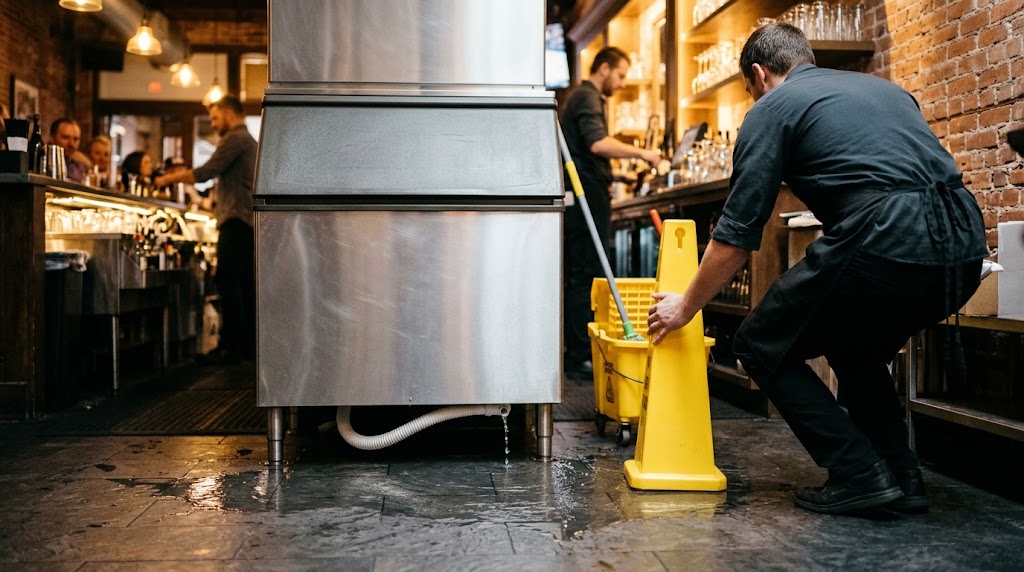
Denver Beverage Services ice machines for commercial accounts. If you’re not sure which setup fits your volume, bring it up when you talk with us about your water program, and see our filtered water and ice programs for more on what’s covered.
Sizing Your Dispenser for the Number of People
Sizing is the most practical variable in the whole decision. A water point shared by eight people has very different throughput needs than one shared by 60, so it’s worth matching the unit to your headcount before you choose.
A countertop dispenser can handle a small team comfortably, especially when demand is spread through the day. Once 50 or more employees share a single break room, a floor-standing bottleless unit with a higher-capacity filter is the right call. Filter capacity matters as much as the dispenser itself.
If you’re splitting a large floor across several stations, smaller units placed closer to where people work can make more sense than one large unit in a single spot. Sharing your headcount and floor layout up front helps us recommend the right configuration.
Maintenance and Service
Maintenance is easy to overlook when you’re comparing dispensers, and it’s what keeps a unit running well months after install. Here’s what to expect.
- Sanitizing: For bottleless units, the dispenser itself typically needs sanitizing every three to six months.
- Filters: Replacement schedules vary by unit and by your local water quality. The supplier should manage this schedule, not the office manager.
- Service team: Denver Beverage’s own technicians handle installation and service, not third-party subcontractors. There are 13 of them; they’re CFESA-trained, and you get 7-day service coverage with a 24-hour service response. Repairs carry a 90-day labor warranty.
- Equipment cost: For qualified accounts, dispensing equipment is provided at no charge.
Want Help Choosing the Right Water Setup?
Between bottled or bottleless, filtration, size, and ice, the right dispenser comes down to your headcount, your space, and your water. Call Denver Beverage at 303-295-3737 or request a quote for an office water program, and we’ll respond within 24 hours. We serve commercial accounts on the Front Range and the I-70 corridor.
Frequently Asked Questions
What’s the difference between a bottleless and a bottled water dispenser for an office?
A bottled dispenser uses a 5-gallon jug and needs no plumbing connection, while a bottleless water cooler, or point-of-use dispenser, connects directly to your building’s water supply. Bottleless means no bottles to store, no deliveries to schedule, and no risk of running out. For most offices with more than 20 people, bottleless is the more practical setup.
How do I know if I need reverse osmosis filtration in my office?
You likely need RO if staff have raised concerns about water quality or taste, or if you want broader contaminant reduction than standard carbon filtration provides. Carbon filtration handles taste and odor and is often enough when the water tastes fine. RO removes dissolved solids and heavy metals that a carbon filter won’t catch. When in doubt, ask your supplier whether the unit carries NSF/ANSI 58 certification on its RO components.
Is an integrated ice maker practical for a shared office break room?
For light use, yes. If a small team wants occasional ice through the day, an integrated unit in a hot and cold dispenser is convenient. For a busier break room with steady ice demand, a standalone ice machine will outperform it, with higher hourly output and more storage.
Do you have a contract, and how quickly can equipment be installed?
Denver Beverage works with commercial accounts on a program basis, and the team will walk you through contract terms on a call. Paperwork needs to be complete before installation can be scheduled, and installs take planning and are rarely immediate. Call 303-295-3737 to talk through your setup.
How often does the equipment need servicing, and who handles that?
A bottleless dispenser typically needs sanitizing every three to six months, and filter replacement depends on the unit and your local water quality. You don’t have to keep track of either one. Denver Beverage’s own technicians handle installation and repairs, and there are 13 of them, with 7-day service coverage and a 24-hour service response.