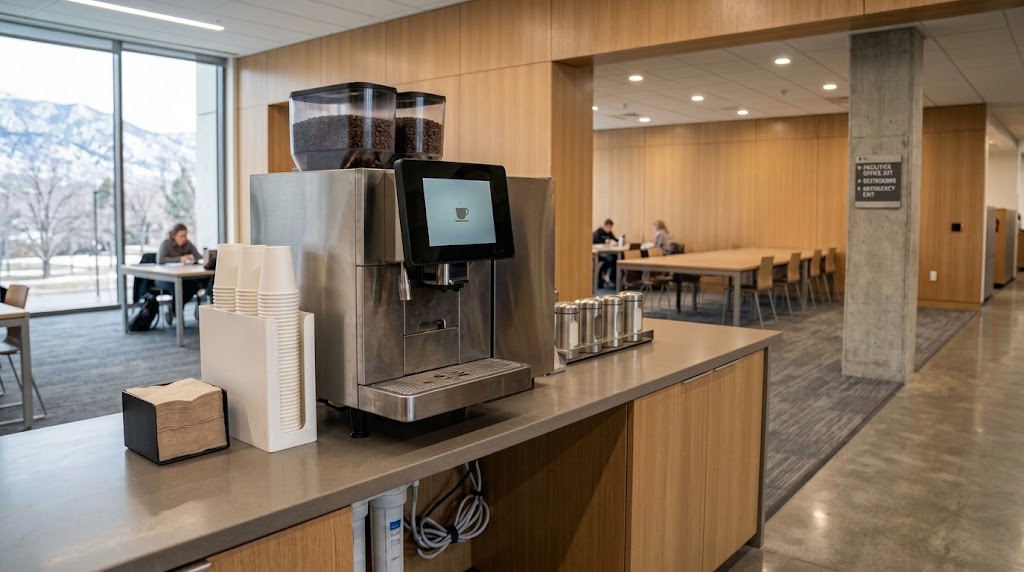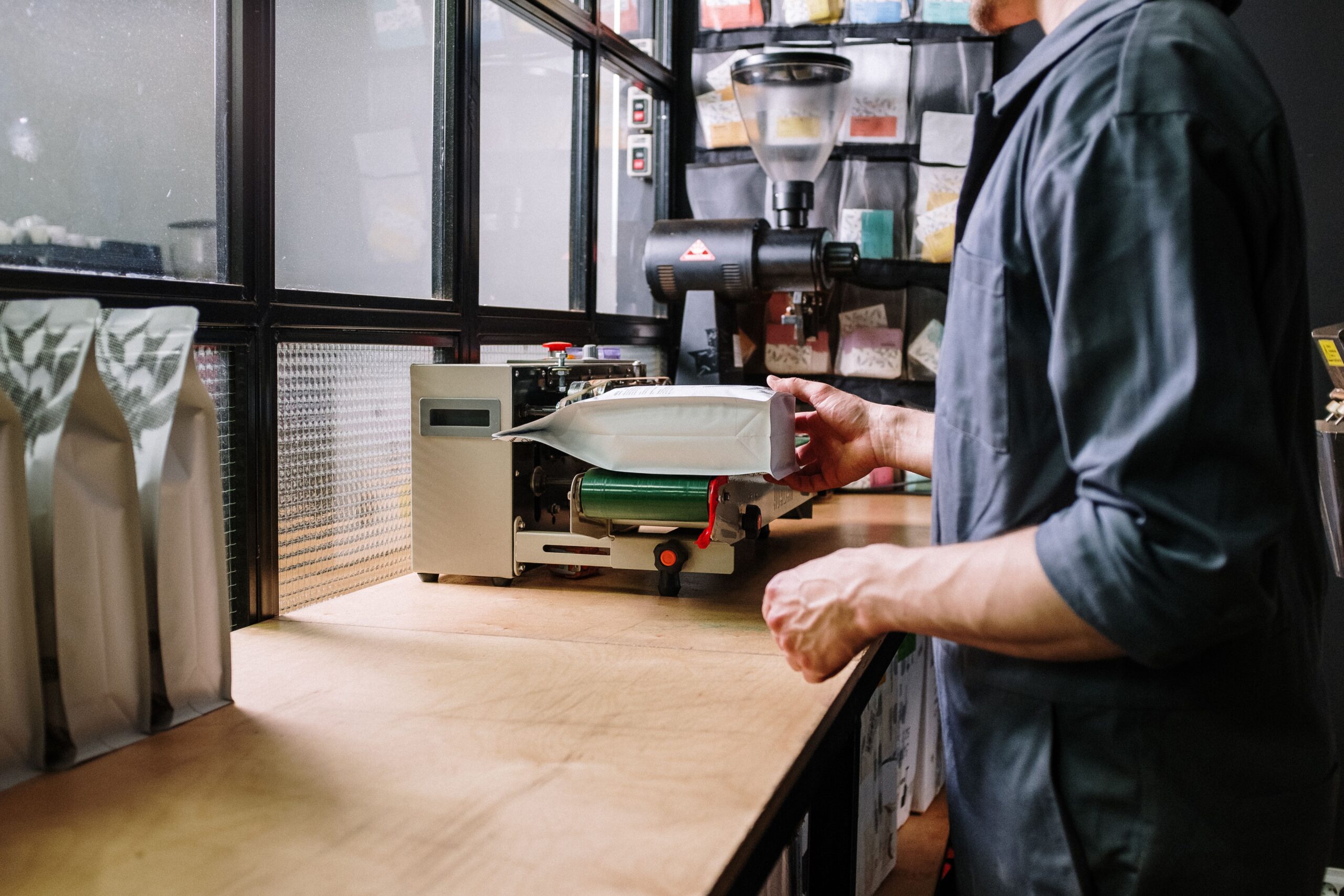

Two coffee machines running the same beans, the same recipe, and the same grind setting can still produce cups that taste completely different, and it’s almost never the machine. In most cases, it’s the water. Water is the primary ingredient in coffee, fountain beverages, and ice, so what’s dissolved in it shapes how every drink in your facility tastes, how long your equipment lasts, and how often you’re placing service calls you didn’t budget for.
This piece breaks down how commercial water filtration affects coffee, fountain beverages, ice, and equipment longevity differently because treating them as one problem only ever solves part of it.
Coffee Is 98% Water, And Your Filter Determines the Other 2%
Coffee is the highest-stakes water application in a commercial kitchen, and it’s usually the first place operators notice a problem. Here’s what’s actually happening inside the cup:
The Specialty Coffee Association’s water quality standard targets total dissolved solids (TDS) in the 75 to 150 ppm range for optimal extraction. Get outside that range in either direction, and the cup suffers:
- Too high: coffee tastes bitter or flat.
- Too low: as happens with a pure reverse osmosis system that strips minerals without remineralization, coffee tastes weak and sour.
The filter isn’t optional; it’s part of the recipe.
Taste isn’t the only thing at stake. Hard water is the more common problem in commercial settings, and it takes its toll on your equipment rather than your cup.
- Calcium and magnesium deposits scale onto heating elements, group heads, and boilers over time.
- A 1mm layer of scale on a heating element can measurably increase energy consumption and shorten equipment lifespan, before any visible failure occurs.
- By the time a technician identifies scale as the root cause, the damage is already accumulating.
Chloramine changes the equation. Colorado municipal water increasingly uses chloramine rather than chlorine as a disinfectant. A standard carbon block cartridge won’t remove it effectively, you need a catalytic carbon filter cartridge instead, a different product entirely.
That distinction has real stakes: many commercial brewer manufacturers specify catalytic carbon filtration as a condition of warranty coverage. The wrong cartridge can void protection on a machine you’ve just placed.
Filtration that’s correct for an espresso machine isn’t automatically correct for a batch brewer, each piece of equipment carries its own TDS target and flow-rate requirement:
- De Jong Duke bean-to-cup machines
- Bravilor Bonamat brewers
- Bunn
- Curtis batch systems
The filter specification needs to match the equipment it’s feeding, not a generic “commercial coffee” category. See Denver Beverage’s coffee brewing equipment page for the specific equipment types these filtration considerations apply to.
Fountain Beverages: What Chlorine Does to a Syrup Ratio
A fountain system doesn’t get a second chance to fix bad water. Whatever’s in the tap line ends up directly in the glass, with no opportunity to correct it downstream. Two water-quality issues account for most of the taste complaints:
- Chlorine and chloramine react with syrup concentrate, producing off-flavors that no ratio adjustment or carbonation tweak will fix. The problem is upstream, at the water supply, not at the dispensing valve. Operators sometimes spend time recalibrating a Coca-Cola Freestyle or adjusting post-mix ratios when the real issue is a filter cartridge that’s overdue for replacement.
- High TDS holds CO2 less efficiently, which means fountain drinks go flat faster. For a fountain beverage system, the water entering the machine is the water in the drink; there’s no secondary correction point between the tap and the cup.
This is one of the more common complaints Denver Beverage technicians encounter during equipment service calls: a fountain system calibrated correctly at installation is producing off-tasting beverages weeks or months later.
In many cases, the root cause is an expired or overloaded filter cartridge that’s no longer doing its job. The fix takes minutes once identified, but the pattern of complaints it generates can look like an equipment fault.
Ice Clarity, Taste, and the Equipment Wear You Don’t See
Ice gets treated as an afterthought in most filtration conversations, but it shouldn’t be. It runs through the exact same water as coffee and fountain drinks, and it carries the same consequences.
Clarity is a water quality problem, not an ice machine problem
Ice clarity is a direct function of TDS. High-mineral water produces cloudy, fast-melting ice that dilutes drinks more quickly and looks visibly inferior in a glass. For a restaurant or hotel bar, cloudy ice is a presentation problem before it’s an equipment problem.
Where the wear actually happens
Unfiltered water introduces sediment and mineral scale into several ice machine components over time:
- The evaporator plate
- Water distribution lines
- The float valve
All of it accumulates buildup that accelerates wear and triggers early service calls.
It’s also a compliance issue
The NSF (National Sanitation Foundation) and ANSI (American National Standards Institute) 12 standard governs commercial ice machines, and many manufacturers require a documented water filtration system as a condition of warranty coverage.
“Isn’t keeping up” is usually a filtration problem, not an equipment problem
Scale buildup in an ice machine is one of the most common causes of reduced ice production. Operators report that their machine “isn’t keeping up” during a peak shift, assume it’s an equipment problem, and call for service.
Often it’s a filtration problem that preceded the equipment symptom. An ice machine without a filter upstream isn’t just a quality issue, it’s an accelerated replacement schedule.
An operator who installs a water filtration system for their coffee program but not their ice machine is solving half the problem. Both outputs share the same source water, and both are affected by the same contaminants.
Equipment Longevity, The Cost That Doesn’t Show Up Until a Service Call
Water quality problems in this category rarely show up as a sudden failure. They show up as a bigger bill later, and as compliance risk you won’t see until an inspection. Here’s what makes up that picture:
Scale reduces equipment lifespan gradually, not dramatically
Scale from hard water reduces the lifespan of dishwashers, steamers, combi ovens, and water-heated beverage equipment. The degradation isn’t dramatic. It’s a gradual efficiency loss that shows up first as longer heat-up times and higher energy consumption, then as increased service frequency, and eventually as component replacement. By the time a heating element or boiler surface fails, the impurity buildup causing it has been accumulating for months.
Reverse osmosis trades a water cost for equipment protection
A commercial reverse osmosis system rejects three to four gallons of wastewater per gallon produced. That’s a real utility cost to factor in. But it needs to be weighed against the cost of early equipment replacement and unplanned service visits, which are considerably more expensive than a water bill line item.
Cartridge replacement is the maintenance variable operators underestimate
Filter cartridge replacement intervals, typically every six to twelve months depending on source water quality and volume, are the maintenance variable most operators underestimate. An overloaded, expired cartridge loses effectiveness before it visibly fails. Sediment and contaminants begin passing through. The equipment downstream pays the price first.
A water quality test should come before any system selection
Before selecting any filtration system, a water quality test should precede the decision. Your municipal Consumer Confidence Report is a starting point, but an independent lab test gives you specific numbers: TDS in ppm, hardness in grains per gallon, whether your source uses chloramine or chlorine, and sediment load. The right water treatment technology depends entirely on those inputs. An RO system and a carbon block filter solve different problems. Getting this wrong means buying a system that doesn’t address your actual water contaminant profile.
NSF/ANSI certification marks independently tested performance
NSF/ANSI 42 and NSF/ANSI 58 water filter standards mark systems independently tested for contaminant reduction. NSF/ANSI 42 covers aesthetic reduction (chlorine taste, odor, sediment); NSF/ANSI 58 certifies RO membrane performance.
These certifications matter when a health department inspector asks for documentation or when an equipment manufacturer requires certified filtration for warranty compliance. If you’re replacing or specifying a commercial water filter, start with NSF-certified systems.
For equipment service that follows from water-related wear, Denver Beverage’s commercial kitchen and beverage equipment repair team covers the Front Range seven days a week.
Why Filtration Works Better as Part of an Integrated Installation
A single unfiltered tap line creates one point of failure for every water-fed output in a facility, an espresso machine, a batch brewer, a fountain system, an ice machine, a combi oven, a dishwasher, each with its own TDS and hardness requirements. A managed filtration program addresses that in three ways a standalone filter purchase can’t:
- Equipment-specific filtration: Denver Beverage integrates filtration into coffee program installations and beverage equipment placements, choosing the filter specification to match the equipment it feeds rather than pulling something generic off a shelf. A De Jong Duke bean-to-cup machine and a Bunn batch brewer don’t share the same water quality requirements, and neither does a fountain system running Coca-Cola Freestyle.
- Maintenance built into the relationship: Cartridge replacement intervals are tracked as part of the service relationship. An expired cartridge gets replaced before a customer complaint surfaces it instead of after, so operators aren’t left managing replacement schedules on top of everything else a facility demands.
- A program built around your specifics: You’re not buying a filter and hoping it’s the right one, you’re getting a filtration program built around your equipment, your water source, and your volume.
Denver Beverage’s filtered water and ice page and the full coffee programs overview both go into more detail on how that works.
If you’ve made it this far, you’re already asking better questions about water quality than most vendors will, and that’s exactly the position you want to be in before talking to anyone about a filtration system, including Denver Beverage. Talk to our team about what a filtration program built around your actual equipment and water source would look like.
Frequently Asked Questions
What is the best water filtration system for a restaurant?
“Best” depends on three variables: your source water’s TDS, its hardness, and the specific equipment being fed. An espresso machine needs a TDS in the 75 to 150 ppm range; a dishwasher has different requirements entirely. A water quality test is the right starting point before any system selection. Carbon block filters address chlorine taste, odor, and sediment. A reverse osmosis system reduces TDS more aggressively but requires remineralization for coffee applications, since pure RO water under-extracts and produces sour, weak results.
How much does a commercial water filtration system cost?
Commercial water filtration costs vary widely by system type. Point-of-use carbon systems sit at the lower end. A full reverse osmosis system with pre-filtration, storage tank, and remineralization stage costs considerably more. Total cost of ownership includes filter cartridge replacement every six to twelve months, RO membrane lifespan (typically two to five years on a commercial membrane), and the wastewater utility cost that comes with any RO system producing three to four gallons of reject water per gallon of filtered output.
How often do commercial water filters need to be replaced?
Cartridge replacement is typically every six to twelve months, but this varies significantly with source water quality and usage volume. An overloaded cartridge loses effectiveness before it visibly fails, which means operators shouldn’t wait for taste complaints or equipment symptoms to trigger a replacement. Track replacement dates from installation, not from the first problem.
Does a restaurant need a separate filter for its ice machine and espresso machine?
Often yes, or at minimum a filtration system specified to serve both endpoints correctly. The TDS range optimal for espresso extraction (75 to 150 ppm) is more precise than what a commercial ice machine requires. Some facilities use a main filtration system with a secondary remineralization stage on the coffee line specifically, to hit the tighter TDS target without over-filtering for other applications.
What does NSF/ANSI certification mean for a commercial water filter?
NSF/ANSI 42 certifies that a filter has been independently tested for aesthetic contaminant reduction: chlorine taste, odor, and sediment. NSF/ANSI 58 certifies reverse osmosis membrane performance. Both are independently verified claims, not manufacturer self-assessments. They matter when a health department inspector asks for filtration documentation and when an equipment manufacturer requires certified filtration as a warranty condition.
Can hard water damage commercial kitchen equipment?
Yes. Scale from calcium and magnesium deposits accumulates on heating elements, boiler surfaces, and water distribution components in dishwashers, steamers, ice machines, and espresso machines. The damage is gradual, typically appearing first as reduced efficiency or increased service frequency, and only later as component failure. Water treatment upstream is significantly less expensive than the service calls and early replacements that follow from unaddressed scale buildup.