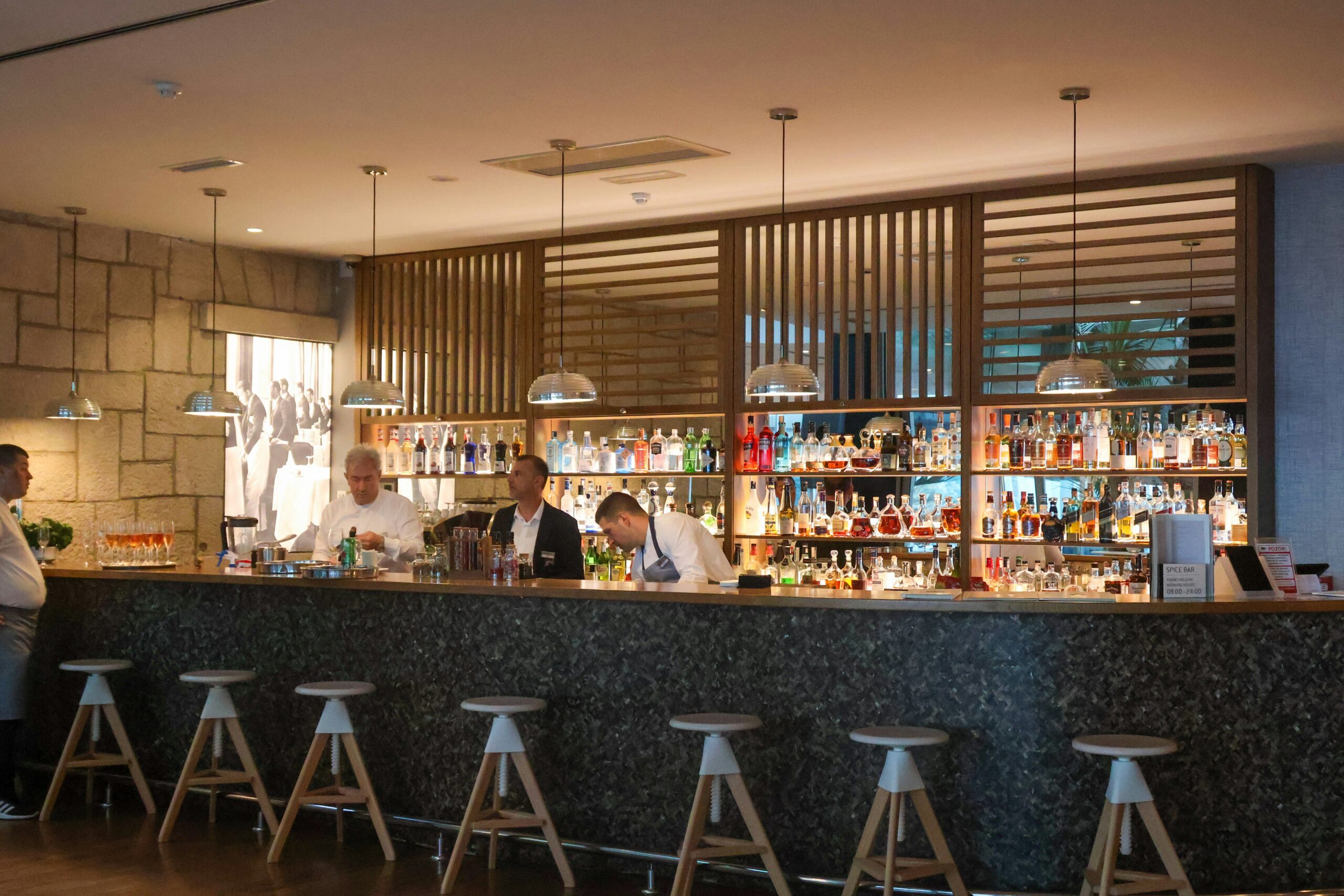
A hotel bar isn’t a standalone bar. On a busy Friday, the same back-of-house may be pouring draft beer at a lobby lounge, running post-mix bar guns through a banquet for 300 guests, and supplying a rooftop deck simultaneously. That operational reality is what makes vendor selection matter more for a hotel than it does for a single-location restaurant.
Denver Beverage installs and services draft beer systems, fountain and bar gun systems, cocktail dispensing, beverage gas supply, and water filtration for hotel bars across Colorado. Beer dispensing across multiple venues on one property means no single setup covers every outlet, which is why all of it runs under one vendor relationship with 7-day equipment service coverage.
The Hotel Bar Environment Is Different from a Standalone Restaurant
A hotel F&B director isn’t managing one tap wall. They’re juggling multiple venues, banquet peaks, brand specifications, and a vendor list that most draft beer guides never touch.
Multi-venue footprints: A full-service hotel may run a lobby bar, a restaurant bar, a banquet hall, and poolside or rooftop service from the same property. Each outlet has a different volume profile and may require a separate keg configuration or direct-draw setup. A vendor who has only worked in standalone restaurants hasn’t thought through this architecture.
Banquet peak pressure: A 300-person event hitting the bar at once is a different system-design problem than a typical restaurant rush. The number of taps, faucet configuration, and CO2 supply all need to be sized for that peak, not average volume.
Brand standard requirements: Branded hotel groups, including Marriott, Hilton, and Hyatt properties, often carry beverage brand specifications that affect what systems and products can be placed. A vendor with hotel experience understands this. One without hotel experience often doesn’t find out until the job is already underway.
Vendor sprawl: Most hotel F&B programs accumulate separate vendors for draft beer equipment, CO2, fountain systems, and equipment repair. When a tap goes down during a banquet, and the responsibility falls between two vendor invoices, nobody moves fast. A single vendor covering all of it eliminates that gap by design.
What a Full Hotel Bar Program Actually Covers
Denver Beverage installs and services draft beer, fountain and bar gun systems, cocktail dispensing, beverage gas, and water filtration as one program, not five separate vendor relationships to manage.
Draft beer systems: Denver Beverage installs two types of draft beer systems for hotel bars: short-draw and long-draw. A short-draw system, sometimes called a kegerator setup, places the keg directly under or behind the bar. It works well for smaller hotel bars with limited tap counts.
A long-draw system runs a glycol-cooled trunk line from a remote keg room to the bar, which is required for larger operations, multi-tap configurations, or any venue where the keg room can’t be immediately adjacent. Micro-Matic and Perlick are the equipment brands Denver Beverage works with across both configurations. The beer line, regulator, CO2 supply, faucet, and drip tray are all part of the install.
Fountain and bar gun systems: High-volume banquet service typically runs through post-mix bar guns rather than draft. These systems require their own CO2 supply lines and syrup infrastructure. Denver Beverage handles both fountain and draft, so the CO2 delivery and gas management don’t fall to a third vendor.
Cocktail dispensing: Pre-batched cocktail tap systems are a growing speed-of-service tool in hotel bars, particularly during peak periods when a bartender can’t build individual cocktails fast enough. Denver Beverage installs these alongside draft beer as part of the same program.
Beverage gas: Denver Beverage supplies CO2 and mixed-gas blends (nitrogen/CO2 for nitro beers and certain lagers) directly. CO2 tanks should be replaced when the pressure reads below 200 PSI. Having the gas supplier and the equipment servicer be the same company means a low-gas call doesn’t require a separate scheduling track.
Water filtration: Beer quality and fountain quality are both directly affected by water quality. Filtration is part of the initial install, not an add-on to revisit later. See our filtered water and ice service page for more details.
What the Installation Process Looks Like
F&B directors evaluating a vendor want to know what they’re committing to before they sign. Here’s how the process runs.
- Site assessment: Denver Beverage evaluates the physical space: keg room location (or absence of one), distance from keg storage to tap locations, ambient temperature, existing CO2 infrastructure, number of tap handles needed, and whether banquet service will run from the same system or a separate setup.
- System design: The team specifies equipment based on the site assessment: tap count, faucet configuration, trunk line length, glycol chiller sizing for long-draw systems, regulator setup, and gas supply. There is no standard configuration for a hotel property.
- Installation: Denver Beverage’s technicians install the system, run beer lines, set regulators, and commission the equipment. The hotel team is trained on daily operations before the job closes out.
- Ongoing service: 13 field technicians cover the Front Range from Fort Collins to Pueblo and the I-70 corridor, 7 days a week. When a tap goes down on a Friday night, a technician is available.
For more detail on how an install actually comes together, see our draft beer, cocktail, and wine tap installation process post. For equipment failures outside the bar program specifically, Denver Beverage also covers commercial kitchen and beverage equipment repair across the same service footprint.
What to Ask a Draft Beer Vendor Before You Sign
These are the questions worth putting to any vendor you’re evaluating. Denver Beverage’s own answers are in the FAQ below.
- Can you handle the full program, including draft, fountain, cocktail, gas, and water filtration, or will we still need separate vendors for parts of it?
- What’s your service response time, and are you available on weekends?
- How many field technicians do you have, and are they your employees or subcontractors?
- Do you have experience working with branded hotel groups and their beverage specifications?
- What does ongoing maintenance look like, and who handles beer line cleaning?
- What happens when equipment fails during a banquet event?
If you’d rather run these questions directly past a Denver Beverage account manager, our hotel beverage and supply services page is the right starting point.
Ready to Simplify Your Bar Program?
Juggling separate vendors for draft beer, fountain, cocktail dispensing, and gas means juggling separate invoices and separate emergency calls too. One relationship covers all of it, backed by 7-day service, so a tap going down mid-banquet doesn’t become your problem to solve alone.
Talk to Denver Beverage about a bar program built for your property.
Frequently Asked Questions
How much does a commercial draft beer system cost for a hotel bar?
Commercial draft beer system costs for a hotel bar vary based on the number of taps, whether a long-draw glycol system is required, the distance from keg storage to tap locations, existing CO2 infrastructure, and whether banquet service runs off the same system or a separate one. A small direct-draw setup costs far less than a 20-tap long-draw system serving multiple venues. A site assessment is the only way to give a real number for a specific property.
What are the different types of draft beer systems for commercial bars?
Hotel bars use one of two draft beer systems: direct-draw and long-draw. Direct-draw places the keg under or behind the bar, close to the faucet, and suits smaller bars with limited taps and no dedicated keg room. Long-draw uses a glycol-cooled trunk line to move beer from a remote keg room to the bar, and it’s required for larger operations, multi-tap setups, or spaces where the keg can’t sit next to the tap wall. Most full-service hotels with active banquet programs need long-draw systems.
What are the main components of a draft beer system?
A draft beer system includes a keg coupler, a CO2 or mixed-gas regulator, the gas supply itself, a beer line (or glycol-cooled trunk line for long-draw), a faucet, and a drip tray. Long-draw systems add a glycol chiller and a recirculating trunk line to maintain temperature across the full run from keg room to bar.
How often do hotel draft beer lines need to be cleaned?
Hotel draft beer lines should be cleaned at a minimum of every two weeks, according to the Brewers Association’s Draught Beer Quality Manual. For high-volume hotel bars running heavy banquet schedules, more frequent cleaning may be warranted. Line cleaning is a maintenance task, not a preference, and it directly affects pour quality and keg yield.
Can Denver Beverage service draft beer systems at hotels outside Denver?
Yes. Equipment service covers the Front Range from Fort Collins to Pueblo and the I-70 corridor. Distribution for beverages and beverage gas reaches statewide Colorado, including Grand Junction, Sterling, and mountain communities along I-70.