A hotel micro market generates revenue every hour the front desk is closed. That is the operational reality most vendor pages skip past, and it is the detail that changes how a GM or ownership group thinks about this investment.
This article explains the mechanics of the managed micro market model, what properties qualify, what the risks actually look like, and what real Colorado hotels are earning right now.
What a Hotel Micro Market Actually Is (and Isn’t)
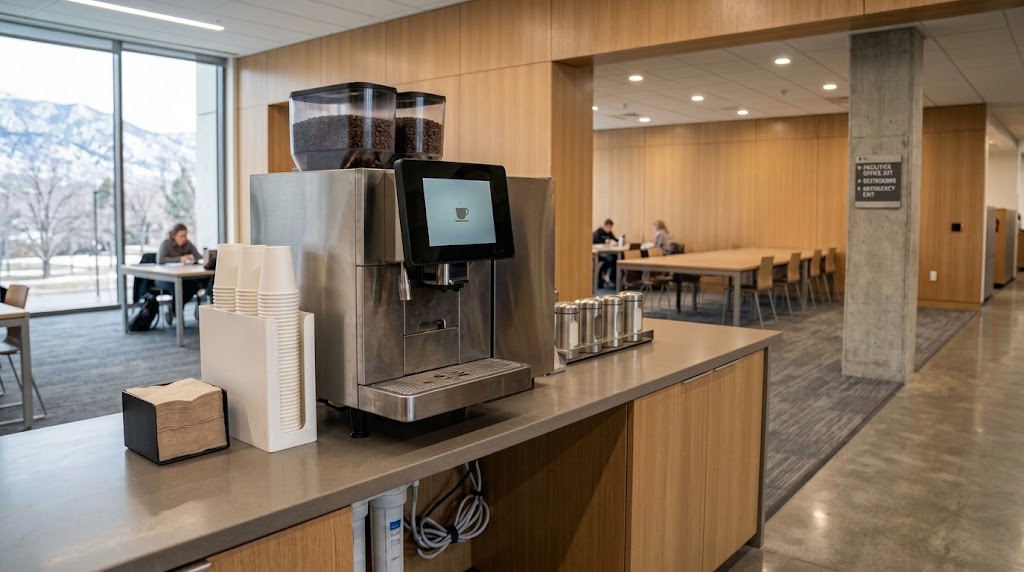
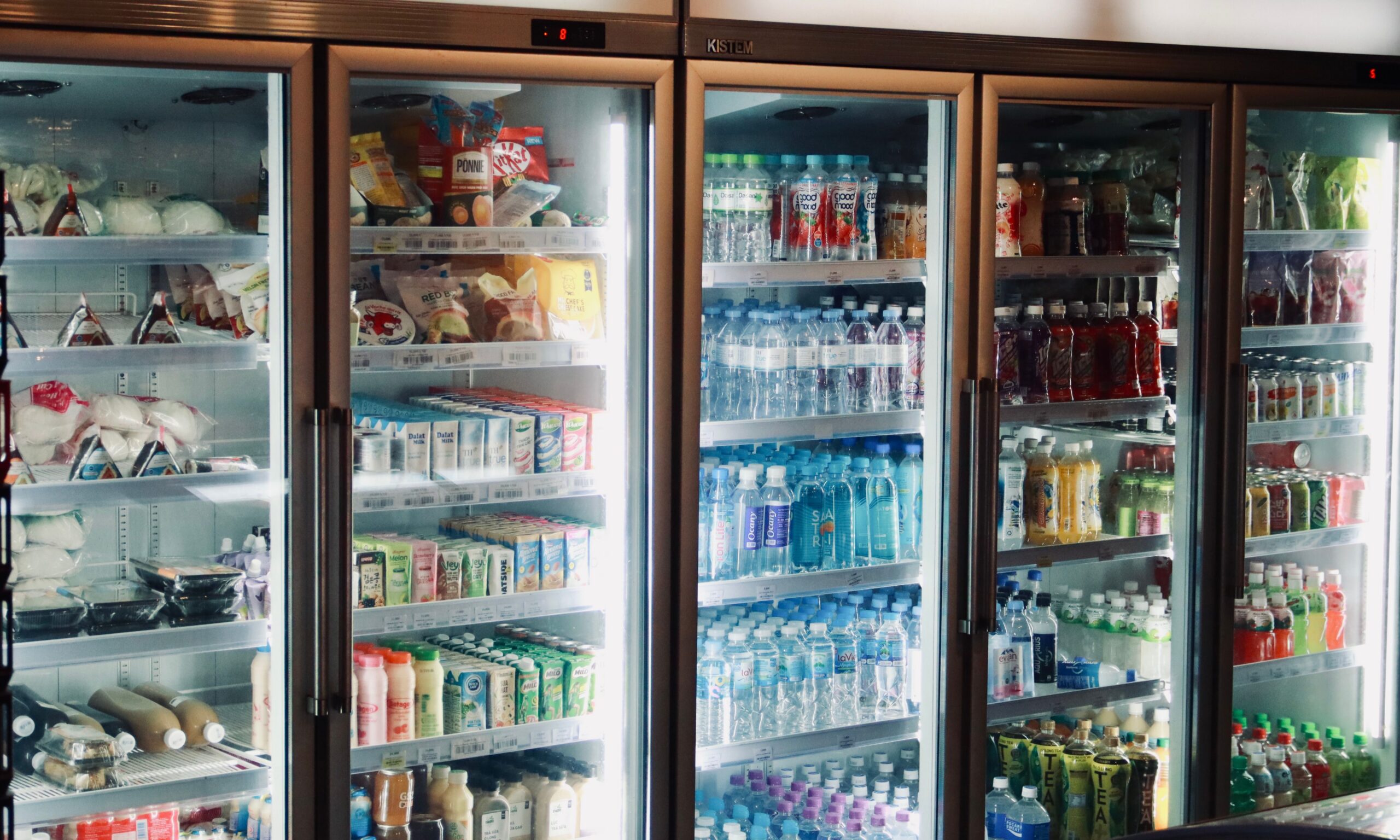
A hotel micro market is an open-shelf, self-service retail space where guests select items, scan them at a self-service kiosk, and pay via cashless payment system, all without staff involvement. It operates as unattended retail: no cashier, no closing time, no checkout line.
The format is not a vending machine alternative in a cosmetic sense. Products sit on open shelves and in glass-front coolers. Guests handle items before buying. The transaction happens at a kiosk, not through a machine slot. That open-concept retail space distinction matters operationally, particularly for shrinkage, which is covered in detail below.
Denver Beverage operates its hotel micro market locations on the GrabScanGo platform, which handles inventory tracking, cashless payment processing, and remote sales monitoring. The technology runs the market. Staff run the hotel.
The Revenue Model: Who Owns What
This is the question every GM has when they first look at a hotel micro market program, and most vendor pages answer it in one vague sentence about “revenue sharing.” Here is what the model actually looks like.
- No equipment cost to the hotel. Denver Beverage installs the market at no equipment cost to the hotel. The hotel does not purchase fixtures, coolers, kiosks, or inventory.
- No labor commitment. Denver Beverage stocks, restocks, and services the market entirely. The hotel has no ordering responsibility and no labor commitment.
- Revenue share. In exchange, the hotel earns a share of net sales as a revenue share. Denver Beverage retains the remainder to cover product cost, restocking labor, platform fees, and equipment maintenance.
- The operator-versus-installer distinction: Denver Beverage is not selling a hotel a market to run. It is running a retail business inside the hotel and sharing the proceeds.
- What that looks like in practice: For a property generating $3,000 per month in micro market profit under this model, that is hotel ancillary revenue with zero labor cost attached. The hotel did not hire a single person to produce it.
- The cost question, answered directly: The most common search question around hotel micro markets is “how much does it cost to install a micro market in a hotel?” Under a managed operator arrangement, the answer is $0 in equipment cost to the hotel. The operator absorbs capital expenditure. The hotel provides space and earns a share of what that space produces.
What Properties Qualify and Where Markets Work Best
Not every hotel is the right fit for a hotel micro market, and a managed operator should tell you that plainly. The qualifying criteria are straightforward.
Minimum property profile:
- Room count: 100 or more rooms
- Occupancy: 60% or above on average
- Guest profile: Business travelers, extended-stay guests, or airport-adjacent transient traffic
- Available footprint: 150 to 200 square feet in the lobby or fitness center area
A select-service Marriott or Hampton Inn lobby is a strong fit. High guest volume, limited food and beverage programming, and a business traveler profile that values 24/7 food and beverage access over a sit-down restaurant. The product mix skews toward grab-and-go snacks and beverages, protein options, and personal care items.
A boutique full-service property with active room service and a lobby bar is a different case. The micro market does not compete with those programs, but its product mix and placement need to be calibrated differently. Fitness center placement with fresh food options, recovery snacks, and hydration products serves guests who are not looking for a full meal. Collapsing these two property types into one product plan is a common mistake.
Properties where the front desk currently handles small purchases, or where an underperforming vending bank sits in a dim corner, are the clearest candidates. The micro market replaces a guest inconvenience with a revenue-generating amenity. For a look at the beverage equipment formats used in these installations, Denver Beverage’s equipment page covers the cooler and kiosk configurations in more detail.
Shrinkage, Theft, and What “Open Shelf” Actually Means for Hotel Operators
Any vendor page that does not mention shrinkage is not being straight with you. Open-shelf unattended retail carries measurable theft risk that a locked vending machine does not. In a hotel environment, that risk has a specific character.
A workplace micro market operates among the same employees every day. A hotel micro market serves a rotating population of guests with no ongoing accountability relationship. That difference is real and should be factored into any evaluation.
Here is what loss prevention technology and operational design can do in a hotel micro market:
- Camera placement: Visible cameras positioned above the kiosk and shelf area create a deterrent. Their presence is a standard installation element, not an add-on.
- Kiosk prompting behavior: The GrabScanGo self-service kiosk is designed to prompt payment before a guest exits the transaction flow. Items scanned, payment required before the screen clears.
- Product layout discipline: High-value, low-volume items (energy drinks, protein bars) are placed closest to camera sight lines. Bulk, low-margin items carry less shrinkage risk and are positioned accordingly.
Some shrinkage is priced into the managed operator model. Denver Beverage absorbs inventory risk. If product walks out the door without being scanned, Denver Beverage absorbs that cost, not the hotel. That is part of what the operator split covers.
A GM who asks about shrinkage before signing is asking the right question. The answer should not be “it’s not really an issue.” It should be an honest accounting of what the model absorbs and what it does not.
Colorado Food Safety Compliance: What Hotels Need to Know
No competitor page covers this section. That omission is a problem for any hotel GM who has had a conversation with their compliance or legal team before signing a micro market agreement.
Micro markets that sell packaged food and beverages in Colorado are governed by the Colorado Retail Food Establishment Rules (6 CCR 1010-2) administered by the Colorado Department of Public Health and Environment (CDPHE). These are not suggestions. They are enforceable retail food establishment requirements.
Key compliance areas a hotel GM should understand:
- Food storage temperatures: Refrigerated and frozen products must be maintained at required temperatures. This applies to the market’s cooler equipment and is a standard element of a managed operator’s maintenance responsibility.
- Allergen labeling: Packaged items sold in the market must carry compliant allergen labeling. Pre-packaged commercial goods from established brands typically meet this requirement. The FDA Food Allergen Labeling and Consumer Protection Act requirements set the federal standard that pre-packaged commercial goods are expected to meet.
- Permit holder: Under a managed micro market arrangement, ask specifically who holds the retail food establishment permit. In a managed operator model, the operator, not the hotel, should carry that permit. This matters because it places the compliance burden on the operator, not the property.
A hotel operating a market under someone else’s permit carries less administrative burden. A hotel that discovers mid-audit that it is the permit holder carries all of it. Clarifying this before signing is not overcaution. It is basic due diligence.
What the Numbers Look Like: A Colorado Hotel Case Study
The clearest argument for a hotel micro market is not an abstract revenue projection. It is a real property with real numbers.
A busy Colorado Springs hotel contacted Denver Beverage with a lobby market that had stopped working. Shelves were full of unsold product. Guests waited in front desk lines for simple purchases. The market went dark after 7 PM. Nearly $50,000 in dead stock was occupying space that should have been generating revenue.
Denver Beverage cleared the old inventory, installed new fixtures, coolers, and a self-service kiosk, and had the space operational within six weeks. The product mix was built around what the guests in that building actually buy: Gatorade fruit punch, Clif bars, Boulder Canyon kettle chips, Red Bull, RX bars, Fairlife protein shakes, and Justin’s peanut butter cups. Grab-and-go snacks and beverages that business travelers reach for at 10 PM, not a curated retail concept.
The results within weeks of launch:
- $3,000 per month in profit to the hotel
- Zero labor cost to produce it: no ordering, no restocking staff, no checkout handling
- 24/7 food and beverage access for guests, including the hours the previous market was completely dark
- Front desk time freed from handling small purchases and fielding “where can I get a snack?” questions
The fresh food options and guest convenience aspect showed up directly in guest feedback. Hotel management noted that the market became one of the most frequently mentioned features in reviews.
The full narrative is documented in our hotel micro market installation case study, which covers the transformation in more detail.
How Denver Beverage Manages Hotel Micro Markets in Colorado
Denver Beverage operates 26 active hotel micro market locations across Colorado.
- Platform: The program runs on the GrabScanGo platform, which handles inventory management software, cashless payment processing, and remote sales monitoring.
- Restocking: Happens two to three times per week based on sales data, not a fixed calendar. The market is not overstocked with slow movers or understocked on what guests actually buy.
- Coverage: Concentrated on the Front Range; Denver metro, Colorado Springs, Boulder County, and Fort Collins. Micro market operations do not currently extend to mountain resort communities. (Equipment service, separately, does reach the I-70 corridor.)
- Service: 13 field technicians cover equipment service seven days a week. A cooler that stops holding temperature on a Saturday gets a service response on a Saturday, not Monday.
- Cross-sell into coffee: For properties that want a unified hotel lobby retail and beverage program, Denver Beverage also operates coffee programs through an exclusive Boyer’s Coffee partnership and as a Starbucks authorized placement partner. A hotel that adds a micro market and a lobby coffee program through the same operator eliminates two separate vendor relationships and two separate service contacts.
The full scope of what Denver Beverage handles for Colorado hotel properties is covered under hotel beverage and supply services, including beverage programs, equipment service, and supply.
If your property is on the Front Range and you want to understand whether the revenue model fits your occupancy profile, contact Denver Beverage to get a conversation started.
Frequently Asked Questions
What is a micro market in a hotel?
A hotel micro market is an open-shelf, self-service retail space where guests select grab-and-go snacks and beverages, scan items at a self-service kiosk, and pay via cashless payment system. It operates 24/7 without staff involvement.
What is the difference between a hotel micro market and a vending machine?
A vending machine dispenses items through a locked mechanism and limits product variety. A hotel micro market uses open shelving and a self-service kiosk checkout, allowing a wider product range, a more intuitive shopping experience, and a retail environment that fits modern lobby design.
How much does it cost to install a micro market in a hotel?
Under a managed operator model, the hotel pays $0 in equipment or installation costs. The operator installs and owns the fixtures, coolers, and kiosk. The hotel provides the space and earns a revenue share from sales.
How does a hotel micro market generate revenue for the property?
The hotel earns a percentage of net sales under Denver Beverage’s model, without any labor, ordering, or stocking responsibility. Hotel ancillary revenue is generated entirely through the operator’s management of the market.
What are the benefits of a micro market for hotels?
The primary benefits are: hotel ancillary revenue with zero staffing cost, 24/7 food and beverage access that improves guest convenience, front desk time freed from purchase handling, and a modern lobby retail experience that registers in guest feedback.
Who handles restocking and maintenance?
Under a managed operator arrangement, the operator handles all restocking, inventory ordering, kiosk maintenance, and equipment service. The hotel has no operational role in running the market.
Does a hotel need a food service permit to operate a micro market?
Under a managed operator model, the operator should hold the Colorado retail food establishment permit, not the hotel. Confirm this in writing with any prospective operator before signing an agreement, and see the compliance section above for the relevant Colorado regulatory framework.