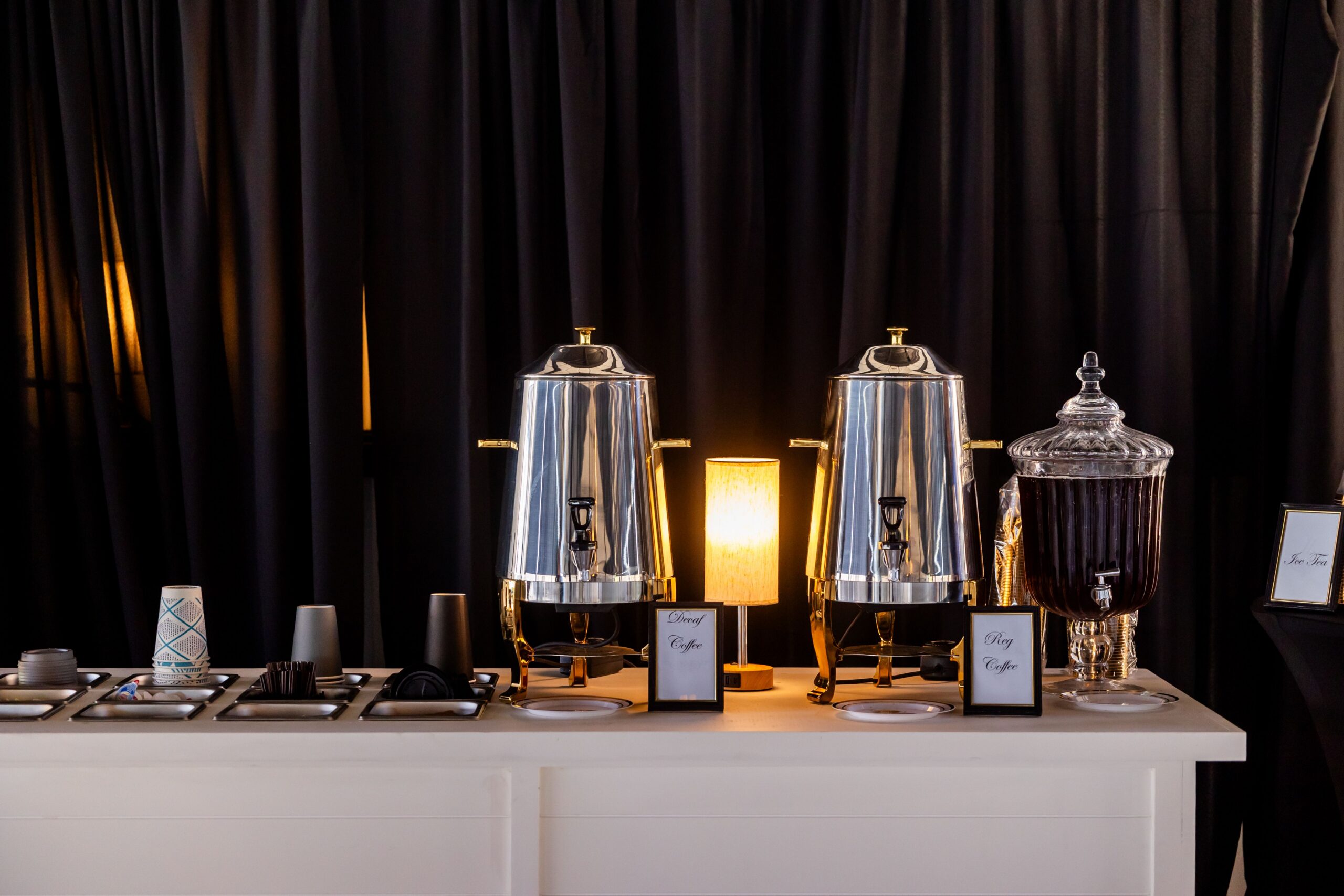
Most hotels are managing three to five separate coffee service contexts with no single vendor responsible for all of them. The lobby runs on one contract, the banquet kitchen on another, in-room supplies come from a third distributor, and the weekend brewer failure at 6 AM goes to a manufacturer hotline that doesn’t pick up until Monday.
For a GM or F&B Director overseeing hotel beverage and supply services across one or more properties, that fragmentation has a real operational cost: inconsistent brand presentation, redundant purchase orders, and equipment downtime that lands in the middle of a full house.
This guide walks through each hotel coffee touchpoint as a distinct operational context, then gives you a structured framework for evaluating any vendor before you sign.
The Four Contexts of Hotel Coffee Service (and Why They Don’t Operate the Same Way)
Hotel coffee is not one program. It is four distinct service contexts, each with its own equipment logic, staffing requirement, and guest expectation. Treating them as a single procurement decision is where most properties run into trouble.
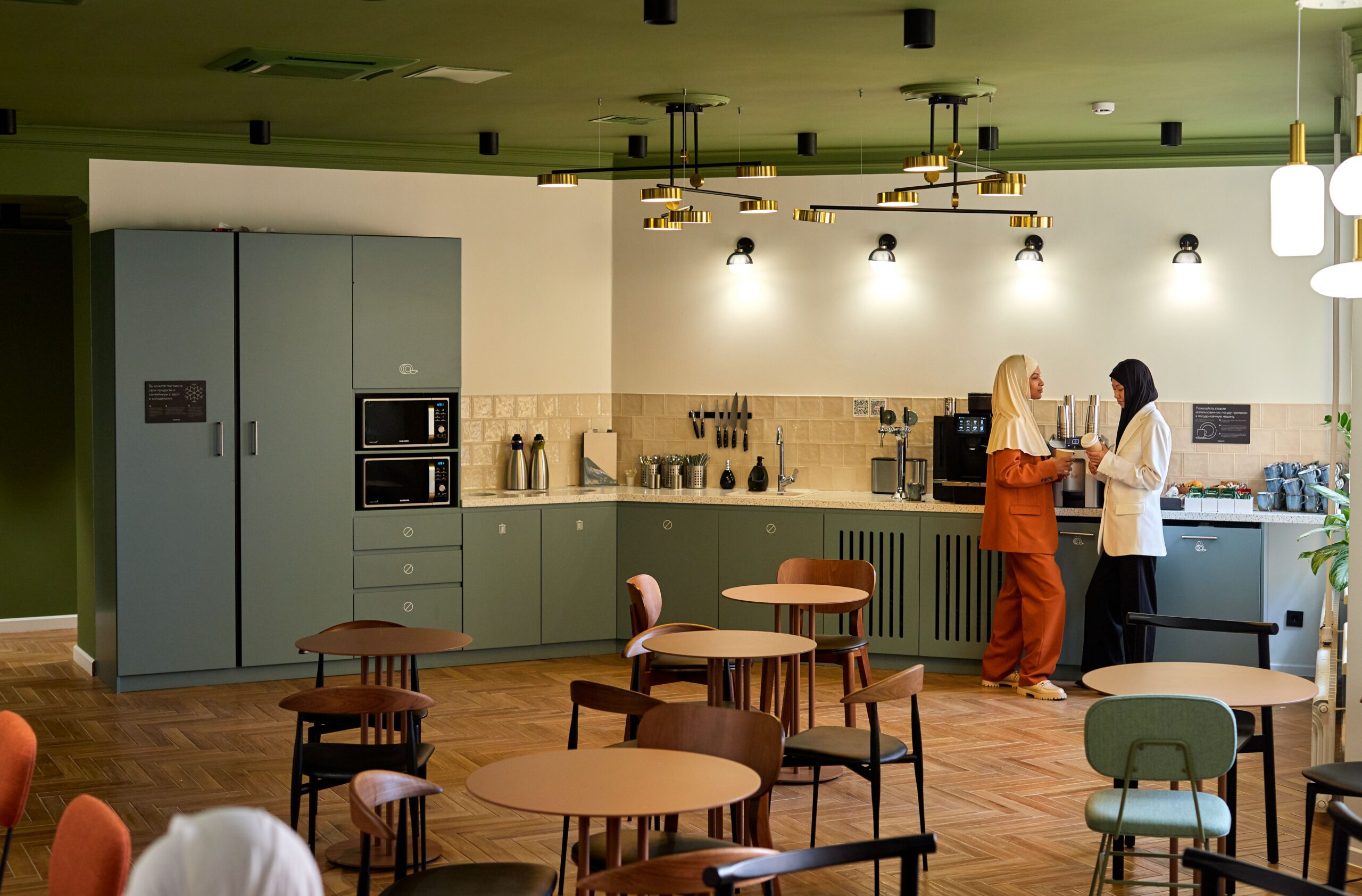
Lobby Self-Serve
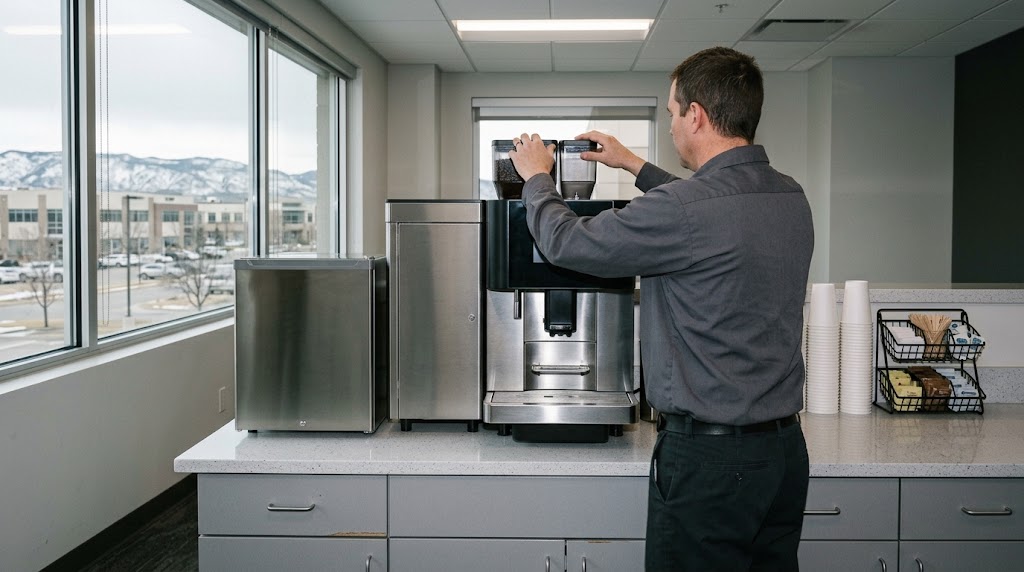
The lobby coffee station runs 24 hours a day without a dedicated staff member watching it. That constraint determines everything about equipment selection.
- Equipment: Bean-to-cup machines, such as those in the De Jong Duke line, are the appropriate category here. They grind on demand, eliminate pre-ground waste, and deliver consistent espresso-based drinks at volume without requiring a trained operator.
- Brand standards: For franchised properties under Marriott, Hilton, Hyatt, or IHG flags, equipment and brand selection in common areas is often governed by brand operating standards. If the brand specifies a Starbucks bean-to-cup placement, that is not optional.
- Brand options: Denver Beverage holds an authorized Starbucks placement program for exactly this context, and carries Boyer’s Coffee as an exclusive Colorado-roasted alternative for properties with more flexibility.
- Why it matters: A lobby self-serve station is one of the highest-visibility guest experience touchpoints on the property. Confirming brand-standard compliance before equipment is ordered is a step most vendors skip and most properties regret later.
Complimentary coffee in the lobby also functions as a hotel amenity with measurable guest perception value. The equipment and brand you place there communicate quality before a guest has spoken to anyone on staff.
In-Room Coffee
Single-serve is the default format for in-room coffee, and for good reason: the in-room coffee maker needs to operate without any staff assistance and produce a consistent result for guests with no instruction. A Keurig or Nespresso machine in each room covers the format requirement, but the procurement decision extends further than the hardware.
- The cost driver: Single-serve coffee pods turn over with every occupied room. For a 150-room property running 70% occupancy, that is a daily housekeeping cost center.
- Branded vs. open-loop: The choice between a branded pod program and open-loop Keurig-compatible options affects cost per occupied room, supply flexibility, and guest satisfaction scores.
- Branded programs lock in flavor consistency but limit purchasing options.
- Open-loop systems allow supply substitution but require more active inventory management.
- What decides it: Neither choice is universally correct. The right answer depends on your average daily rate, your brand tier, and whether your housekeeping coffee supplies are ordered through the same distributor handling your other beverage stock. If they are not, that is worth revisiting.
Banquet and Meeting Breaks
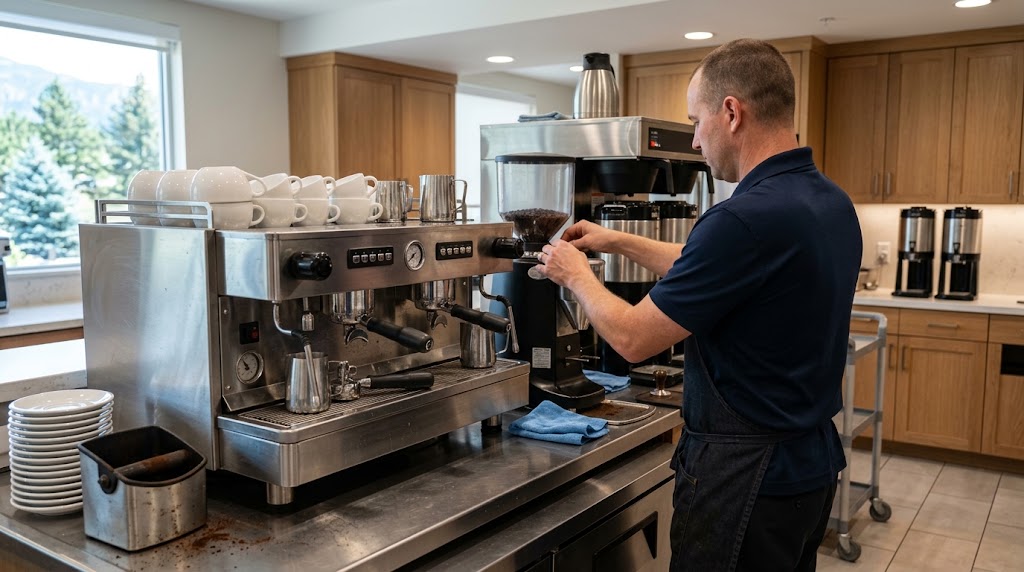
Banquet and meeting break coffee operates on a BEO timeline. A 100-person morning break means a predictable volume output within a specific 15-minute window, not the variability of a barista station. Batch-brew equipment from Bunn or Curtis is the appropriate category for this context. These brewers are designed for high-volume, timed output with consistent yield per batch.
The operational variable most F&B Directors underestimate here is yield control. A brewer that delivers 10% less output than expected on a sold-out meeting morning creates a service failure that no amount of goodwill recovers. A coffee and tea selection that works at the volume your largest meeting rooms require should be tested before it is contracted.
Denver Beverage supplies and services batch-brew equipment for this context and can confirm yield specifications for the equipment it places.
Grab-and-Go and Micro Market
This is the touchpoint most coffee service vendors do not cover at all. A staffed or self-serve grab-and-go point in the lobby extends complimentary coffee into a revenue-generating channel. Guests who want a second cup after the lobby station is restocked, or who arrive outside your complimentary hours, represent unmet demand that a lobby micro market can capture.
A Colorado Springs hotel that replaced an underperforming lobby store with a fully stocked micro market is now generating around $3,000 in profit per month, with no labor, equipment, or ordering required from hotel staff. The hotel micro market installation case study details how the transition happened in six weeks. Coffee and grab-and-go beverages are a core part of that revenue, not a side category.
What to Evaluate When Choosing a Hotel Coffee Service Vendor
No competitor on this SERP gives an F&B Director a structured checklist for vendor evaluation across all four hotel coffee contexts simultaneously. The criteria below apply to any vendor you are considering, not just Denver Beverage.
- Equipment ownership vs. loaner and placement programs. Some vendors charge for the brewer upfront; others place equipment at no cost in exchange for product volume commitments. These are structurally different financial arrangements and must be compared on total cost of ownership, not just monthly supply spend. Denver Beverage operates placement programs for lobby and in-room equipment, which shifts capital cost off the property’s balance sheet in exchange for ongoing supply volume.
- Brand standards and franchise compliance. A vendor who has never worked with a franchised hotel operator will not know that brand-level operating standards govern common-area equipment selection. Ask any prospective vendor whether they have experience navigating brand approval processes for Marriott, Hilton, or similar flags. A vendor who treats this as a formality rather than a real process step is a liability for a franchised property.
- Service coverage and response time. The question is specific: who fixes the brewer when it goes down at 6 AM on a Sunday, and how quickly do they get there? Ask for technician count, geographic coverage, and days of service. Denver Beverage runs 13 field technicians across the Front Range and I-70 corridor, 7 days a week. That is a verifiable number, not a general commitment to fast service. For commercial kitchen and beverage equipment repair, the coverage area and technician count are the right data points to request from any vendor.
- Staff training and ongoing support. A bean-to-cup machine placed in the lobby without staff training creates guest complaints within the first week. Ask whether the vendor provides onboarding at installation and retraining when staff turns over. This is especially relevant for lobby equipment that general-hire front desk staff will encounter.
- Single-source vs. multi-vendor programs. If the same vendor can cover lobby coffee brewing equipment, in-room supply, banquet brewers, preventive maintenance, and draft beer system installation and service for your hotel bar, that consolidation reduces purchase orders, service contacts, and vendor management overhead for a multi-property group. Evaluate whether that breadth is real or just a catalog listing with no operational depth behind it.
Coffee Brand Options and What They Signal to Guests
Brand selection in a hotel coffee program is a guest-facing decision with real perception consequences. A specialty coffee program built around a recognizable premium brand communicates something different to a guest than a generic drip setup. The difference shows up in reviews, repeat-stay decisions, and the guest experience your property delivers relative to its comp set.
- Starbucks authorized placement: Covers properties that need brand-standard alignment, or that want the immediate guest recognition a Starbucks station delivers.
- Boyer’s Coffee: A Colorado-roasted brand with genuine regional recognition, available exclusively through Denver Beverage in this market. For properties looking for a premium coffee brands story with a local identity, Boyer’s is a direct and specific choice, not a generic “specialty coffee” placeholder.
- What decides it: The choice between a nationally recognized name and a regionally rooted brand isn’t purely aesthetic. It should align with your property’s positioning, your guests’ expectations, and whether your flag’s brand standards give you flexibility in common-area brand placement.
Compliance and Operational Considerations Hotels Often Overlook
Two operational realities rarely appear on a vendor’s sales sheet, but both carry real consequences for an F&B Director.
Health code and sanitation intervals. Self-serve coffee equipment in lobby and banquet contexts falls under Colorado retail food establishment regulations administered by the Colorado Department of Public Health and Environment. These regulations govern equipment sanitation frequency and temperature control for milk-based beverages.
Confirm with your county health department which requirements apply to each service format before equipment is placed. This is a checklist item before installation, not a problem to resolve after your first inspection. Hospitality industry standards for self-serve dairy dispensing are more stringent than most operators assume.
Single-use packaging and sustainability. Hotel brand standards and some state-level regulations are beginning to constrain single-serve coffee pod usage and individual creamer packaging. Multi-property ownership groups should factor this into procurement decisions, particularly if any properties operate in jurisdictions with extended producer responsibility legislation.
Open-loop pod systems, including Keurig-compatible formats, offer more supply flexibility than proprietary capsule systems and are easier to adapt as regulations evolve.
How Multi-Property Hotel Groups Standardize Coffee Programs Under One Vendor
A multi-property group consolidating lobby, in-room, and banquet coffee programs under one Front Range vendor does not just reduce the number of invoices it processes. It also eliminates the coordination overhead that comes with each vendor relationship: separate service calls, separate training contacts, separate ordering cycles, separate accountability when something breaks.
For a group managing three to five Colorado hotels, the operational logic is straightforward. One vendor covering:
- Lobby bean-to-cup equipment
- Batch brewers for banquet
- In-room supply
- Preventive maintenance
- Micro market management
…means one service call number, one point of contact for brand-standard compliance questions, and equipment that gets fixed on Saturday morning because the technician coverage is seven days. That last point is not a minor detail for a hotel running a sold-out weekend conference.
- Coverage: Denver Beverage’s Front Range and I-70 corridor coverage reaches most of Colorado’s largest hotel markets. Distribution runs statewide from Grand Junction to Sterling.
- Category breadth: The scope of service across product categories, from coffee programs through draft beer and micro markets, means the same vendor relationship that starts with a lobby brewer can eventually cover the hotel bar and grab-and-go operation in a single contract.
Common Questions About Hotel Coffee Programs
Do all hotels provide free coffee in the room?
Most mid-scale and above hotels include an in-room coffee maker and a basic coffee and tea selection as standard hotel amenities. Budget properties vary. The format (drip brewer vs. single-serve pod) and brand quality depend on the property’s tier and operating standards.
What type of coffee makers do hotels typically use?
Mid-scale and upscale hotels typically use single-serve pod brewers such as Keurig machines in guest rooms. Lobby stations at higher-tier properties more often use bean-to-cup machines that can produce espresso-based drinks without a barista. Banquet and restaurant breakfast service relies on high-volume batch brewers from manufacturers like Bunn or Curtis.
How do luxury hotels differ from budget hotels in coffee service?
Luxury properties are more likely to run a specialty coffee program in the lobby, use bean-to-cup machines in guest rooms instead of standard drip brewers, and offer a curated room service beverage menu. Budget hotels typically provide a basic in-room drip brewer and rely on a lobby station for complimentary coffee rather than room-level equipment investment.
Can you request extra coffee supplies from hotel housekeeping?
Yes. Housekeeping coffee supplies, including additional pods or coffee packets, are almost always available on request at the front desk or directly from housekeeping. The availability and response time depend on the property’s staffing model.
Why do some hotels offer a lobby coffee station instead of in-room coffee?
A lobby coffee station centralizes supply and equipment into one location, which simplifies restocking and maintenance compared to servicing a brewer in every room. Some hotels use both formats: complimentary coffee in the lobby during set hours, and an in-room coffee maker for guests who want coffee at other times. Properties with a grab-and-go market in the lobby can extend that complimentary experience into a revenue-generating channel.