
Most office managers don’t switch coffee vendors because of the coffee. They switch because a machine sat broken for four days, deliveries kept arriving late, or calls went unreturned for a week.
The evaluation criteria below are designed to surface those risks before you sign a contract, not after. If you want a broader sense of what office coffee service actually covers, our office coffee services overview is a useful starting point before comparing vendors and building a shortlist.
1. Local vs. National Office Coffee Service Companies: What Happens When Something Goes Wrong
Technician location determines your actual response time when equipment fails, and that’s the single highest-stakes difference between a national and a local provider.
| National Provider | Local Provider | |
| Nearest technician | Often based out of state (Phoenix, Salt Lake City) | Based in Colorado |
| Real response time | Next day, if the ticket is opened promptly | On-site within hours |
| Who answers the phone | Rotating call center | A named person |
| Accountability signal | Coverage area listed on a map | Trucks and technicians parked overnight in-state |
A national provider can list Colorado as part of its coverage area without having a single technician in the state. When your brewer goes down at 8 a.m. on a Tuesday, “covered” and “fast” aren’t the same thing.
Ask any vendor you’re evaluating:
- Where are your technicians based?
- What’s your average on-site response time for equipment service in our city?
A vague answer to either question is itself an answer.
Denver Beverage runs 13 field technicians across the Front Range with seven-day service coverage. That’s the standard a Colorado office manager should be benchmarking against.
2. Equipment Quality and What “Free Equipment” Actually Means
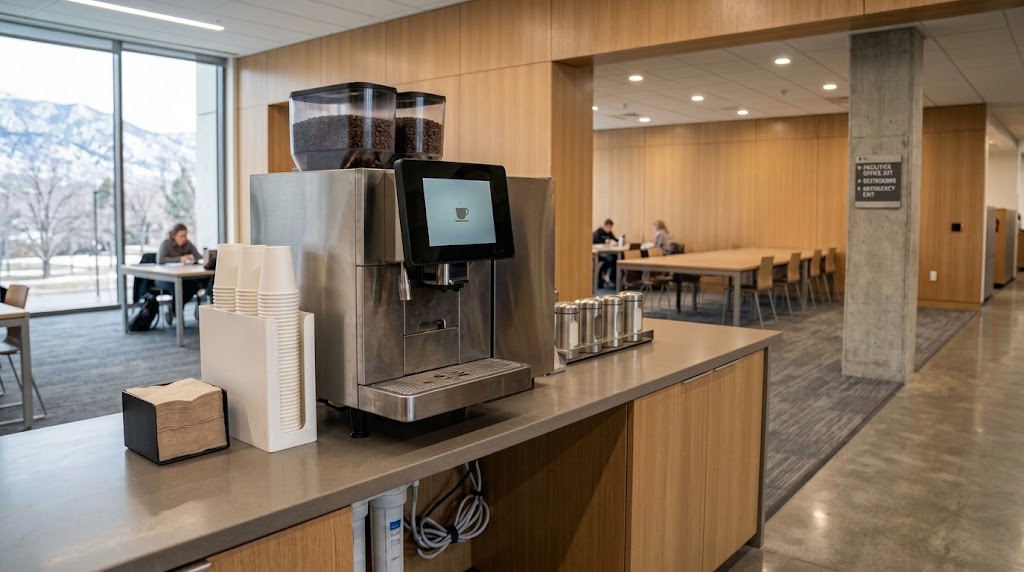
Most office coffee service agreements include equipment as part of the per-cup or monthly pricing. It’s not truly free. What matters is the quality of the machine, who owns it, who services it, and what happens when it breaks.
| Equipment Type | Manufacturers | Best For |
| Bean-to-cup machines | De Jong Duke, Bravilor Bonamat | Higher-volume offices |
| Single-serve brewers | Bunn, Curtis | Smaller teams, simpler use cases |
| Flavia systems | Flavia | Individual-serving variety |
You can review the full range of commercial coffee brewing equipment Denver Beverage places to understand what these tiers actually look like in practice. Vendors who only offer unbranded or bottom-tier machines are a flag worth noting early.
Three questions worth asking every vendor before you sign:
- Who holds equipment ownership? If you terminate early, who takes the machine?
- Who handles repairs? Is it the vendor’s own technicians or a third-party service call?
- Is there a loaner unit if mine is down for more than 24 hours? The answer tells you a great deal about how seriously they treat uptime.
3. Coffee Quality: Sourcing Matters More Than the Branding
The same machine with mediocre coffee still produces mediocre coffee. Equipment quality and coffee quality are two separate evaluations, and most buyers spend more time on the former.
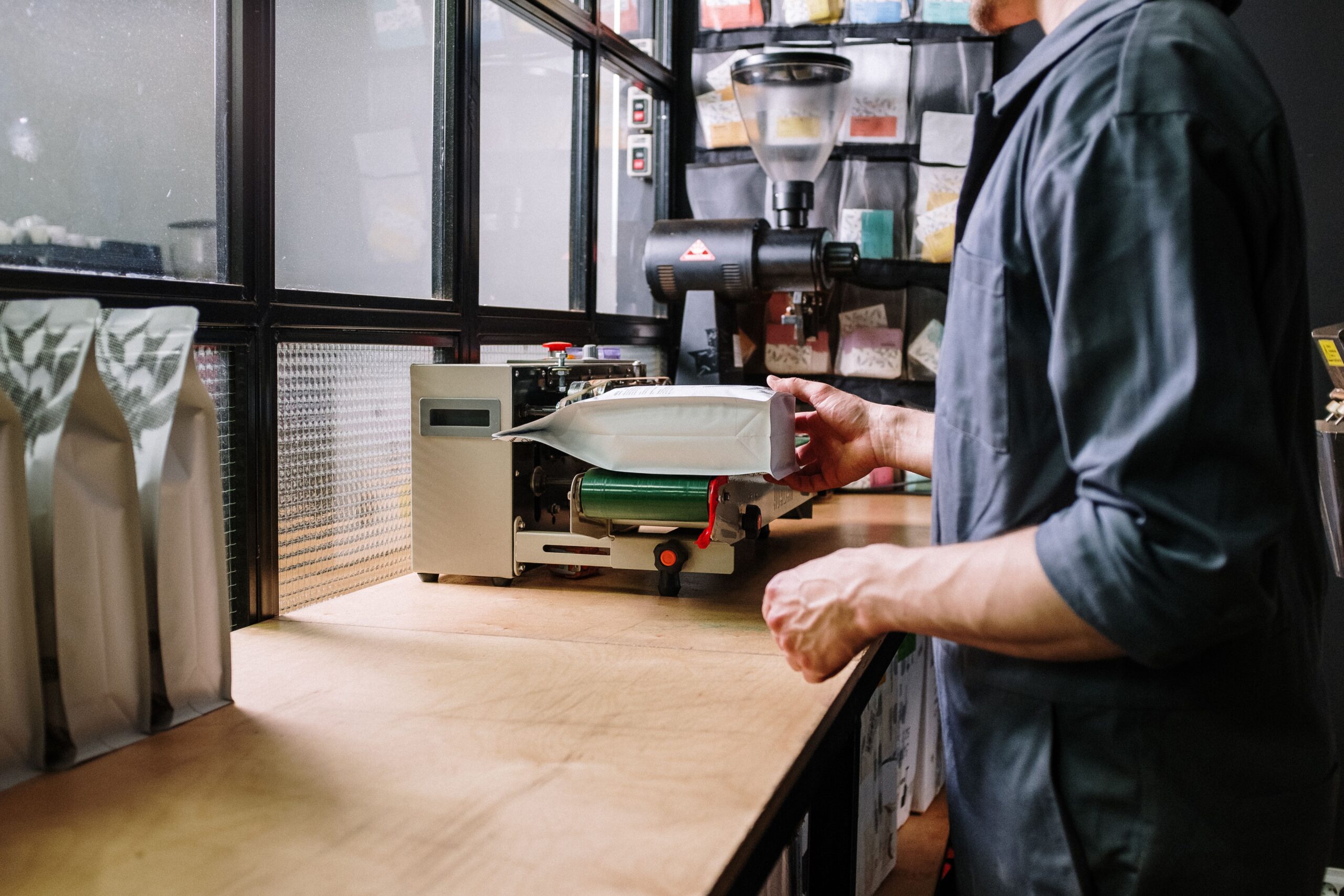
Ask where the coffee comes from and how recently it was roasted. A regional roaster operating on a weekly roast cycle is a different product than commodity beans shipped from a national warehouse with a 60-day shelf life.
Boyer’s Coffee, a Colorado-roasted brand for which Denver Beverage is the exclusive foodservice distributor, is locally roasted and delivered fresh, and the same local/premium lineup also includes:
- Ozo Organic Coffee
- Queen City Collective
- Boulder Organic
That’s a named, verifiable fact you can check, not a generic “locally sourced” claim.
For offices that need a recognized brand for client-facing programs or conference room setups, Denver Beverage also places Starbucks as an authorized placement. Both options are real and available. Your choice depends on your office culture and what your team and guests actually respond to.
When you’re evaluating any vendor’s coffee, ask for the roast date on their standard delivery, not just the brand name on the bag. A vendor who won’t let you sample before signing is also worth noting.
4. Product Range: Can They Handle Everything, or Just the Coffee?
An office sourcing coffee from one vendor, water from another, and breakroom supplies from a third is managing three relationships, three billing cycles, and three delivery schedules. That’s administrative overhead that compounds over time.
A capable corporate coffee program covers the coffee itself, but the more relevant question for most operations managers is whether the vendor can consolidate everything else around it. A single provider can typically manage:
That means one invoice, one contact, and one delivery schedule to coordinate.
This is where the “easier to work with” criterion has real operational weight. A fully managed coffee service that also covers water and breakroom reduces your vendor count, not just your coffee overhead.
For offices with 100 or more employees and enough daily footfall to justify a self-service model, micro market refreshment services are worth asking about. A micro market refreshment solutions setup reduces the need for HR or office management to oversee restocking while giving employees access to a wider product range around the clock. Not every office needs one, but it’s a useful option to understand before you assume a managed coffee station is your only path.
5. Contract Terms: What to Read Before You Sign
“Free equipment” office coffee service agreements include per-cup pricing minimums, volume commitments, and early termination clauses. Understanding the real cost structure before signing protects you from surprises in month four.
A cost-per-cup analysis is worth running before you compare quotes side by side. The per-cup price looks simple but changes significantly based on machine type, product mix, and volume tier. An agreement priced for 150 employees consuming coffee five days a week will look very different if half your team shifts to remote work for three months.
Ask every vendor these questions before you commit:
- What is the per-cup price, and what volume minimum triggers it? Get a specific number, not a range.
- What happens if we go under that volume? Understand whether there’s a minimum billing floor or a make-good clause.
- What is the termination notice period, and is there a fee? Thirty days and ninety days are not the same thing, and some agreements include an equipment buyout if you exit early.
These aren’t unusual questions, and a vendor with a straightforward, customer-friendly coffee service contract will answer them without hesitation. Vagueness here is the signal worth taking seriously.
6. The Criterion Most Buyers Underweight: Ease of Partnership
Every evaluation checklist covers equipment, coffee quality, and price. Very few name this one directly, even though it’s often the real reason accounts switch vendors.
“Easier to work with” sounds soft until you’ve dealt with a vendor that routes every question through a call center, sends deliveries late without notice, or requires a three-day ticket queue for equipment repairs. Denver Beverage hears a version of this from most accounts that switch: it usually wasn’t about price or quality. It was a relationship that had become something to manage around, not rely on.
What “easier to work with” actually looks like in practice:
- A named account contact who answers the phone and knows your setup, not a rotating support queue
- Deliveries that arrive on schedule without requiring a follow-up call to confirm
- Equipment repairs that don’t require escalation before someone shows up
- Consolidated billing for multiple services under one account, not one invoice per product line
These things don’t show up in a spec sheet. Ask any vendor you’re seriously evaluating for a reference from a current account in Colorado with a similar team size, since that conversation will tell you more about the partnership experience than any feature comparison will.
If you want to talk through what the right workplace coffee solutions look like for your team, Denver Beverage’s own team is straightforward to reach.
Frequently Asked Questions
How much does an office coffee service cost per month?
Pricing varies based on machine type, volume, and product mix, so there’s no single flat monthly figure that applies across the board.
Most office coffee service agreements use one of two pricing structures:
- Per-cup basis: the price per cup decreases as volume increases
- Flat monthly service fee: with product costs on top
The most useful comparison is to run a cost-per-cup analysis across any quotes you receive, using your actual monthly consumption as the denominator. A vendor who won’t give you a per-cup breakdown is harder to evaluate accurately.
Should my business lease or buy commercial coffee equipment?
Leasing, or entering a fully managed service agreement, means lower upfront cost and no direct maintenance responsibility, but it comes with volume commitments and contract terms worth reading carefully. Purchasing outright gives you more control, but you take on the full cost of maintenance, repairs, and replacement parts. Most fully managed agreements include the equipment at no separate charge in exchange for a per-cup price, so the real trade-off is upfront cost and included service versus full ownership and control.
How do I choose the right office coffee solution for my team size?
A practical starting point would look like this:
- Under 50 employees, single-serve coffee brewers from a manufacturer like Bunn or a Flavia system usually provide enough variety without complexity.
- From 50 to 150 employees, throughput becomes the issue, and a bean-to-cup machine handles volume more efficiently than a pod-based system.
- Above 150 employees with consistent daily traffic, a micro market setup or a higher-capacity bean-to-cup unit may reduce the overhead of a managed station while improving the experience.
Keurig for business is a common baseline people start with, but it’s worth asking whether it’s actually the right fit for your headcount before defaulting to it.
What’s the difference between a local and a national office coffee service provider?
Four things separate a local provider from a national one: technician location, response time, billing flexibility, and named account contacts.
National providers can offer scale and brand recognition, but their nearest technician may be in another state, and their account management is often handled through a central call center.
A local Colorado provider with field technicians based here can get someone on-site faster, consolidate billing across multiple services, and give you a direct contact who knows your account. Denver Beverage, for example, runs 13 field technicians across the Front Range with seven-day service coverage, the kind of local presence this comparison is describing.
How do I evaluate the coffee quality an office service provides?
Ask for the roast date on their standard delivery, not just the brand name. A regional roaster with a weekly roast cycle delivers a meaningfully fresher product than commodity beans from a national supplier. Ask whether they source from a regional or national roaster, and ask to sample before committing. If a vendor won’t provide a sample before you sign, that’s worth noting. Fair trade and specialty coffee sourcing is also worth asking about if your team cares about origin, but the most practical first question is simply how fresh the coffee is when it arrives at your office.