If your Manitowoc or Hoshizaki ice machine is showing a fault, has stopped making ice, or is turning out ice that looks wrong, don’t panic. Start with the basics: power, water supply, the water filter, airflow around the machine, and anything blocking the bin sensor. These checks solve many problems, and if they don’t, they give a technician useful information to work with.
If the fault comes back after you clear it, or the problem involves refrigerant, that’s the point to call for help. Denver Beverage repairs Manitowoc and Hoshizaki ice machines with its own technicians and 7-day service coverage across the Front Range and the I-70 corridor, and you can reach them at 303-295-3737. If you get to the end of a section and the problem is still there, that’s your next step.
This guide walks you through what to check first, how to read what your machine is telling you, and when to stop and call for service. You won’t find a list of fault codes here, because codes mean different things depending on the brand, series, and model. The manual and the model plate on your machine are the most reliable places to look those up, and a technician can read the machine for you if you’d rather not dig.
Find the Model Before You Troubleshoot
Manitowoc and Hoshizaki each make several lines of ice machines, and the way each one reports a fault varies. Some show text or a code on a display. Others use indicator lights. Before you do anything else, find the model and serial number on the machine’s data plate and write it down. Whoever helps you, whether that’s the manufacturer’s manual or a technician, will need it.
Then note what the machine is actually showing: a code, a light pattern, or nothing at all. Write down exactly what you see and when it started. If the display or lights clear on their own and come back later, note that too. A fault that returns tells a technician more than one that appears once.
Basic Checks You Can Make Safely
These checks don’t involve opening the refrigeration system, so they’re safe for kitchen or bar staff to make.
- Power: Check the breaker and the GFI outlet, both, not just one. Confirm the machine is plugged in and the power switch is on. A tripped breaker, a tripped GFI, or a loose connection can look like a machine fault.
- Water supply: Confirm the supply valve to the machine is open and water is reaching it. No water in means no ice out.
- Water filter: A clogged or overdue filter restricts flow and affects ice quality and production. Check when it was last changed.
- Airflow: Air-cooled machines need clear space around them to release heat. Make sure nothing is stacked against the machine or blocking its vents, and that the condenser area isn’t coated in dust or grease.
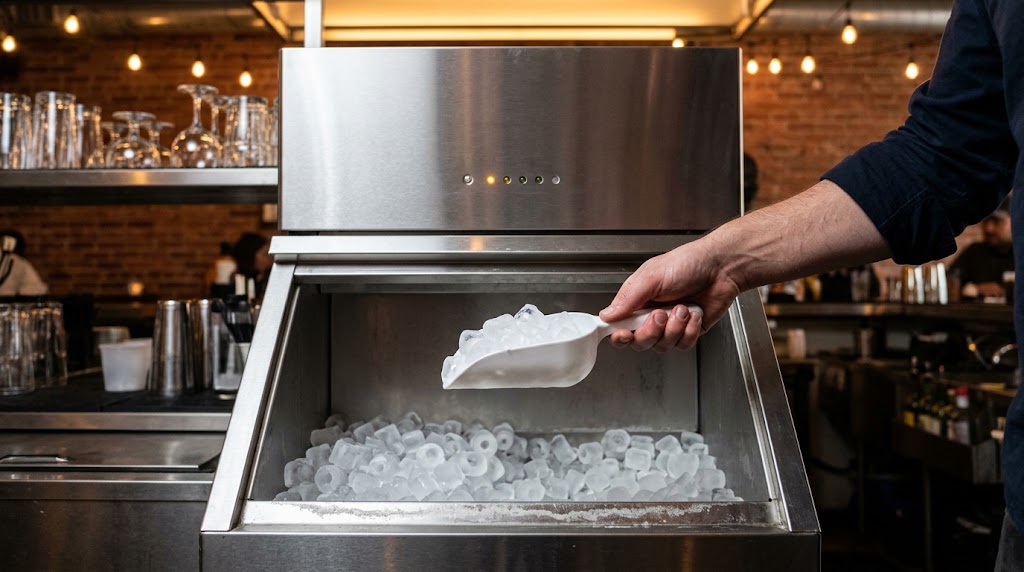
- Ice bin and sensor: If the machine has stopped making ice but the bin isn’t full, check whether ice or debris is blocking the part that senses when the bin is full.
- Cleaning cycle: Some displays aren’t faults. The machine may be in a clean or sanitize cycle, and the display is showing a cycle state, not an error.
- Surroundings: A very hot kitchen makes an ice machine work harder. Note whether the problem gets worse during the hottest part of the day.
If one of these checks fixes the problem, note what it was so you can watch for it again. If not, move on to what the ice itself is telling you.
What the Ice Is Telling You
The ice often shows what’s wrong before a fault appears.
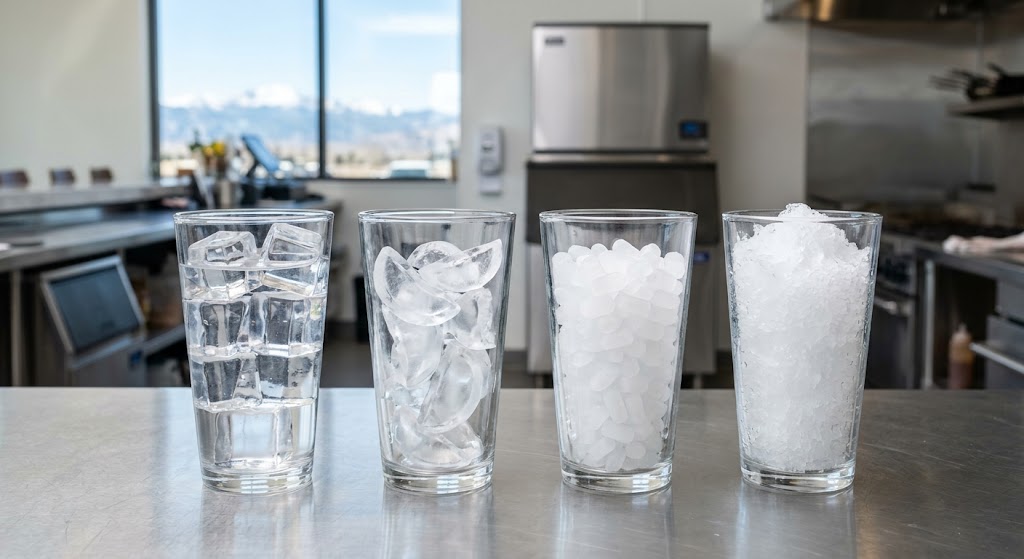
- Cloudy or soft cubes: Often a sign of a water quality or filtration problem. Scale and minerals in the water affect how ice forms.
- Hollow, thin, or misshapen cubes: Can point to a water supply problem, a dirty machine, or a part that needs attention.
- Less ice than usual: Check airflow, the water supply, and the filter, then call if output hasn’t recovered.
- Ice that tastes or smells off: Usually a cleaning or filtration issue. Dirty machines and old filters affect taste.
Water quality drives many of these symptoms. Hard water leaves scale on the surfaces inside an ice machine over time, which affects ice formation and can contribute to faults. Filtration at the point of supply helps, and Denver Beverage’s filtered water and ice programs include filtration alongside ice machine service.
When to Stop and Call a Technician
Some problems aren’t worth another round of troubleshooting. Stop and call for service if any of these apply:
- A returning fault: The fault comes back after you clear it, or the same light pattern or code keeps returning.
- A possible refrigerant problem: The machine runs but never cools. Refrigerant work requires a certified technician and isn’t a task for kitchen staff.
- A water leak: Water is leaking from the machine.
- Noise or repeat trips: You hear unusual noises, or the machine trips the breaker repeatedly.
- No ice: The machine has stopped making ice and the basic checks above didn’t help.
- Low output: Ice output is more than 20 to 25% below the machine’s rated daily capacity and the condenser area is clean.
Don’t open sealed refrigeration components or attempt refrigerant work yourself. That’s unsafe and can make a repair more expensive.
What to Have Ready When You Call
A short, accurate description gets a technician to the right diagnosis faster. Have this ready:
- Machine details: The brand, model, and serial number from the data plate.
- The symptom: What the machine is showing, whether that’s a code, a light pattern, or something else.
- Timing: When it started and whether it comes and goes.
- Checks already made: Power, water supply, filter, and airflow.
- Cooling type: Whether the machine is air-cooled or water-cooled, if you know.
Manitowoc and Hoshizaki Service With Denver Beverage
Denver Beverage’s own technicians handle installation, maintenance, and repair. They’re CFESA-trained, and they’re not third-party subcontractors. Manitowoc and Hoshizaki are among the repair brands Denver Beverage lists, alongside True, Vulcan, Hobart, and Bunn.
Service covers the Front Range and the I-70 corridor, with 7-day service coverage and a 24-hour service response. Repairs carry a 90-day labor warranty.
If you also run commercial warewashing equipment, Denver Beverage’s own ADS (American Dish Service) leased dish machines start at $129 a month, with free repairs included. See our commercial dishwasher repair page for details.
Get Your Ice Machine Looked At
If your Manitowoc or Hoshizaki ice machine is showing a fault you can’t clear, or the same problem keeps coming back, the next step is a technician who knows these machines. Call Denver Beverage at 303-295-3737 or send a request through the commercial kitchen equipment repair page. Quote requests get a response within 24 hours.
Frequently Asked Questions
Why is my Manitowoc or Hoshizaki ice machine not making ice?
Power, the water supply valve, the water filter, and airflow around the machine are the usual starting points, so check those first. If they’re all fine, a technician needs to find the cause. A machine that runs but never cools may have a refrigerant problem, which needs a certified technician.
Can I clear a fault on my ice machine myself?
Usually yes, once you’ve checked the basics: switch the machine off and back on. If the fault returns, treat it as a real problem and call for service instead of clearing it again and again.
How do I find out what my machine’s fault means?
Check the manufacturer’s manual for your exact model, using the model plate on the machine. Fault indicators differ by brand, series, and model, so the same code can mean different things on different machines. A technician can also read the machine for you.
Does water quality affect ice machine faults?
Yes. Scale from hard water can affect ice formation manitowoc ice machine troubleshootingand contribute to faults, and filtration at the point of supply helps.
Does Denver Beverage service Manitowoc and Hoshizaki ice machines?
Yes. Denver Beverage’s own technicians service both brands across the Front Range and the I-70 corridor. Call 303-295-3737.