A medical or dental office coffee setup has two separate jobs. One is the waiting room, where patients are often anxious or running late. The other is the break room, where staff work long shifts and lean on coffee to get through them.
Each job fails in its own way. An empty or confusing station frustrates patients, and weak coffee or a slow line frustrates staff. A good office coffee service treats the two zones as separate problems, because a practice isn’t a corporate office with one shared kitchen. Its coffee has to work for patients and staff at the same time.
What Patients Expect in a Waiting Room
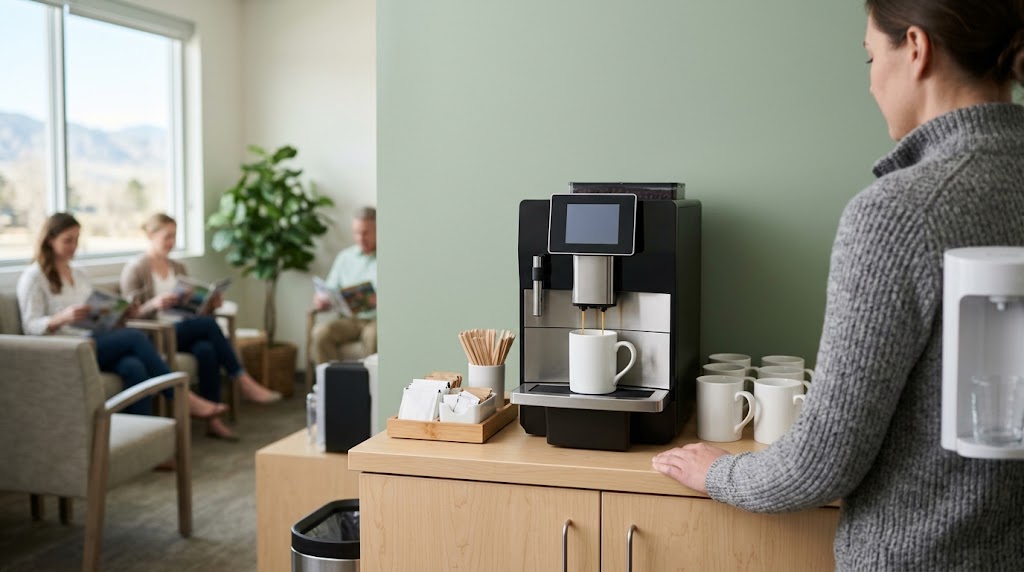
By the time patients sit down, the hard part of the visit is still ahead of them. A coffee station can’t ease that, but it can make the wait easier or harder depending on how well it works. What matters most is that it’s dependable, not that it has lots of choices. Three things do most of the work:
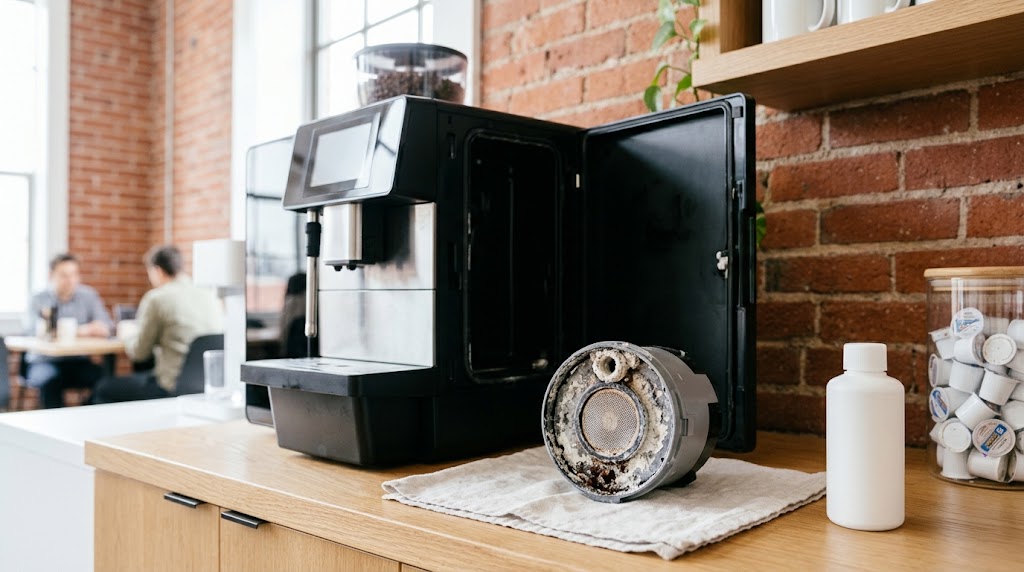
- Cleanliness: Many people use a waiting room station, so choose equipment that stays tidy with little staff attention. A communal drip pot on a burner needs someone checking it between appointments.
- Low friction: The station should be easy to use and reliably stocked. A machine that runs out, or shows an error patients can’t read, does more harm than good.
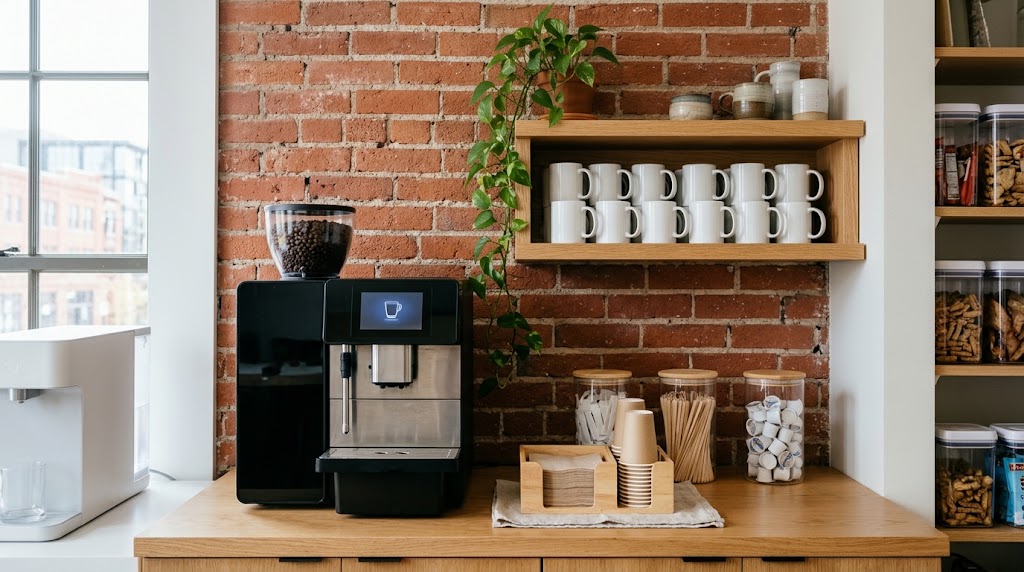
- Format: Bean-to-cup and single-serve machines suit a waiting room well, because each cup is made on demand and there’s no pot to watch. A filtered water and ice station, such as a Bevi smart water machine, can sit alongside coffee for patients who don’t drink it.
What Staff Expect in the Break Room
A medical office doesn’t have one big morning rush. Staff reach for the break room in small waves: at shift changes, in gaps between patients, and over working lunches. The setup should keep up with that steady flow, not just one busy hour.
- Throughput: A busy practice needs a coffee machine that can serve several people in a short break. One that makes a single cup at a time can slow down when several people want coffee together, so match the machine to your staff.
- Quality and choice: Staff who drink coffee all shift notice what’s in the cup, so the coffee itself matters as much as the machine. Denver Beverage’s foodservice coffee roster includes Ozo Organic Coffee, Queen City Collective, Boyer’s, Boulder Organic, Lavazza, Peet’s, and Starbucks, and Denver Beverage is the exclusive foodservice distributor for Boyer’s. A free coffee taste test lets your staff try the options before you choose.
- Supplies: The program covers more than the machine. Fractional pre-measured coffee packs, creamers, bulk beans, filters, cups, and lids all come through the same account.
How a Managed Coffee Program Works
Practice managers usually want three things: coffee that works, supplies that show up, and someone to call when something goes wrong. A managed program covers all three, and the office coffee services overview shows how it fits together. Here’s how it works for qualified accounts:
- Equipment at no charge: Coffee equipment is provided for qualified accounts, so the practice doesn’t buy the machine.
- Service by Denver Beverage’s own technicians: Repairs aren’t sent to a third party. Denver Beverage has 13 CFESA-trained service technicians, with a 24-hour service response and 7-day service coverage on the Front Range and the I-70 corridor. Repairs carry a 90-day labor warranty.
- One account: Coffee, supplies, water filtration, and ice can all come through one Denver Beverage account.
- Healthcare experience: Denver Beverage is a State of Colorado preferred vendor for healthcare.
Whichever provider you’re considering, a few questions are worth settling before you sign a service agreement. They tell you how the arrangement will work once the machine is running:
- Ownership: Who owns the equipment, you or the provider?
- Repairs: Who handles them, and how quickly do they respond?
- Inclusions: What does the program cover beyond the machine itself?
Denver Beverage can answer all three when you call. The team can also walk you through the coffee brewing equipment it installs and what fits your practice. Installs take planning and are rarely immediate, so it helps to start the conversation early.
Waiting Room and Break Room at a Glance
If you want the short version, this is it. A waiting room and a break room serve different people with different needs, and the right setup for one is often the wrong one for the other. Use this as a quick reference when you plan each zone, and treat them separately:
- Waiting room, format: Bean-to-cup or single-serve, so each cup is made on demand.
- Waiting room, priorities: Easy to use, reliably stocked, and low-maintenance between appointments.
- Waiting room, avoid: A communal drip pot that someone has to keep checking.
- Break room, format: A machine that can serve several people in a short window.
- Break room, priorities: Coffee your staff enjoy, plus the full supply of creamers, cups, and lids.
- Break room, avoid: A machine that makes one cup at a time in a busy practice.
Talk to Denver Beverage About Your Practice
Picking a coffee setup is easier once you’ve tasted what’s in the cup. If you’d like to try the coffee before choosing a program, call Denver Beverage at 303-295-3737 to set up a free coffee taste test. You can also request a quote, and you’ll hear back within 24 hours.
Frequently Asked Questions
Should a medical office offer coffee to patients in the waiting room?
Yes, as long as the setup is reliable. A station that’s easy to use and always stocked works better than a communal pot that needs staff attention. Bean-to-cup and single-serve machines are a good match for that job.
What is the difference between a waiting room coffee setup and a staff break room setup?
A waiting room setup needs to be simple, tidy, and reliable for people who use it occasionally, while a break room setup needs to serve several staff in a short window and offer coffee people are happy to drink every day. Treating the two as one environment can leave one of them with the wrong machine.
Does Denver Beverage supply coffee equipment to medical offices?
Yes, at no charge for qualified accounts on the Front Range and the I-70 corridor. Denver Beverage’s own technicians handle installation, service, and repairs. The company has been Colorado-owned since 1986 and is a State of Colorado preferred vendor for healthcare.
What coffee brands are available?
Practices can choose from Ozo Organic Coffee, Queen City Collective, Boyer’s, Boulder Organic, Lavazza, Peet’s, and Starbucks. Call 303-295-3737 to find out what’s currently on the program and to set up a free coffee taste test.
How does service work if the machine stops working?
Denver Beverage’s own CFESA-trained technicians handle repairs, not a subcontractor. You get a 24-hour service response and 7-day service coverage, and repairs carry a 90-day labor warranty.