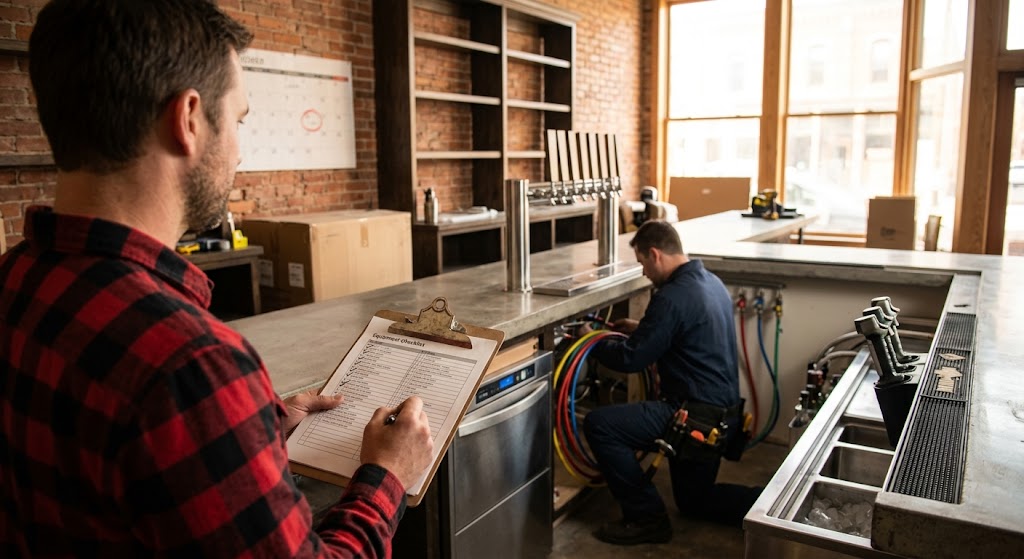
If you’re opening a bar and need a soda system, a draft setup, and a glass washer, the real questions are what to order, who supplies it in Colorado, and how far ahead to start. The last one trips up more new owners than any other. It’s easy to assume installs happen in a week or two, and they don’t.
This guide covers the bar-specific beverage equipment categories most opening checklists skip, with realistic lead time context for each. It’s written for commercial bar programs on the Front Range and the I-70 corridor, where Denver Beverage serves restaurants, bars, hotels, and venues. It isn’t the guide for home kegerators or residential soda systems.
Liquor licensing and health department approval run in parallel with your equipment setup, each on its own timeline. The Colorado Liquor Enforcement Division is the right starting point for licensing. This guide stays on the beverage equipment side, where the timeline surprises tend to live.
How Far Ahead Do You Need to Start?
Installs take planning and are rarely immediate. Every bar has a different footprint, and every equipment program involves coordination between your space, your account setup, and our technicians’ schedules. Call early in your planning, well before the final stretch of your opening. Here’s what happens before your first pour.
- Site assessment: A technician reviews your space, plumbing, and electrical before equipment is specified.
- Account setup: Equipment is provided at no charge for qualified accounts, but the account has to be established first.
- Equipment configuration: Draft systems, fountain setups, and dishwashers are configured to your specific space, not pulled off a shelf and dropped in.
- Scheduled installation: Our technicians handle installation, and scheduling it takes coordination, especially around a target open date.
With that in mind, the sections below take each equipment category in turn, starting with the soda system, since it’s the most common reason new bars call us. Each one covers what the equipment is, why a bar needs it, and what to plan for before your first pour.
Coca-Cola Fountain System and Bar Guns
Most bar operators call asking for a “Coke machine” or a “soda gun install.” Here’s what that involves, and why it matters even for bars that serve mostly alcohol.
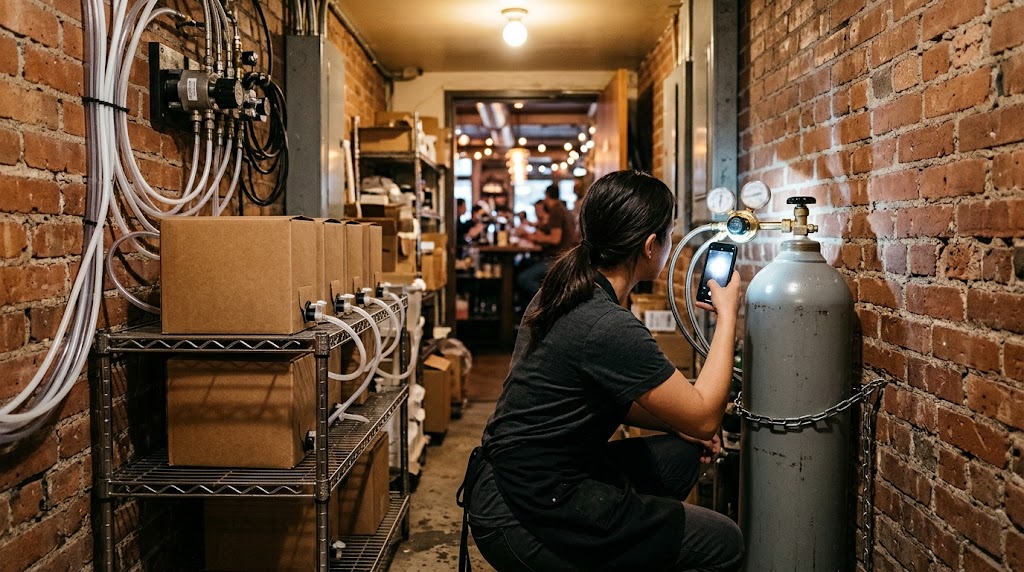
- What it includes: CO2 supply, bag-in-box (BIB) product, dispensing equipment, and the bar gun at the rail. The bar gun, also called a soda gun or cobra, lets bartenders dispense at the bar without walking to a fountain.
- Why a bar needs it: Mixers, non-alcoholic options, and high-margin fountain sales. Mocktails and designated-driver options belong on any drink selection, and they’re part of responsible alcohol service.
- How the program works: Dispensing equipment is provided at no charge for qualified accounts; you buy product through Denver Beverage, and our own technicians install it, not a third party. This isn’t a Coke machine you purchase or rent independently. It’s a program that runs through one account.
- Who you work with: Denver Beverage has been the Coca-Cola fountain distribution partner on the Front Range since 1986, when The Coca-Cola Company chose Denver Beverage (then Denver Syrup and Bar Supply) as its local partner. See our all beverages page and our restaurants and bars beverage programs for what’s available.
- Service once you’re open: You get 7-day service coverage and a 24-hour service response. If your bar gun is leaking on a Saturday night, that’s a call we can answer. Our fountain and bar gun troubleshooting guide covers the most common issues bartenders run into.
Draft Beer System
Draft is one of the higher-capital decisions in bar startup costs, and it’s a system that needs planning, not a plug-in product. Here’s what you’re buying into and why the install needs to start early.
- Components: A complete system runs from the keg to the tap. It includes a keg coupler matched to your keg type, a CO2 or blended gas supply, a trunk line, a tower or tap, and a drip tray.
- Bar-specific variants: Three choices shape your setup. Tap count comes first: single-tap setups suit smaller venues, while multi-tap configurations give you a broader draft menu. Layout comes next: direct-draw works when the cooler sits close to the tap, and long-draw carries the beer further, which means more line and more refrigeration to manage. If you plan to pour nitro or stout, you’ll also need a blended gas supply at a 75/25 nitrogen to CO2, ratio, which is a different configuration from standard CO2.
- Why it needs planning: Line running, wall penetration, refrigeration, and gas supply all have to be coordinated before a single tap goes in.
- Beverage gas: It’s supplied as part of the draft program, not as a standalone product.
- Inventory management: Keg and CO2 replenishment should be set up before you open, not the week after.
If you’d like to see how an install actually unfolds, our draft beer and cocktail tap installation process walks through it step by step. For the full program, including ongoing service, see our draft beer system installation and service page, and our draft systems page shows what’s available.
Glass Washer and Undercounter Dishwasher
This pairing is easy to overlook, and it directly affects your health inspection outcomes. A glass washer and an undercounter dishwasher aren’t the same thing, and choosing the wrong one for your volume creates problems from day one.
- Glass washer vs. undercounter dishwasher: A glass washer is made for what a bar asks of it: quick cycles, glass-safe temperatures, and enough capacity for a busy night. A standard undercounter dishwasher is meant for plates and cookware, so it struggles to keep up with pint glasses. If your bar runs high volume, treat a glass washer as essential equipment.
- High-temp vs. low-temp: A high-temp machine sanitizes with heat, which puts steam into your bar and can affect staff comfort and ventilation. A low-temp machine sanitizes with a chemical, usually chlorine, and gives off less steam. The trade-off is that you’ll pay for chemicals and need to keep the concentration right.
- Health inspection: Whichever type you choose, it has to meet your local sanitizing standard. Food handler permits and staff training should cover which type you run.
- ADS and free assessment: Denver Beverage’s own leased dish line is ADS (American Dish Service), starting from $129 a month with free repairs included. A free dish machine assessment is available, including a high vs. low-temp recommendation for your space. Our technicians are CFESA-trained, and repairs carry a 90-day labor warranty.
- Already have a dish provider: Many bars opening fast are already talking to a provider such as Ecolab, and that’s a common situation. Moving to Denver Beverage means one account and local service from the same technicians who handle your fountain and draft equipment.
If you’d like to see how the dish side fits together, our dish and laundry programs page covers the machines and chemicals, and our commercial dishwasher repair service page explains how repairs are handled.
Beverage Equipment Your Bar Might Overlook
Beyond the fountain system, draft lines, and dishwasher, most bars need a few more categories and don’t realize they need a supplier for them until they’re already behind. Here’s what to add to your list.
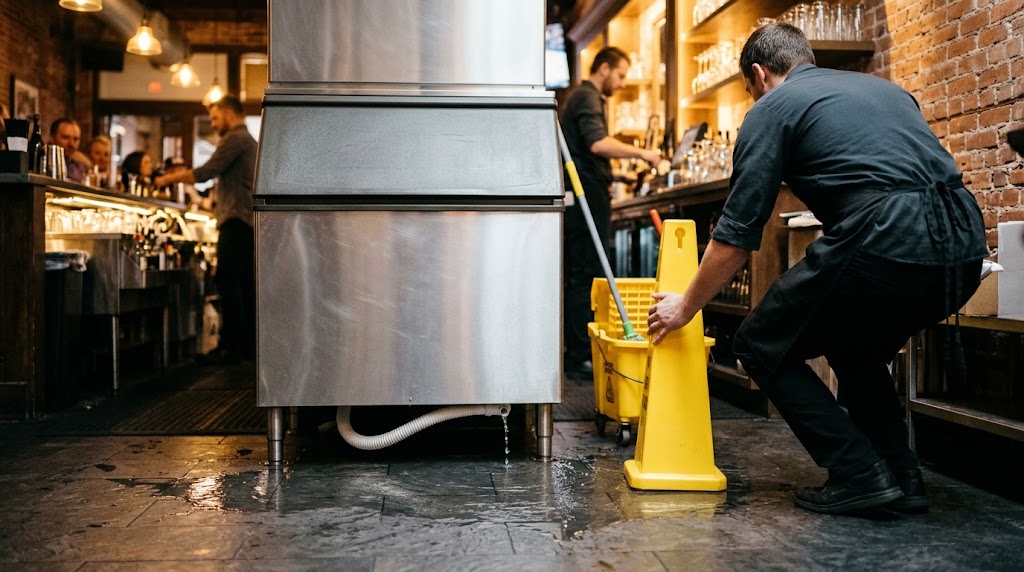
- Ice machine: How much ice you need depends on your bar type and your busiest hour. A sports bar with a full house on a Sunday afternoon goes through far more than a 40-seat cocktail lounge. Denver Beverage services ice machines, so it’s worth working out your ice needs early. Our filtered water and ice page has more.
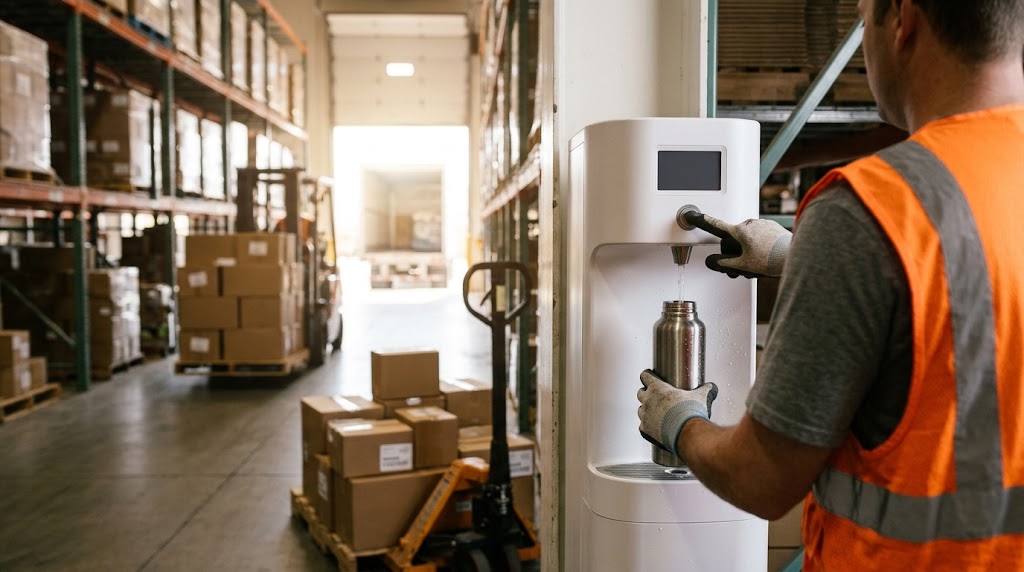
- Filtered water: If your bar does specialty cocktails or offers still and sparkling water, a bottleless machine is a good fit. Denver Beverage carries Bevi and Borg & Overström for commercial accounts.
- Coffee program: A bar with brunch service, late-night espresso, or a hotel bar setup may need a commercial coffee program and the right coffee brewing equipment. It can run through the same account. We carry Boyer’s, where we’re the exclusive foodservice distributor, along with Ozo Organic Coffee, Queen City Collective, Boulder Organic, Lavazza, Peet’s, and Starbucks. If coffee is on your menu, get it specified before you open.
- Disposables: Cups, lids, straws, and bar napkins are part of the broader Denver Beverage program. Ordering them through the same account means fewer suppliers to manage from day one.
What to Expect When You Work with Denver Beverage
Here’s how the program works in plain terms, because it surprises some people the first time they hear it.
- Equipment: Dispensing equipment is provided at no charge for qualified accounts, and the economics work because you buy product through us. Dishwashers run through the ADS leased line.
- Product: BIBs, CO2, and cleaning chemicals come from Denver Beverage. This is how the no-charge equipment model works for both sides.
- Installation: Our own technicians install everything, not subcontractors. There are no third parties and no handoffs.
- Service: The same local team services what it installed, with 13 technicians, 7-day service coverage, and a 24-hour service response.
- Quotes: Quote requests get a response within 24 hours.
- Who we serve: Commercial accounts on the Front Range and the I-70 corridor, not home setups or residential kegerators.
Getting your programs set up right from day one means fewer service calls and no surprise equipment costs later, which protects your profit margins. The items that get missed in planning, like ice, filtered water, or the dish machine, tend to show up as problems after you open. It’s easier to plan the full account from the start.
Ready to Plan Your Bar’s Beverage Program?
If you’re opening a bar on the Front Range or along the I-70 corridor and you’re ready to talk through your soda system, draft setup, or dishwasher program, call us at 303-295-3737 or request a quote online. We respond within 24 hours.
Frequently Asked Questions
Does installation cost anything for a new bar account?
Dispensing equipment is provided at no charge for qualified accounts, so you’re not buying or renting the hardware. In return, product is purchased through Denver Beverage, and that’s the structure of the program. Call 303-295-3737 to talk through what your account would look like.
How long does it take to get a fountain system or draft setup installed?
Installs take planning and are rarely immediate. There’s a site assessment, account setup, equipment configuration, and scheduled installation before anything goes in. Bars that contact us expecting a one-to-two-week turnaround usually need to reset their timeline, so call early in your planning, not just before your open date.
Do I have to buy all my product through Denver Beverage?
Yes. BIBs, CO2, and related product come through Denver Beverage, and that’s how the no-charge equipment model works. It isn’t a hidden condition, and it’s worth understanding before you set up the account.
What equipment does a bar need that a restaurant might not?
A bar typically needs a bar gun at the rail, a draft beer system, and a glass washer, on top of the fountain, ice, and dish equipment a restaurant needs. Each has its own supplier and install requirements. Nitro and stout setups also need a 75/25 nitrogen to CO2 blended gas configuration, which is a separate spec from a standard CO2 draft system.
What happens if something breaks down after we open?
Denver Beverage provides 7-day service coverage and a 24-hour service response across your fountain system, draft lines, and dish machine, so a single call reaches the team responsible for all three. The same local team that installed your equipment handles service calls. If your bar gun is leaking or your draft system stops pouring correctly, call 303-295-3737.
Do you service bars outside Denver?
Yes. We serve bars across the Front Range and the I-70 corridor, not just Denver. If you’re outside that area, call 303-295-3737 and we’ll tell you directly whether we can help.