Choosing a hotel micro market platform is an operational decision, not a product decision. It determines who manages inventory, who absorbs shrinkage, who responds when a kiosk goes down at 2 a.m., and what your net revenue actually looks like after the first quarter. GrabScanGo, as deployed by Denver Beverage, is one option in that market. This article explains how the platform works, what it does not do, and how it compares to the alternatives a hotel GM or F&B Director is likely already evaluating.
If you’re still deciding whether a micro market fits your property, the hotel micro markets overview covers the broader program. If you’ve already made that call and are comparing platforms, keep reading.
What GrabScanGo Actually Does in a Hotel Lobby
GrabScanGo is a self-checkout platform built specifically for unattended retail environments. In a hotel setting, it replaces the traditional locked vending cabinet or staffed lobby shop with an open-format market that runs continuously without front desk involvement.
The platform supports four distinct checkout pathways:
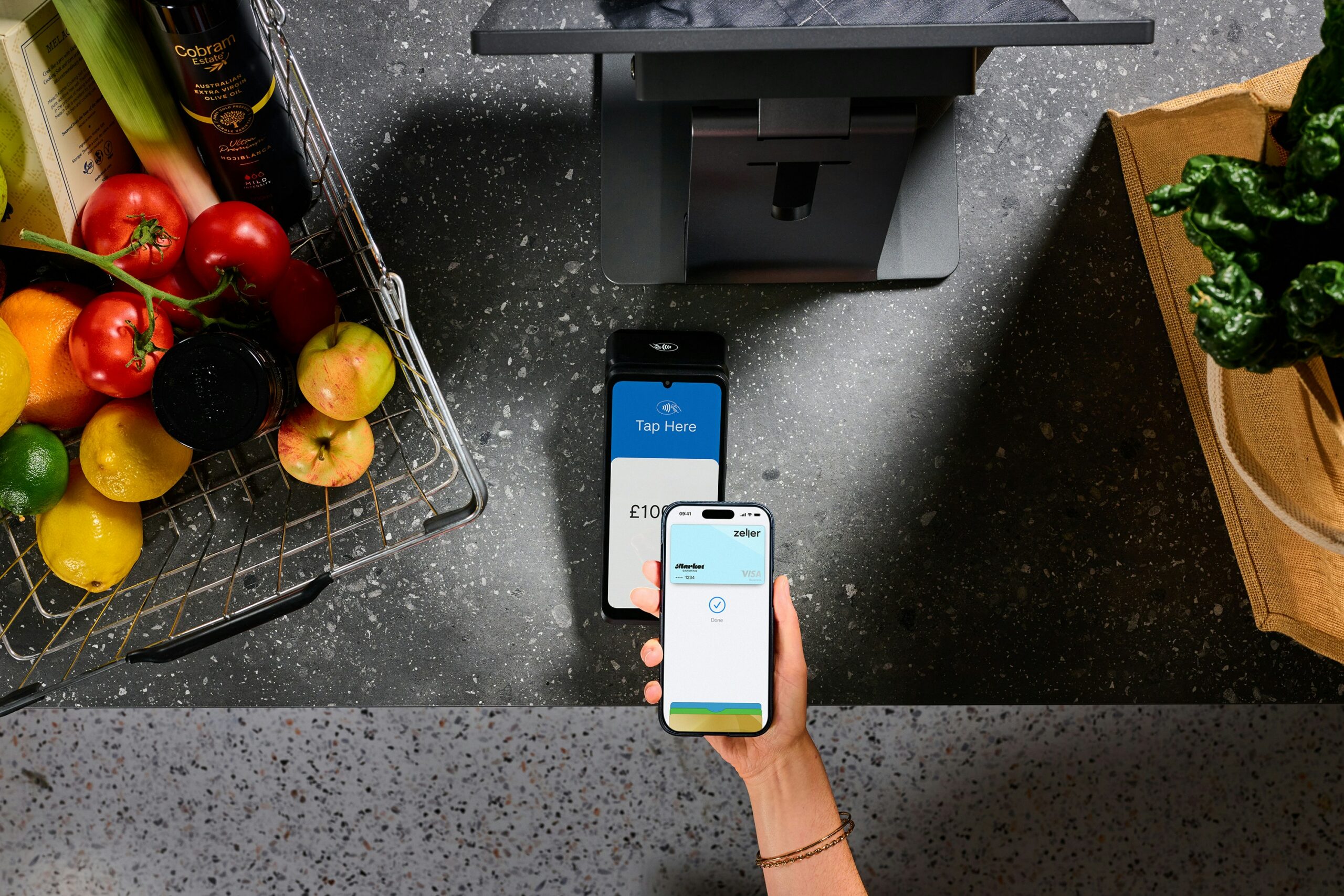
- Self-checkout kiosk: The primary touchpoint. Guests scan items at the kiosk, pay via contactless transaction, credit/debit card, or mobile pay, and walk out. No PIN, no staff involvement.
- Mobile web checkout: Guests scan a QR code on their phone and complete the purchase through a browser. No app download required.
- App Clip: An iOS-native shortcut that launches a lightweight checkout interface directly from the camera app. Again, no app download required. This matters for international guests who may not have U.S. payment apps installed or data plans that support large downloads.
- Front desk card-on-file: For properties that want to offer room-charge or pre-authorized billing, purchases can be settled against a card on file at the front desk. This is the pathway that most directly mirrors how guests already interact with hotel ancillary revenue services like room service or minibar charges.
Why multiple checkout pathways matter. Hotel guests aren’t a uniform population. A late-night guest who doesn’t want to navigate an app is different from a business traveler who won’t touch a shared kiosk screen. Having multiple pathways increases completed transactions across those guest segments.
No POS integration required. GrabScanGo runs independently of the hotel’s existing property management system or point-of-sale stack. For properties on legacy PMS configurations, or mid-brand systems where third-party integrations require IT approval and corporate sign-off, this is a material operational advantage: the market goes live without touching the hotel’s existing technology infrastructure.
Cashless payment, start to finish. The system handles contactless transactions, standard credit and debit, and mobile pay. There’s no cash drawer, no cash handling by staff, and no end-of-day reconciliation that eats into front desk time. The 24/7 grab-and-go model works precisely because the payment layer doesn’t need a human present to close a transaction.
Inventory Management and Restocking: Who Does What
This is the section of the platform evaluation that most hotel operators do not fully work through before signing a contract, and it is where the difference between platforms becomes most consequential.
- Platform-side inventory management: GrabScanGo’s dashboard gives Denver Beverage real-time inventory tracking across every SKU in the market. The system shows which items are moving, which are sitting, and what needs replenishment before a shelf goes empty. This is inventory management software operating in the background of every transaction. The hotel does not see a planogram spreadsheet. Hotel staff do not place purchase orders. Denver Beverage handles restocking two to three times per week based on live data, not a fixed schedule.
- The operator model vs. the self-managed model: This is the P&L decision that determines whether a hotel micro market generates passive hotel ancillary revenue or becomes an internal retail operation. In Denver Beverage’s model, Denver Beverage owns the inventory, absorbs shrinkage, and manages all restocking and planogram decisions. The hotel provides the space and receives a revenue share. In the Colorado Springs case study, that figure reached approximately $3,000 per month within weeks of launch.
A self-managed arrangement works differently. The hotel licenses the software platform, purchases the inventory, manages spoilage and loss internally, and keeps all gross margin. The revenue potential may look higher on a whiteboard. The operational cost, including staff time, spoilage write-offs, and shrinkage exposure, often closes that gap significantly.
The two models are not interchangeable. A hotel operator evaluating GrabScanGo as a technology purchase and a hotel operator evaluating GrabScanGo as part of a Denver Beverage operator agreement are making structurally different decisions.
Denver Beverage’s hotel beverage and supply services page covers the full scope of the operator relationship for hotels considering the broader program.
Loss Prevention and the Open-Format Retail Question
Open-format micro markets carry higher shrinkage than locked vending cabinets. That’s a fact, not a selling point to minimize. The real question isn’t whether shrinkage occurs, it’s who bears the cost and what the platform does to limit it.
GrabScanGo’s loss prevention at the kiosk level:
- Item-level scan confirmation before payment is processed
- An audit trail per transaction
- Camera-enabled kiosk confirmation (captures an image at checkout) as an available feature, though the specific configuration depends on the hardware setup at your property
If camera functionality is a requirement for your installation, confirm the exact hardware configuration with Denver Beverage before installation.
Who actually carries the risk: In Denver Beverage’s operator model, shrinkage risk doesn’t transfer to the hotel. Denver Beverage owns the inventory, so undetected non-scans reduce Denver Beverage’s margin, not the hotel’s net revenue. For a GM who doesn’t want to track retail loss against a departmental P&L, that’s a meaningful structural difference from any self-operated model.
Why operators accept the tradeoff anyway: Product breadth and revenue per square foot. A lobby convenience store format carrying Fairlife protein shakes, Boulder Canyon kettle chips, and Red Bull alongside personal care items outperforms a locked vending cabinet on both guest satisfaction and total transaction volume, even accounting for a shrinkage rate a vending machine simply doesn’t produce.
What GrabScanGo Is Not: Honest Platform Comparison
A hotel operator who has researched this category has likely encountered Impulsify, 365 Retail Markets, and Toast. Each is a legitimate product. Here’s what they are and where the difference lies.
Impulsify and Toast: software-only platforms. They provide the checkout technology and inventory management software, but not inventory, restocking, or operational management. A hotel operating on either platform is self-operating: the hotel buys the product, manages the market, and keeps the margin.
365 Retail Markets: hardware and software, national network. It’s a hardware and software provider with its own operator network, but a national one, so equipment downtime response and local account management run through a regional partner network rather than a local operator. Response times and service continuity depend on who holds the local contract.
GrabScanGo, as deployed by Denver Beverage: technology plus operations. The platform handles checkout, cashless payment processing, and real-time inventory visibility. Denver Beverage handles installation, stocking, equipment service, and shrinkage, running 13 field technicians with 7-day service coverage across the Front Range.
When a self-checkout kiosk has a problem on a Saturday morning, a local technician responds, and Denver Beverage’s commercial kitchen and beverage equipment repair program covers the equipment service layer that makes 7-day uptime realistic rather than aspirational. Denver Beverage’s own service team is why that response happens, not anything built into the GrabScanGo software itself.
GrabScanGo is a capable platform on its own. What differentiates the Denver Beverage offering is partly technological and mostly operational:
- A hotel that wants a vending machine alternative with better guest experience and no new internal workload is evaluating the operator model, not just the platform.
- A hotel that wants to run its own retail operation should be looking at a software license, not an operator agreement.
What Colorado Hotels Can Expect in the First 90 Days
The Colorado Springs property documented in the hotel micro market installation case study is the clearest available benchmark for what a Denver Beverage-operated hotel micro market produces in practice.
That property came in with nearly $50,000 in dead stock from a prior lobby setup that was not working. Shelves full of unsold product, long front desk lines for simple purchases, and no food or beverage options after 7 p.m.
The timeline after Denver Beverage took over:
- Week one through six: Full transformation completed. New fixtures, coolers, and lighting installed. Market stocked and operational.
- Ongoing: Restocking two to three times per week based on GrabScanGo inventory data. No hotel labor involved in ordering or stocking.
- Within weeks of launch: Approximately $3,000 per month in profit flowing to the hotel.
- Guest impact: The lobby market became one of the most frequently mentioned features in guest feedback.
The market carries named products, not a generic grab-and-go assortment. Gatorade fruit punch, Clif bars, Boulder Canyon kettle chips, Justin’s peanut butter cups, RX bars, Sahale snacks, Fairlife protein shakes, and Red Bull. These are current planogram items drawn from the case study, not a promotional category list.
On the capital question: in Denver Beverage’s operator model, the hotel does not carry equipment or inventory costs at setup. The question is not “what do I invest to get this started” but “what do I receive once it is running.” That reframes the ROI conversation significantly for a property that is weighing this against other capital projects.
Compliance Considerations for Unattended Hotel Retail
Unattended retail food operations in Colorado may require a retail food establishment permit, depending on the product mix, ambient-only assortments and refrigerated items are treated differently under CDPHE rules. Raise this before installation planning, not after.
ADA compliance also applies: kiosk reach range, accessible route width, and screen height are confirmed during the site assessment, before fixtures are ordered.
Denver Beverage raises permit and ADA questions at the start of every engagement. If your property has additional compliance requirements or a brand standard governing lobby retail, bring those to the first call.
Ready to evaluate whether a Denver Beverage-operated hotel micro market fits your property? Request a consultation and a Denver Beverage representative will walk through the operator model, site requirements, and projected revenue for your specific location.
Frequently Asked Questions
What is GrabScanGo and how does it work in a hotel?
GrabScanGo is a self-checkout platform designed for unattended retail environments. In a hotel lobby, it enables guests to select items from an open market and pay via a self-checkout kiosk, mobile web, App Clip, or front desk card-on-file. No staff involvement is required to complete a transaction.
Does a hotel micro market require POS integration?
No. GrabScanGo operates independently of a hotel’s existing point of sale technology or property management system. Installation does not require IT access to the hotel’s existing technology stack.
Who manages restocking in a Denver Beverage-operated micro market?
Denver Beverage handles all restocking, typically two to three times per week, using real-time inventory tracking from the GrabScanGo dashboard. Hotel staff are not involved in ordering, stocking, or planogram decisions.
How does shrinkage work in an open-format hotel micro market?
Open-format markets carry higher shrinkage than locked vending cabinets. In Denver Beverage’s operator model, Denver Beverage owns the inventory and absorbs shrinkage. The hotel’s net revenue is not reduced by loss events.
What products are typically sold in a hotel micro market?
The Colorado Springs case study market carries Gatorade fruit punch, Clif bars, Boulder Canyon kettle chips, Justin’s peanut butter cups, RX bars, Sahale snacks, Fairlife protein shakes, and Red Bull. Product mix is set based on property type, guest profile, and sales data from the GrabScanGo inventory management software.
Does a hotel need a permit to operate a micro market in Colorado?
Possibly. Unattended retail food operations in Colorado may require a retail food establishment permit under Colorado Department of Public Health and Environment regulations, depending on product mix. This is a setup-phase question, not a post-installation one.
How long does it take to install a hotel micro market?
Based on the Colorado Springs case study, the full transformation from initial engagement to a live, stocked market took six weeks. This included fixture installation, equipment placement, and initial stocking.