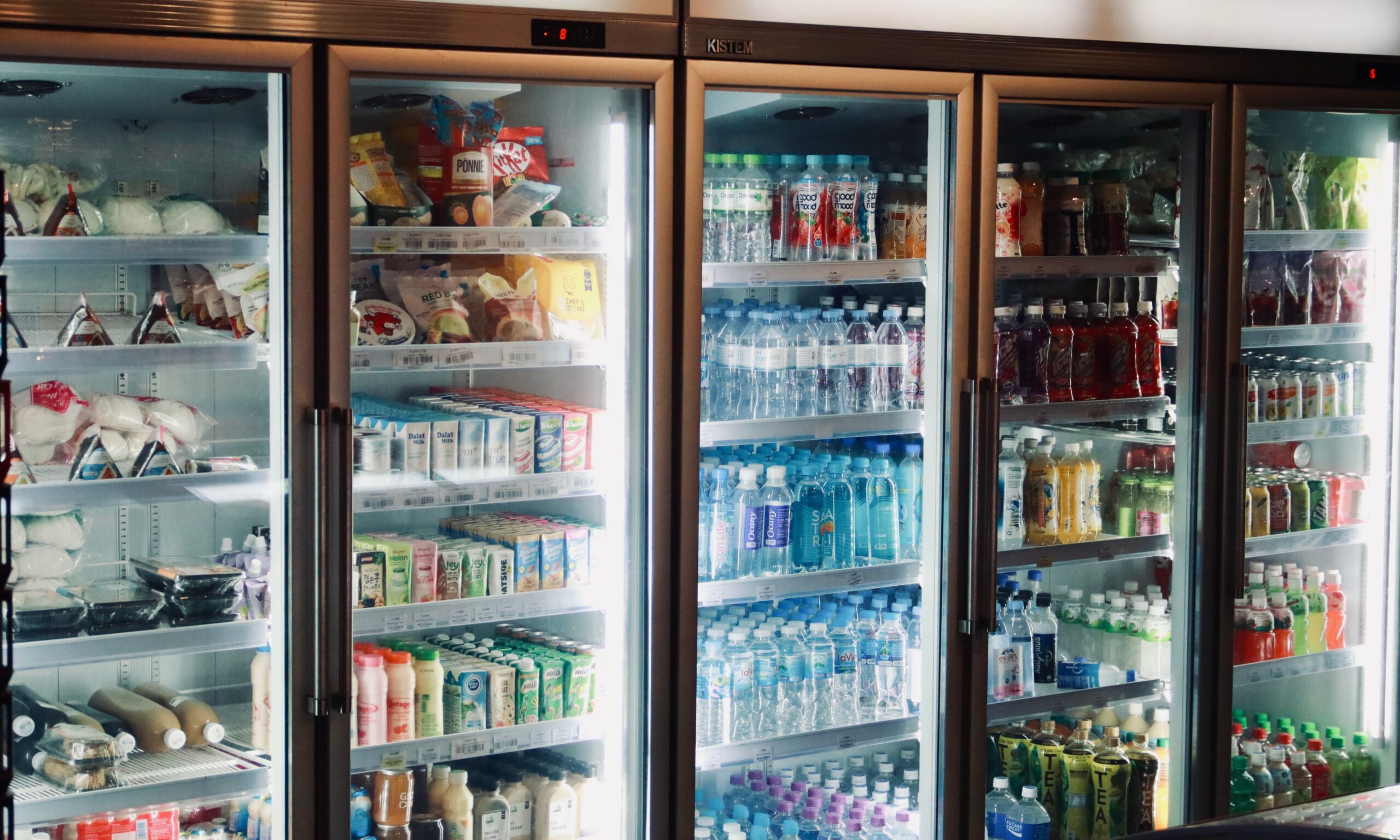
A micro market is an open-concept, self-service retail space installed inside a workplace breakroom, hotel lobby, or healthcare facility. Products sit on open shelving and inside cooler and refrigerated display cases, just like a small convenience store. Shoppers browse, pick up items, check labels, and pay at a touchscreen self-checkout kiosk using a credit card, debit card, or contactless payment. No cashier, no attendant, no front desk involvement required.
The term “unattended retail” describes this format: the space runs on its own between scheduled restocking visits from the operator who manages it.
How Does a Micro Market Work?
Open shelving and refrigerated display cases replace the enclosed cabinet of a traditional vending machine. Shoppers walk up, browse products directly, and inspect packaging before selecting anything.
- Payment: Shoppers use a touchscreen point-of-sale kiosk at the front of the space. The kiosk accepts credit cards, debit cards, and contactless payment methods such as Apple Pay or Google Pay. No cash handling, no staff member needed to process the transaction.
- Inventory tracking: Inventory management software tracks every item sold. The micro market operator receives automatic alerts when stock falls below set thresholds and typically replenishes the market two to three times per week, depending on foot traffic.
- Product layout: The operator also manages the planogram, the planned layout of products across shelving, coolers, and display cases, to keep the selection fresh and relevant to the location.
How Is a Micro Market Different from a Vending Machine?
This is the comparison most property managers start with, and it is worth addressing directly. The two formats share a category (self-service food and beverage access) but differ on almost every operational dimension.
Product access
- Micro market: Open shelving and refrigerated display cases. Shoppers handle products before purchasing.
- Vending machine: Enclosed cabinet. Products are visible but unreachable until purchased.
Product range
- Micro market: Fresh food options including refrigerated meals, sandwiches, and dairy, alongside packaged snacks and drinks.
- Vending machine: Shelf-stable packaged goods only. No refrigerated meals or fresh items.
Checkout experience
- Micro market: Single self-checkout kiosk handles all items in one transaction using a cashless payment system.
- Vending machine: Each machine has its own coin or card slot. Multi-item purchases require multiple separate transactions.
Space footprint
- Micro market: Requires a dedicated open-concept retail space, typically 100 to 400 square feet.
- Vending machine: One or several individual machine placements with no dedicated floor area required.
Inventory control
- Micro market: Inventory management software tracks sales automatically and alerts the operator to restock.
- Vending machine: Manual counts per machine during each service visit.
Neither format is universally better. A smaller office or a space with irregular foot traffic may genuinely be better served by a vending machine. The honest comparison helps you self-qualify rather than oversell one format.
Where Do Micro Markets Work Best?
Micro markets perform best in locations with consistent daily foot traffic and a defined user base. Industry operators typically cite 50 to 100 daily users as a practical floor for a full market to be financially viable. Below that threshold, product turnover slows, fresh items go to waste, and the economics do not support a full installation.
Denver Beverage installs and manages micro markets across three specific verticals in Colorado.
Hotels
Hotel lobbies are a natural fit for 24/7 access retail. Guests need snacks, drinks, and travel essentials at all hours, including well after the front desk shifts into overnight mode. A self-checkout kiosk means guests serve themselves without queuing at the front desk for a bottle of water at midnight.
A Colorado Springs hotel Denver Beverage worked with had nearly $50,000 in dead lobby stock and no food or beverage options after 7 PM. After converting to a lobby micro market, the property generates around $3,000 in profit every month with no labor cost to hotel staff. See the full hotel micro market installation case study for the complete outcome detail.
For hotels evaluating micro markets alongside broader beverage and supply needs, Denver Beverage’s hotel beverage and supply services covers the full program.
Healthcare
Dietary staff in skilled nursing, rehab, and assisted living facilities are already stretched across resident care, meal service, and compliance documentation. A micro market installed in a staff corridor or patient family lounge provides 24/7 access to food and beverages without adding a single labor hour. Overnight staff, who often have no off-site food options between midnight and 6 AM, benefit most.
Denver Beverage’s healthcare beverage programs extend beyond micro markets into full beverage supply programs for facilities operating under Colorado’s state preferred vendor framework.
Offices
Properties with 100 or more employees on-site daily have the foot traffic to support a full market. Micro markets work well alongside existing employee amenities as a healthy snack selection upgrade, particularly in office environments where the nearest restaurant is a 15-minute drive. Many office decision-makers evaluate micro markets at the same time as bean-to-cup coffee programs.
Denver Beverage’s office coffee service and breakroom supplies are frequently set up alongside a market as part of a broader workplace breakroom refresh.
What About Security and Theft?
This is a real operational question that most micro market content avoids entirely. Open shelving in an unattended retail environment does carry some shrink risk, which is the industry term for loss from theft or unscanned items.
Modern micro markets address this through loss prevention technology: overhead camera systems, kiosk-mounted video capture at the point of sale, and in some installations, weight-sensing shelving that flags unscanned removals. Operators factor an expected shrink rate into their product mix and pricing, so a modest level of loss is already accounted for in the model.
Location matters significantly for security outcomes. A workplace breakroom behind badge-access entry, or a healthcare facility with controlled corridor access, presents far lower theft exposure than an open-public-access lobby. If your location has unrestricted public entry with no accountability layer, a micro market may not be the right format. That is worth knowing before installation, not after.
Who Manages a Micro Market?
The micro market operator handles everything. Denver Beverage supplies the equipment, installs the market, stocks it on a regular schedule, and services any equipment issues. The host employer or property owner provides the space and nothing else. No ordering, no counting, no restocking, no equipment purchases required from your side.
The operator earns revenue from product sales. Depending on the service agreement, the host may receive a revenue share, though the specific structure varies by location, foot traffic, and product mix. Denver Beverage can walk through what that looks like for a specific property.
Denver Beverage runs its micro market program on the GrabScanGo platform, which handles the self-checkout kiosk interface, cashless payment processing, and inventory management software that drives the restocking schedule.
This managed-service model is what makes micro markets practical for hotel GMs, facility directors, and office managers who cannot add food service responsibilities to their existing workload.
Food Safety Basics for Unattended Retail
Fresh and refrigerated products in a micro market fall under food safety regulations. Temperature control for cooler and refrigerated display cases is an active operational requirement, not something that can be set once and forgotten.
- Who’s responsible: The micro market operator bears primary responsibility for food safety compliance, including product handling, temperature monitoring, and labeling. The host employer isn’t typically the responsible party for product handling, but confirm this allocation in your service agreement before installation.
- Where the rules come from: In Colorado, unattended retail operations selling perishable foods operate under state food safety rules. The Colorado Department of Public Health and Environment’s food safety resources page is the authoritative starting point for understanding which rules apply.
- What else to check: County health departments may layer additional requirements on top of state minimums, so a conversation with your local health department before launch is worthwhile.
None of this is a reason to avoid a micro market, it’s a reason to ask the right questions before you sign. If you’re evaluating one for your property, contact Denver Beverage to start a site-specific conversation about foot traffic, space, and fit.
Frequently Asked Questions
How does a micro market work?
A micro market is an open-concept self-service retail space with open shelving, coolers, and a self-checkout kiosk. Shoppers browse and select items directly, then pay at the kiosk using a cashless payment system. No attendant is needed. The operator tracks inventory automatically and restocks on a regular schedule.
What is the difference between a micro market and a vending machine?
A vending machine dispenses shelf-stable products from an enclosed cabinet via individual coin or card transactions. A micro market is an open-concept retail space offering fresh food options and a full product range, with a single self-checkout kiosk handling all purchases in one transaction. Micro markets also require more floor space and a minimum daily user base to be financially viable.
How much does it cost to set up a micro market?
In a managed-service model, the host employer provides the space. The micro market operator supplies and installs all equipment at no upfront cost to the host. Ongoing costs and any revenue-share arrangements depend on location, foot traffic, and product mix. Contact Denver Beverage for a site-specific conversation rather than applying a generic figure.
Are micro markets profitable for businesses?
For the host employer in a managed-service model, the primary value is an employee or guest amenity at no labor cost, not a direct revenue stream. Profitability for the operator depends on volume. A Colorado Springs hotel Denver Beverage works with generates around $3,000 in monthly profit from a lobby market that previously held $50,000 in unsold stock.
What types of products are sold in a micro market?
A typical micro market carries refrigerated meals, sandwiches, fresh snacks, dairy, energy drinks, bottled water, packaged snacks, and personal care essentials. The specific product mix is managed by the operator using a planogram and adjusted based on what sells at that location.