Most content about micro market ROI is written for the person running the market, not the property hosting it. If you’re a property manager, facilities director, or hotel GM sizing up whether a micro market makes sense for your location, that operator-side math isn’t your math. Your ROI calculation looks fundamentally different, and it’s simpler.
Under a revenue-share model like Denver Beverage’s GrabScanGo program, your property contributes space and foot traffic, nothing more. In return, you receive a percentage of every sale, with no equipment costs, no staffing burden, and no inventory to manage.
The average location in Denver Beverage’s portfolio generates $64,000 in annual sales. As a property host, a meaningful portion of that comes back to you every year, on top of whatever you’re already earning from that same square footage.
Denver Beverage’s micro market program serves hotels, healthcare facilities, office campuses, and multi-location facility management portfolios across the Denver and Colorado Springs metro areas. See our industries served page for the full picture.
Micro Market ROI: What a Property Actually Earns
The $64,000 figure is useful as a benchmark, but it’s an average, not a ceiling. Here’s the range that number is built from, and what pushes an individual location toward one end of it.
Weekly revenue range for active locations
Active locations in high-traffic environments typically run between $1,000 and $3,000 in weekly sales. As the property host, your take scales right along with that range, a busier location means more coming back to you every week.
How the math plays out for a single location
A location running $1,500 a week in sales delivers a real, ongoing return to the property every week it operates. Denver Beverage’s hotel micro market installation case study documents a Colorado Springs hotel that reached approximately $3,000 a month in profit after installation, a concrete example of what an active location can produce.
What drives a location’s revenue up or down
Three variables matter most: daily foot traffic, population size, and product mix. A 300-room hotel lobby running at 60% occupancy will consistently outperform a 75-person office floor. A healthcare facility with a steady population of residents, staff, and visitors can perform well even with a smaller footprint.
For hotels specifically, our hotel beverage and supply services page covers how Denver Beverage structures micro market programs for hotel properties, where traffic patterns and guest purchase behavior tend to support the higher end of these ranges.
What a Micro Market Costs the Property (Usually Nothing)
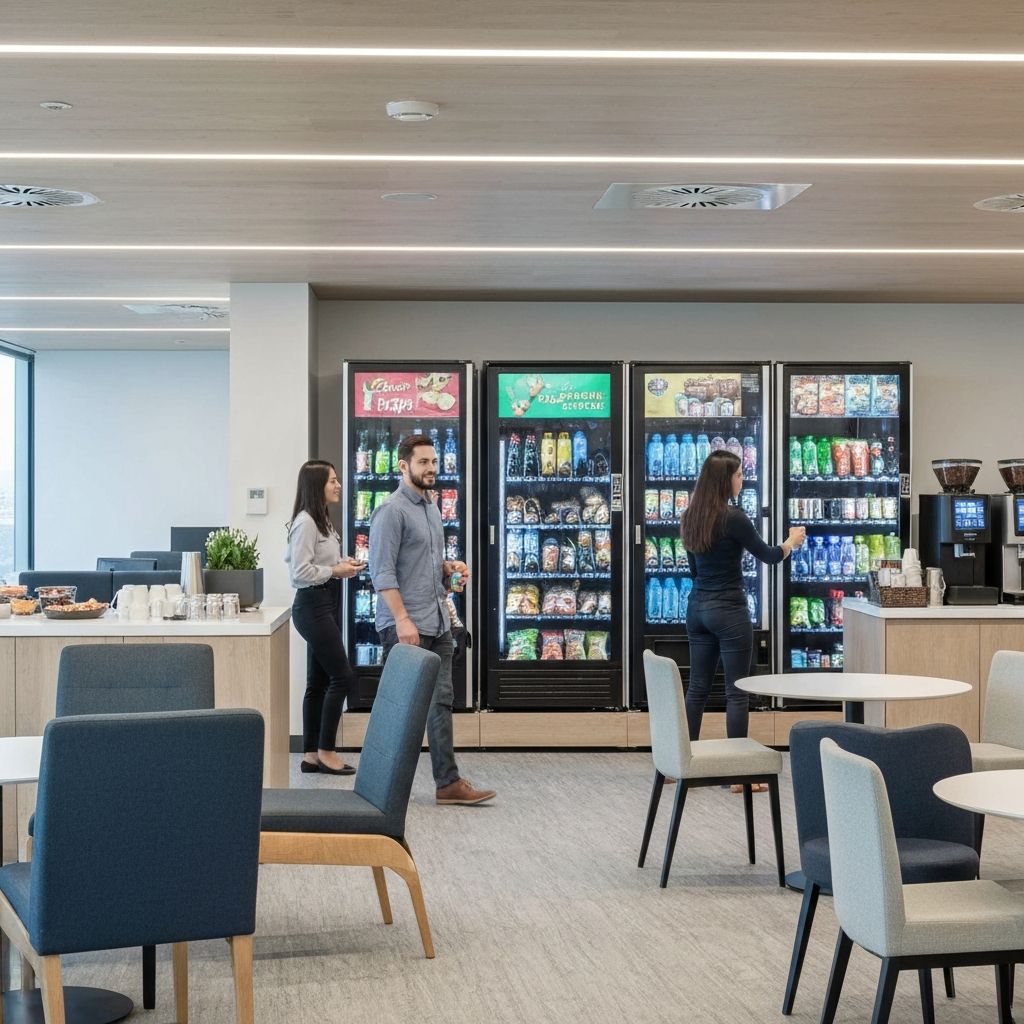
This is the part most micro market content never explains from the property host’s perspective. Under a fully managed revenue-share model, the operator funds the equipment, orders the product, handles the stocking, and processes the payments, all of it. Property staff have no role in day-to-day operations. What the property contributes is simple:
- Space: A dedicated footprint, typically in a lobby, breakroom, or common area with existing foot traffic.
- Power access: Standard electrical service to power the cooler, kiosk, and any lighting.
- Foot traffic: The population that makes the location viable.
That’s the full extent of the property’s investment. When your input is space you already have, the return on it doesn’t need to clear a traditional payback threshold. There’s no capital outlay to recover.
Micro Market ROI vs. Traditional Vending: The Property’s Perspective
This comparison is worth making explicitly, because the financial gap is larger than most properties expect.
| Traditional Vending | Micro Market | |
| Revenue share to property | 5% to 20% of gross sales | A substantially higher share of gross sales |
| Per-location sales volume | Limited by a coin mechanism and a narrow selection window | Higher: an open cooler and self-checkout kiosk remove that friction, so customers spend more per visit and visit more often |
| Example weekly sales | $800 | $2,000 |
| Property’s weekly return | $120 (at 15%) | Substantially higher, even before accounting for the sales volume difference |
A higher gross sales figure at a higher commission rate compounds the gap significantly. The revenue difference isn’t marginal.
Micro Market Payback: The Questions Worth Asking Before You Commit
Every property considering a micro market has the same handful of concerns before signing on. Here are the ones that come up most, answered directly.
What happens if the location underperforms?
Under a managed model with no property capital outlay, the worst case is opportunity cost on the square footage, not an actual financial loss. Denver Beverage checks a location’s viability upfront so a market doesn’t end up somewhere the traffic can’t support it.
Who handles shrink and loss?
The operator, not the property. It’s a common concern among healthcare and hotel decision-makers, and modern micro markets address it with camera systems and kiosk audit logs that significantly reduce shrink compared to traditional vending machines. If there’s a discrepancy, it’s the operator’s exposure, not the property’s.
Is there a contract?
Yes, and Denver Beverage structures each micro market partnership with clear terms, though specific contract lengths and exit provisions get worked out as part of the placement conversation, so ask about them directly before signing anything.
Talk to Denver Beverage about what a micro market program would look like for your specific property and traffic volume.
Also, if you’re managing an office property and considering both a micro market and a managed coffee program, the two pair naturally. Our office coffee service page covers how the coffee program works alongside a micro market footprint.
Frequently Asked Questions
Are micro markets a good investment for a property that already has vending?
Yes, in most cases. The revenue-share rate on a micro market is typically two to three times higher than a standard vending machine commission, and micro markets generate significantly more gross sales per location. A property currently earning 10% to 15% on vending machine sales will almost always see a higher return from a micro market at 35%, even before accounting for the volume increase.
What’s a realistic revenue range for a micro market location?
Active locations typically bring in $1,000 to $3,000 a week in sales. As the property host, your return scales with that range, the busier the location, the more comes back to you. Across Denver Beverage’s full portfolio, the average location generates $64,000 in annual sales, and a meaningful share of that flows to the property every year.
How many people does a location need to justify a micro market?
Industry benchmarking indicates that operators generally target locations with 50 or more daily users as a minimum viable threshold. Locations below that floor rarely sustain consistent sales. Denver Beverage has this qualification conversation with properties upfront, before any placement commitment is made.
Does the property pay anything if the micro market doesn’t perform?
No. Since the property has no capital outlay under a managed revenue-share model, an underperforming location doesn’t create any financial exposure for you. The operator absorbs the equipment cost and operational overhead, not the property.
How does a micro market commission compare to what a vending machine pays the property?
Traditional vending machine commissions typically run 5% to 20% of gross sales. Denver Beverage’s micro market model returns a substantially higher share. Pair that higher rate with the higher sales volume micro markets tend to generate, and the actual dollars returned to the property end up substantially higher in most head-to-head comparisons.