
If your Pepsi contract just ended, or you’re fed up waiting on service calls, you’re probably asking whether a Coca-Cola fountain program makes more sense for your operation. That’s a legitimate question, and it deserves a real answer, not a consumer trivia piece about which restaurants serve Pepsi vs. Coke.
This guide is for commercial operators: restaurant owners, bar managers, F&B directors. It shows how to compare the two programs and what switching looks like, from contract exit through installation.
What You’re Actually Comparing (It’s Not Just the Brands)
When consumers debate Coke vs Pepsi, they’re talking about taste. When you’re evaluating a fountain beverage supplier for your operation, you’re making a different set of decisions entirely. Here’s the framework that actually matters.
- Equipment ownership and cost: Denver Beverage provides dispensing equipment at no charge for qualified accounts, so you’re not buying hardware. Ask any supplier who owns the equipment, who repairs it, and what happens if it breaks on a Saturday night.
- The distributor relationship: Fast food soda contracts and beverage exclusivity agreements are negotiated at the corporate level, which isn’t your situation. As an independent operator, you deal with a local fountain beverage supplier, and their day-to-day support matters more than the logo on the cup.
- Product portfolio: A Coca-Cola fountain program through Denver Beverage includes the full range of Coca-Cola fountain drinks. You can browse all beverages to see what’s available. Your restaurant beverage menu should drive this conversation, so confirm your specific product mix with Denver Beverage before you sign.
- Service response: This is often the real deciding factor, so it gets its own section next.
- Co-op and marketing support: Ask Denver Beverage what marketing support applies to your account, rather than assuming national chain co-op terms carry over.
The Service Reality: Why This Is Often the Deciding Factor
Operators searching “Pepsi fountain machine service” aren’t doing academic research. They’re dealing with a live problem: a machine that’s down, a call that hasn’t been returned, and a bar or dining room that needs to function tonight.
Restaurants and bars looking to switch often tell us the same thing about their current supplier: calls don’t get returned, and technicians take days to show up. That’s a real operational problem, not a brand preference.
Here’s what Denver Beverage’s service model looks like, in plain terms. The same local team that installs your equipment is the team that fixes it.
- Technicians: 13 on staff, all Denver Beverage employees, not subcontractors
- Coverage: 7-day service coverage
- Response: 24-hour service response
- Training: CFESA-trained technicians
- Warranty: 90-day labor warranty on repairs
That local, employee-based model is the comparison that matters most to an operator who’s been waiting on a callback. It’s worth asking any prospective supplier directly: are your technicians employees or subcontractors, and what’s your actual response time commitment on a service call?
If you’re already a Denver Beverage customer and your equipment is down, see our commercial kitchen and beverage equipment repair page.
What the Switch Actually Involves
This is the section most guides skip entirely, because most guides are written for consumers, not operators. Here’s the actual process.
- Exiting your current contract: Check your contract end date and give proper notice per your agreement’s terms. Denver Beverage can advise on timing from its side, but can’t speak to a third party’s contract terms.
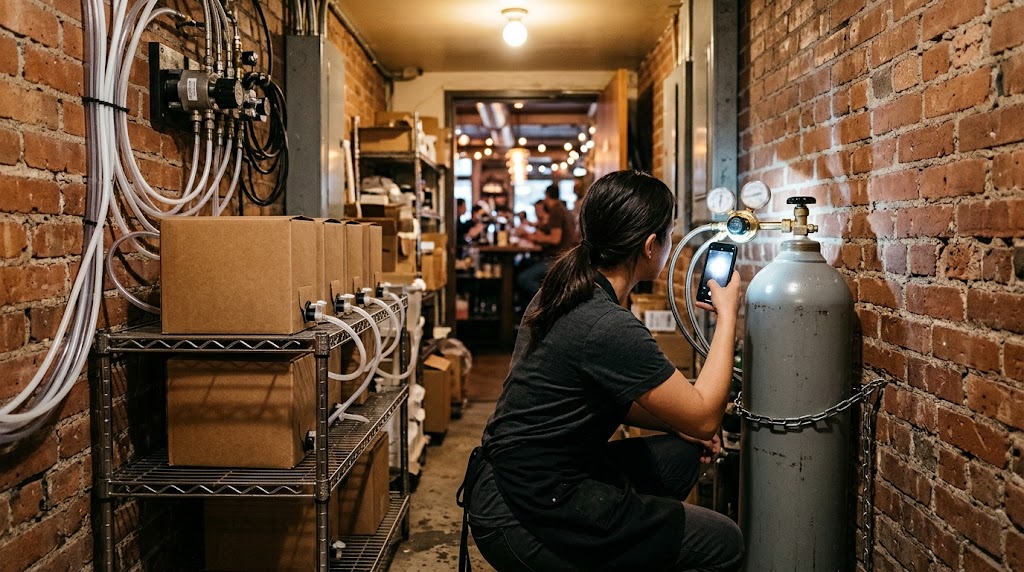
- Equipment removal: The fountain equipment in your operation most likely belongs to your current bottler or distributor, and it gets removed when you switch. Denver Beverage coordinates the cutover from its side, so removal and the new installation are sequenced to keep your operation running.
- Installation: Denver Beverage’s own technicians handle installation. Installs take planning and are rarely immediate, so the sooner you start the conversation, the more timing options you have.
- What your account typically includes: Fountain equipment accounts often pair with a broader program that may include chemicals or restroom products. Denver Beverage will walk you through what a qualifying account looks like for your operation.
- What changes day to day: Product is ordered through Denver Beverage, service calls go to the same local team, and you get a 24-hour service response.
For more detail on what equipment service looks like after installation, see our fountain and bar gun troubleshooting guide.
Is a Coca-Cola Program the Right Fit for Your Operation?
Denver Beverage serves restaurants and bars, hotels, healthcare facilities, offices, and convenience stores across the Front Range and the I-70 corridor. The Coca-Cola fountain drinks program works best for commercial accounts that want a single source for equipment, product, and service.
This is not a home bar program. If you’re running a commercial operation and you want one local supplier handling equipment, Coca-Cola fountain drinks supply, and service calls, the program is worth a direct conversation.
Your guests may have a favorite soft drink brand, and your restaurant beverage menu shapes what they order and what your staff pours. The right supplier keeps the equipment running and the product arriving, without the service problems that push operators to switch.
Not Sure Where to Start With the Switch?
Switching a fountain program involves a few moving parts: your current contract, the equipment swap, and the planning an install takes. You don’t have to sort that out alone. Call Denver Beverage at 303-295-3737 or request a quote, and we’ll talk through where you stand and what the next step looks like. Quote requests get a response within 24 hours.
Frequently Asked Questions
Does installation cost anything?
Dispensing equipment is provided at no charge for qualified accounts, so you’re not buying the hardware. Denver Beverage’s own technicians handle the installation. The team will walk you through what qualifies your account based on your operation.
How long does installation take?
Installs take planning and are rarely immediate, so it’s best not to expect a quick turnaround. The sooner you start the conversation, the more flexibility you have on timing.
Do I have to buy all my product through Denver Beverage?
Yes, product is ordered through Denver Beverage as part of the program. This is standard for fountain programs: the equipment is provided in connection with a product supply relationship. It’s worth understanding this upfront so there are no surprises about how ordering works once you’re set up.
What happens to my Pepsi equipment when I switch?
The existing equipment belongs to your current bottler or distributor, not to you. When you switch, they remove it. Denver Beverage coordinates the installation on its side, and the timing of both is something you’ll plan together so your operation isn’t down any longer than necessary.
What does service look like after installation? How fast can someone come out?
Denver Beverage offers 7-day service coverage with a 24-hour service response. The technicians are Denver Beverage employees, not subcontractors, and they’re CFESA-trained. Repairs carry a 90-day labor warranty, and the same local team that installed your equipment handles service.